
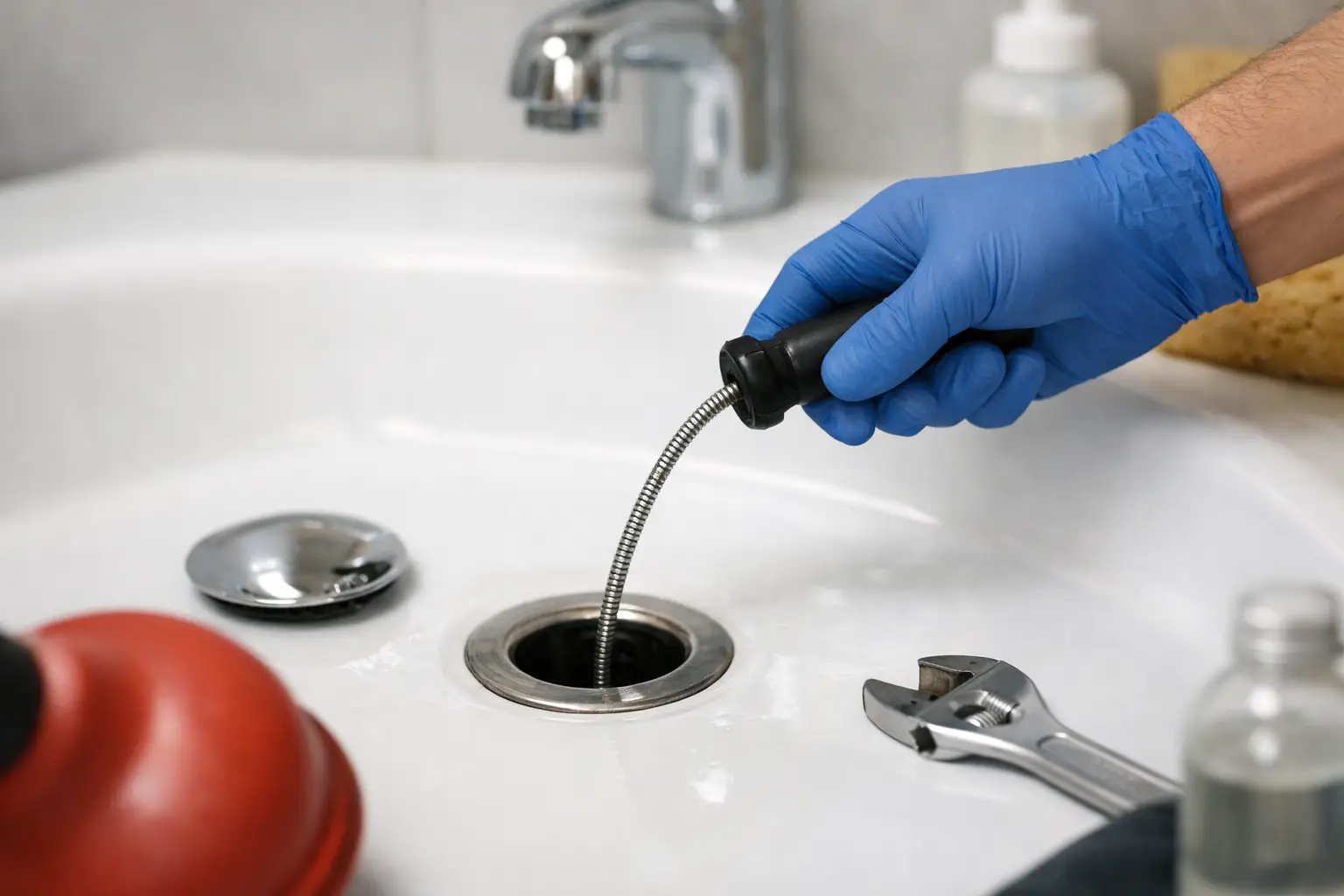
A bathtub that drains slowly can turn a five-minute shower into a standing-water problem. The usual cause is not deep in the sewer line. It is often a compact mix of hair, soap residue, conditioner, and skin oils caught close to the drain opening. Knowing how to clear bathtub drain clogs safely can save time, but the wrong method can damage pipes, push the blockage farther down, or create a bigger mess.
Before reaching for a strong chemical product, start with the simplest approach. Most bathtub clogs respond well to careful hands-on cleaning, a plunger, or a basic drain snake. If water is backing up elsewhere in the bathroom, however, the issue may be beyond the tub drain and needs professional diagnosis.
Start by Checking What Kind of Clog You Have
A slow drain and a fully blocked drain call for slightly different approaches. If water still moves, even slowly, remove as much hair and buildup as possible before trying to force water through the pipe. If the tub is holding several inches of water and will not drain at all, you may need to bail out enough water to access the drain and use a plunger.
Pay attention to other fixtures while you test the tub. A bathtub-only clog is usually local to that drain. If the toilet bubbles when the tub drains, the bathroom sink is slow too, or water comes up through another fixture, you could have a branch line or sewer line blockage. That is not a DIY situation to ignore, especially in a multi-unit property or older Orange County home.
Gather Basic Tools Before You Begin
You do not need a garage full of plumbing equipment for a typical hair clog. Have an old towel and a small bucket nearby, since even simple drain work can be wet.
For most bathtub drain cleaning jobs, these items are useful:
- Rubber gloves and a flashlight
- A screwdriver, if the stopper needs to be removed
- A plastic drain-cleaning tool or small hand snake
- A cup plunger made for sinks and tubs
- Warm water and mild dish soap
Avoid using boiling water in a bathtub drain. Very hot water can be hard on older plumbing connections, plastic components, or certain acrylic tub surfaces. Warm tap water is a safer choice after you remove the clog.
Remove the Stopper and Pull Out Visible Hair
Many bathtub stoppers collect hair around the linkage or just below the drain opening. Begin by removing the stopper according to its style. A lift-and-turn stopper may unscrew, while a trip-lever stopper typically has a plate on the overflow opening that can be removed with a screwdriver. Keep the screws in a small cup so they do not disappear into the bathroom.
Use a flashlight to look into the drain. If you can see hair, put on gloves and pull it out slowly. A plastic barbed drain tool can reach farther into the pipe and is often enough to catch a hairball that is just out of sight. Insert it gently, rotate it a little, then pull it back out. It may take several passes.
Do not jab aggressively or force a tool around tight bends. The goal is to hook and remove the clog, not compact it. Wipe the tool clean between passes and dispose of debris in the trash, never back into the drain.
Flush the Drain With Warm, Soapy Water
Once the visible hair is gone, run warm water to see whether the tub clears. If it is still draining slowly, add a small amount of mild dish soap and follow it with warm tap water. Soap can help loosen greasy residue left by bath products, but it will not dissolve a dense hair clog on its own.
This step works best after physical debris has been removed. Pouring products into a drain packed with hair usually does little more than leave chemicals sitting in the pipe.
Use a Plunger the Right Way
Plunging a bathtub is effective when the blockage is below the drain opening, but the overflow opening must be sealed first. The overflow is the metal plate below the faucet that prevents overfilling. Cover it tightly with a wet rag, or use duct tape if needed. Without that seal, the plunger will lose pressure through the overflow instead of moving the clog.
Place enough water in the tub to cover the plunger cup. Position the plunger directly over the drain, press down to create a seal, and use firm, controlled strokes for about 20 to 30 seconds. Then lift the plunger and check whether water begins to move faster.
Repeat this process two or three times if necessary. If the tub still does not drain after several attempts, stop forcing it. Excessive plunging may not solve a stubborn clog and can splash contaminated water around the bathroom.
Try a Hand Snake for a Deeper Tub Clog
A small hand-crank drain snake can reach clogs that a plastic tool cannot. For many tubs, the best access point is the overflow opening rather than the drain at the bottom of the tub. Remove the overflow cover, feed the cable carefully into the opening, and turn the handle as you advance it.
When you feel resistance, do not immediately crank harder. You may have reached a bend in the pipe rather than the clog. Pull back slightly, rotate the cable, and advance again with light pressure. If the cable catches material, withdraw it slowly and clean off what it brings back.
A hand snake is helpful for routine bathtub clogs, but there is a limit. Do not use a large power auger unless you understand the pipe layout and have the right equipment. Older pipes, damaged fittings, and improper tool use can turn a small drain issue into a repair project.
Skip Chemical Drain Cleaners
Chemical drain cleaners promise a quick fix, but they are often a poor choice for bathtub clogs. They may not penetrate a heavy hair blockage, and the heat or corrosive ingredients can be tough on aging metal pipes, rubber seals, and certain drain components. They also create a safety hazard if the product remains in standing water when you later remove the stopper or call a plumber.
Never mix drain cleaners with vinegar, bleach, ammonia, or another cleaner. The combination can release dangerous fumes or cause a chemical reaction. If you have already used a chemical cleaner, tell your plumber before any work begins so technicians can take proper precautions.
When a Bathtub Drain Problem Needs a Plumber
Some clogs are simple, and some are a warning sign that the drain system needs more than a quick cleaning. Call for professional drain service when the tub repeatedly clogs after you remove hair, when multiple fixtures drain slowly, or when you notice sewage odors, gurgling, or water backing up into the tub.
Homeowners should also call when the drain assembly is corroded, the stopper linkage is broken, or there is a leak beneath the tub. Landlords and property managers should act promptly when a shared bathroom line is affected, since a backup can damage flooring, drywall, and neighboring units.
A licensed plumber can inspect the line, identify whether the obstruction is local or farther down the system, and use professional equipment without guessing. Lenora Plumbing provides dependable drain cleaning and plumbing support for Orange County homeowners, families, and property managers who need clear answers, fair prices, and work done correctly.
Keep the Tub Draining Freely
After clearing the drain, a simple hair catcher is one of the most effective ways to prevent another clog. Clean it after each shower or bath rather than waiting for hair to collect below the stopper. It also helps to wipe excess hair from the tub walls before rinsing and avoid washing thick product buildup directly into the drain.
A tub that starts draining more slowly is easier to address than one that has completely stopped. Take care of the early warning signs, use gentle methods first, and get experienced help when the problem points to more than a handful of hair.
Need help with a plumbing problem?
Speak directly with Lenora Plumbing about service for your Orange County home or business.
Call (949) 992-7410