
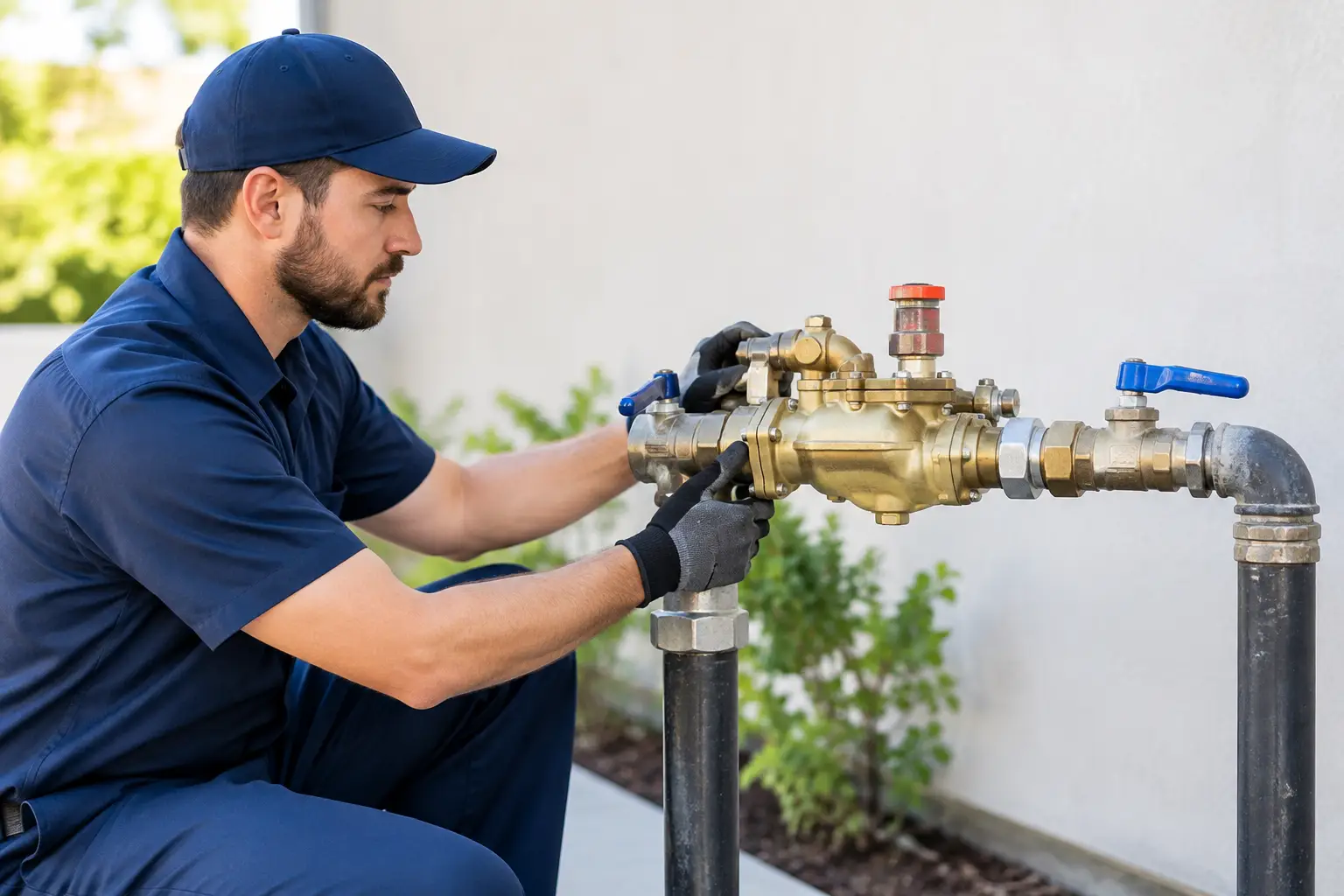
A hose left in a pool, a lawn irrigation system connected to fertilizer, or a sudden drop in water pressure can create a pathway for contaminated water to move the wrong direction. Backflow prevention is the plumbing protection that stops that reversal before it reaches the water you drink, cook with, and use throughout your property.
For homeowners, landlords, and facility managers, this is not usually a plumbing issue you can see from the kitchen sink. The equipment often sits near a water meter, irrigation connection, boiler, fire protection system, or commercial water line. But when it is missing, damaged, or incorrectly installed, the consequences can affect an entire building and sometimes the public water supply.
What Is Backflow Prevention?
Water is designed to travel one way: from the public supply through your plumbing system and out through faucets, fixtures, and equipment. Backflow occurs when pressure changes cause water to reverse direction. Instead of clean water flowing outward, water from a private plumbing system can be pulled or pushed back toward the potable water supply.
There are two common ways this happens. Backsiphonage occurs when pressure drops in the water supply. For example, a major water main break or unusually heavy demand can create suction that pulls water backward through a connected hose or pipe. Backpressure occurs when pressure within a property’s plumbing system becomes greater than the pressure in the supply line, forcing water back toward the source.
A backflow prevention assembly, often called a backflow preventer, uses valves and air gaps to stop this reverse flow. The right device depends on the potential hazard and the plumbing connection involved. A simple residential hose bib may need a vacuum breaker, while an irrigation system, commercial kitchen, medical facility, or fire line may require a tested mechanical assembly.
Why Backflow Prevention Matters on Real Properties
The concern is not ordinary water sitting inside a household pipe. The concern is cross-connections, where clean potable water is connected to a source that could contain contaminants. A garden hose submerged in a bucket of cleaning chemicals is a simple example. So is an irrigation line exposed to soil, fertilizer, pesticides, or standing water.
At larger properties, cross-connections can be more complex. Boilers, cooling systems, food-service equipment, chemical processing equipment, laundry systems, reclaimed-water lines, and fire sprinkler systems may all need carefully selected protection. The risk level determines the required type of assembly.
A properly installed device protects more than one faucet or appliance. It helps protect residents, visitors, employees, tenants, and neighboring water users. It can also help property owners meet water-provider requirements and avoid failed inspections, service disruptions, or costly corrective work.
For Orange County properties, requirements can vary based on the local water agency, the type of building, and the specific connection. A licensed plumbing professional can assess the installation, identify the hazard level, and make sure the proposed solution matches both the plumbing system and applicable requirements.
Where Backflow Devices Are Commonly Needed
Many property owners first hear about backflow after receiving a testing notice or finding an unfamiliar valve assembly near the meter. In other cases, a renovation, new irrigation system, tenant improvement, or equipment installation creates a new cross-connection that requires protection.
Residential properties commonly need protection at irrigation connections, pool fill lines, hose bibs, and certain water-treatment or booster systems. The device may be small and easy to overlook, but it still needs to be installed in the correct location and orientation.
Commercial properties often have more than one assembly. A retail center might have separate protection for irrigation, fire protection, and domestic water. A restaurant may need protection for specialty equipment, while an apartment complex may have assemblies serving common areas, landscaping, and building supply lines.
The right setup is not always the largest or most expensive device. It depends on water pressure, pipe size, the type of potential contaminant, local requirements, accessibility for testing, and whether the assembly must remain above ground. Installing the wrong device can lead to leaks, poor performance, failed inspections, or a costly replacement later.
Common Types of Backflow Preventers
Plumbing professionals select backflow devices based on the degree of hazard. A low-hazard connection may only require a device that prevents backsiphonage, while a high-hazard application often needs protection against both backsiphonage and backpressure.
Atmospheric vacuum breakers and pressure vacuum breakers are commonly used for irrigation-related applications. They help stop contaminated water from being siphoned backward, but they have installation limitations. They generally must be placed above downstream outlets and cannot be installed where constant pressure conflicts with the device’s design.
Double check valve assemblies use two check valves to stop reverse flow and are often used where the potential hazard is considered lower. Reduced pressure principle assemblies, sometimes called RP assemblies, provide a higher level of protection and include a relief valve. They are commonly specified when contaminants could present a greater health risk.
Air gaps are another highly effective form of protection. Rather than relying on moving internal parts, an air gap creates a physical separation between the water outlet and a receiving container or drain. You see this principle at the space between a kitchen faucet and sink, although more specialized installations may require engineered air gaps.
Testing and Maintenance Are Part of the Protection
A backflow assembly is not a set-it-and-forget-it part of the plumbing system. Mechanical devices contain check valves, springs, seals, and relief components that can wear out, collect debris, freeze in rare cold conditions, or fail after pressure changes. Even a device that looks fine from the outside may not perform correctly under a test.
Many water providers require annual testing for certain assemblies, especially those serving irrigation, commercial buildings, multi-family properties, and high-hazard connections. The exact schedule and reporting process depend on the local water agency and the assembly type. If you receive a notice, do not assume it is optional or that a general visual inspection is enough.
Testing is performed using calibrated equipment by a qualified backflow tester. The tester checks whether the internal components hold pressure and respond correctly. If the assembly fails, a plumber can determine whether repair is practical or replacement makes more sense.
Repair can be a good value when the body of the assembly is sound and replacement parts are available. Replacement may be the better choice when the device is corroded, repeatedly failing, damaged by impact, improperly sized, or no longer accepted for the application. The goal is a dependable, code-conscious installation, not simply getting a passing test for the moment.
Signs You Should Have the System Checked
A formal testing notice is the clearest reason to schedule service, but it is not the only one. A visible drip from a relief valve, corrosion around fittings, repeated water pressure changes, or a device that was struck by landscaping equipment deserves attention. So does a backflow preventer that has been buried, painted over, boxed in without access, or altered during a remodel.
Property owners should also call a licensed plumber after adding irrigation, a pool, a water feature, commercial equipment, or any plumbing connection involving chemicals or non-potable water. Changes that seem minor can alter the cross-connection risk and the device requirements.
For landlords and commercial managers, documentation matters. Keep test reports, repair records, installation details, and correspondence from the water provider in one accessible place. This makes recurring testing easier and gives you a clear record when ownership, tenants, or contractors change.
Choose Installation That Holds Up
Backflow prevention works best when it is treated as part of the property’s larger water system. That means proper sizing, secure supports, accessible shutoff valves, drainage where needed, protection from damage, and enough clearance for testing and repair. A device squeezed into an inaccessible corner may be cheaper on installation day, but it creates frustration and added labor every year afterward.
Lenora Plumbing can help homeowners and property managers evaluate existing assemblies, complete repairs or replacements, and address plumbing conditions that affect long-term performance. As a licensed, bonded, and insured contractor, the focus is on clear recommendations, fair prices, and work that protects the property as well as the water supply.
Clean water protection rarely gets much attention when everything is working properly. That is exactly the point: a correctly installed and maintained backflow device quietly does its job, giving you one less serious plumbing risk to worry about.
Need help with a plumbing problem?
Speak directly with Lenora Plumbing about service for your Orange County home or business.
Call (949) 992-7410