
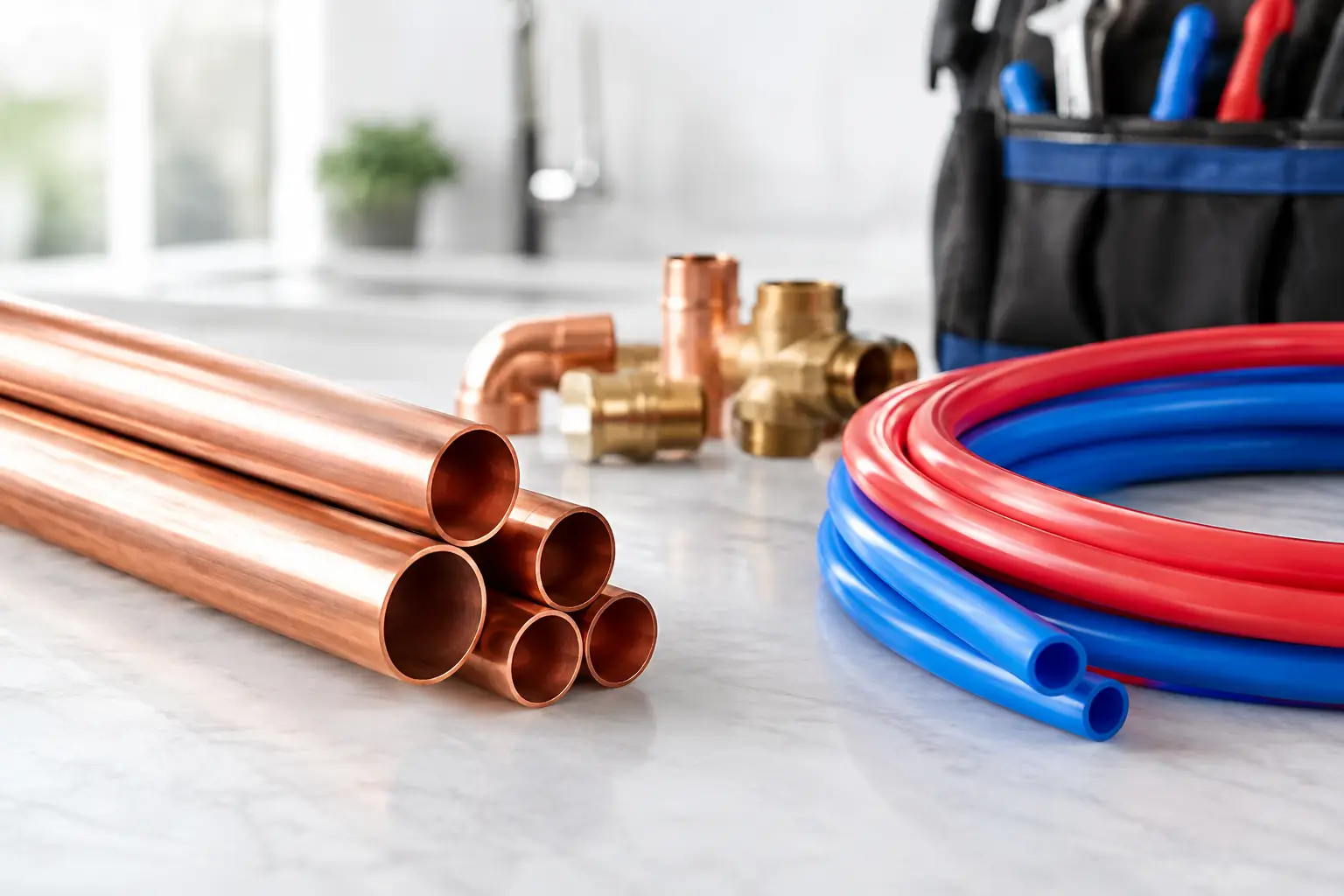
A whole-home repipe is not a cosmetic upgrade. The pipe behind your walls affects water pressure, repair risk, water quality, resale confidence, and the cost of owning your home for years to come. When homeowners weigh copper versus PEX plumbing pipes, the right answer depends on the home’s condition, the local water supply, the installation, and what matters most to the owner.
Copper has been the familiar standard for generations. PEX has become a common choice because it is flexible, efficient to install, and often less expensive. Both can provide dependable water service when they are properly designed and installed by a licensed plumber. The difference is in how each material handles real-world conditions.
Copper Versus PEX Plumbing Pipes: The Main Difference
Copper is a rigid metal pipe joined with soldered, press-fit, or other approved fittings. It is durable, heat-resistant, and well known to homeowners, inspectors, and buyers. Copper piping is typically installed in straight sections with fittings at turns and branch connections.
PEX, short for cross-linked polyethylene, is a flexible plastic piping material. A plumber can route long runs through framing with fewer connections than copper requires. It is commonly installed with a manifold system or with branch lines that feed individual fixtures.
Neither material is automatically “better” in every property. A newer home with accessible walls may be a strong fit for PEX. A homeowner who prefers metal piping, expects extensive sun exposure at exposed sections, or has specific renovation requirements may lean toward copper. The quality of the layout and workmanship matters as much as the pipe choice.
Cost: PEX Usually Has the Lower Installation Price
PEX typically costs less to install than copper. The material itself is generally less expensive, and its flexibility can reduce labor time, fittings, and wall openings. Fewer joints can also mean fewer potential connection points along a long pipe run.
Copper costs more because copper is a commodity metal and because installation is more labor-intensive. A technician must measure, cut, clean, fit, and join rigid sections accurately. In a large repipe, those differences add up.
Still, the lowest initial estimate should not decide the project by itself. A repipe should account for shutoff valves, pressure regulation, fixture connections, pipe sizing, permits when required, drywall access, and the condition of the existing plumbing. An incomplete quote can look attractive until additional work is identified later. Ask for a clear scope so you understand what material is being installed, where it will run, and what restoration is included.
Lifespan Depends on Water, Workmanship, and Conditions
Copper has a long track record and can last for decades. However, copper is not immune to failure. Water with an unfavorable pH, high mineral content, excessive velocity, electrical grounding problems, or corrosive conditions can contribute to pinhole leaks and internal deterioration. Homes with repeated small leaks in copper lines should be evaluated for the cause, not simply patched one section at a time.
PEX also has a long expected service life when it is listed for potable water use and installed according to manufacturer requirements and plumbing code. It does not corrode like metal, which is a major advantage in areas where water chemistry is hard on copper. PEX can also expand slightly during freezing conditions, making it more forgiving than rigid pipe. That benefit is less central in most Orange County homes, but it can matter in unconditioned or exposed areas during unusual cold weather.
PEX does have limits. It should not be exposed to direct sunlight for extended periods, since ultraviolet light can damage the material. It also must be protected from physical damage, high heat, and improper contact with certain chemicals or petroleum-based products. The correct supports, sleeves, fittings, and access points are part of a lasting installation.
Water Quality and Taste Considerations
Some homeowners prefer copper because it is an inert-feeling, familiar material for drinking-water lines. Copper is naturally antimicrobial, although that does not replace proper water treatment, filtration, or plumbing maintenance. New copper lines can occasionally create a metallic taste until the system has been used and flushed.
PEX is approved for drinking-water applications, but some people report a temporary plastic-like taste or odor after new installation, especially when water has sat in unused lines. Flushing the system often resolves this. Choosing quality, properly certified pipe and fittings is essential.
If your concern is the quality of water coming from the tap, pipe material is only one part of the picture. Aging galvanized pipe, old fixtures, a failing water heater, sediment, or a filtration issue may be the real source of discoloration, taste, or reduced flow. A professional inspection helps separate a piping problem from a water-quality problem before you commit to a major project.
Performance, Noise, and Water Pressure
Copper is rigid, so it can transmit the sound of moving water and create noise when pipes expand or contract. Proper fastening and insulation reduce this issue, but older installations may develop rattling or knocking over time.
PEX is generally quieter because it flexes and does not transmit vibration in the same way. It can be especially useful in homes where pipe routes pass through bedrooms, ceilings, or living areas.
Water pressure is not determined by copper or PEX alone. Pipe diameter, length of runs, number of fixtures, pressure regulator settings, mineral buildup, and the home’s supply pressure all affect performance. A poorly sized PEX system can produce disappointing flow, just as an undersized copper system can. For a repipe, a plumber should evaluate simultaneous use – such as showers, laundry, dishwasher, and outdoor irrigation – instead of copying an outdated layout without review.
Repairs and Future Access
Copper repairs are familiar to many plumbing professionals, but work can be more involved in tight spaces because the pipe is rigid and joins require careful preparation. Hot work also requires appropriate safety practices around framing and finished surfaces.
PEX is often easier to repair or modify because the pipe can be routed around obstacles and connected with approved fittings. It is useful in renovation work where access is limited. The trade-off is that fitting quality and installation method matter greatly. Connections should be accessible where practical, supported correctly, and installed with the appropriate system components.
For either material, avoid treating recurring leaks as isolated bad luck. One repaired leak may be reasonable. Several leaks in separate areas can indicate aging pipe, corrosion, pressure problems, or a broader system issue. At that point, a targeted assessment may protect your home from repeated wall repairs and water damage.
When Copper Is the Better Fit
Copper can be a sensible choice for homeowners who want a proven metal pipe system, have a budget for the added labor and material cost, and do not have water conditions likely to accelerate corrosion. It also works well in visible mechanical areas where the finished appearance of metal piping is preferred.
Copper may be worth considering when pipe sections are exposed to conditions PEX does not tolerate well, such as persistent sunlight or high-temperature areas. A qualified plumber can also use a mixed-material approach when a particular section calls for copper while the rest of the distribution system benefits from PEX.
When PEX Is the Better Fit
PEX is often the practical choice for whole-home repipes, additions, and remodels. Its flexibility helps reduce installation time and can limit the number of openings needed to route new water lines. For homeowners managing a major renovation budget, that efficiency can make a meaningful difference.
PEX is also appealing when existing copper has developed corrosion-related leaks. Because it does not corrode in the same manner as copper, it can be a strong long-term option when water chemistry has been rough on metal piping. Proper installation remains nonnegotiable: correct sizing, quality fittings, protected routing, and code-compliant connections are what make the system dependable.
Start With an Evaluation, Not a Material Preference
Before choosing pipe, have the existing system assessed. A good evaluation considers leak history, water pressure, visible corrosion, fixture flow, pipe accessibility, water heater connections, and the goals of the project. A small repair may be the right move for a newer system with one localized issue. A full or partial repipe may be more cost-effective when failures are becoming repetitive.
For Orange County homeowners, landlords, and property managers, working with a licensed, bonded, and insured contractor helps ensure the recommendation is based on the building rather than a one-size-fits-all sales pitch. Lenora Plumbing holds C36 License #1100153 and can help explain the practical trade-offs, project scope, and fair pricing before work begins.
The best piping choice is the one that fits your property’s conditions and is installed with care. Whether that leads to copper, PEX, or a thoughtfully planned combination, a clear diagnosis now can spare you from chasing the next leak later.
Need help with a plumbing problem?
Speak directly with Lenora Plumbing about service for your Orange County home or business.
Call (949) 992-7410