
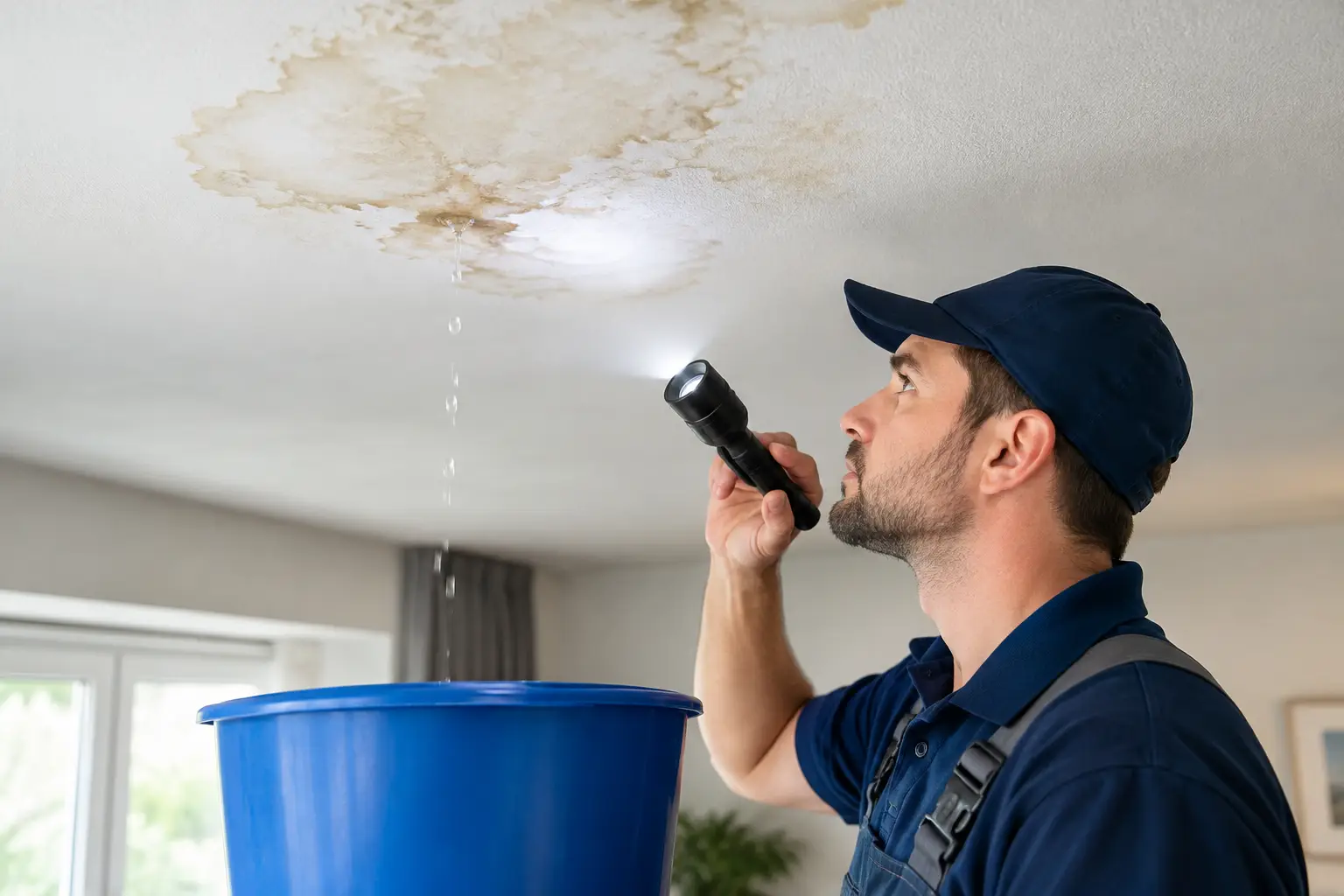
A brown ring spreading across the ceiling is not just a paint problem. If you are asking what causes ceiling water stains, the real issue is usually hidden above the drywall – and it may continue damaging framing, insulation, and nearby finishes long after the stain first appears.
A ceiling stain does not always mean there is an active plumbing leak directly overhead. Roof openings, air-conditioning condensation, upstairs bathrooms, and even attic moisture can leave similar marks. The location, timing, color, and condition of the ceiling help narrow down the source, but lasting repairs begin with finding where the water is actually coming from.
What Causes Ceiling Water Stains? The Most Common Sources
Leaks from bathrooms, kitchens, or laundry rooms above
When a bathroom, kitchen, or laundry room sits above the stained area, plumbing should be high on the list. A loose drain connection, worn toilet seal, cracked supply line, leaking shower valve, or failed tub overflow gasket can release small amounts of water each time the fixture is used.
These leaks often create a stain below a specific fixture, but water does not always travel straight down. It can run along a pipe, floor joist, or framing member before soaking into the ceiling below. That is why the visible stain may be several feet away from the actual leak.
Pay attention to when the stain changes. Does it grow after showers, laundry loads, dishwasher cycles, or someone flushes an upstairs toilet? That pattern is valuable information for a licensed plumber and can make diagnosis faster.
A leaking roof or damaged flashing
If the stain gets darker or larger after rain, the roof deserves close attention. Missing shingles, cracked tiles, aging underlayment, blocked roof drainage, and damaged flashing around vents, chimneys, skylights, or solar penetrations can allow rainwater into the attic.
Roof leaks can be especially misleading in Southern California because they may remain unnoticed through dry stretches. Then a seasonal storm sends water through a weak point, across roof sheathing or rafters, and down onto the ceiling far from where it entered.
A stain near an exterior wall, skylight, fireplace, or top-floor ceiling may point toward a roof-related problem. Still, do not assume. A pipe leak in the attic can produce the same symptom, and repairing the wrong issue only delays the real solution.
HVAC condensation and air handler problems
Air-conditioning systems remove moisture from indoor air, and that moisture must drain properly. A clogged condensate line, cracked drain pan, disconnected drain fitting, or poorly insulated refrigerant line can let water drip into a ceiling cavity.
This is a common concern where an attic air handler or ductwork runs over finished living space. Unlike a roof leak, HVAC-related staining may appear during warm weather or after the system has been running for long periods. You may also notice reduced cooling performance, a musty odor, or water around the indoor unit.
Condensation can also form on cold ducts or pipes when insulation is missing or damaged. The water buildup may be gradual, but repeated moisture can stain drywall and encourage mold growth.
Attic moisture and poor ventilation
Not every ceiling water stain comes from a single dripping source. Warm, humid indoor air can rise into an attic through gaps around light fixtures, ceiling penetrations, attic hatches, and unsealed ductwork. When that humid air meets a cold surface, condensation can form.
In this situation, stains may look diffuse rather than concentrated. They can appear around recessed lights, along exterior ceiling edges, or in more than one room. Inadequate attic ventilation, insufficient insulation, and bathroom fans that vent into the attic instead of outside can make the problem worse.
This is one area where a plumbing repair alone may not solve the whole problem. The cause may require ventilation corrections, air sealing, insulation work, or roof assessment in addition to repairs for any damaged pipe or drain.
Leaks in hidden water lines
A pressurized water line can leak behind a wall, in a ceiling cavity, or in an attic without making an obvious sound. Even a pinhole leak may send enough water into drywall over time to create discoloration, bubbling paint, or a soft spot.
Because supply lines remain pressurized, these leaks can continue whether or not a fixture is running. A sudden increase in your water bill, the sound of water when all fixtures are off, or consistently damp drywall can be clues. Professional leak detection helps identify the source without unnecessary demolition.
What the Stain Can Tell You
The color and texture of a stain provide useful clues, although they cannot confirm a diagnosis by themselves. Yellow, tan, or brown rings often appear as water dries and leaves behind minerals, dirt, wood tannins, or rust. A fresh leak may leave the ceiling cool, damp, or darker at the center.
A stain that feels soft, sags, flakes, or bubbles needs prompt attention. Drywall loses strength when saturated. A bulging area may hold a significant amount of water and can fail without warning, damaging floors, furniture, and anything beneath it.
Dark spotting or a persistent musty smell can signal ongoing moisture and possible microbial growth. The priority is to stop and dry the water source first. Painting over a stain before the materials are dry and the leak is repaired usually leads to another visible mark later.
How to Narrow Down the Source Safely
Start by looking for patterns rather than cutting into the ceiling. Note the stain’s exact location and take a dated photo. Check whether it changes after rain, after using upstairs fixtures, or when the air conditioner runs.
From a safe position, inspect accessible areas above the stain. Look under sinks, around toilets, behind washing machines, at water heater connections, and around visible attic piping. In an attic, watch for wet insulation, darkened wood, active drips, or water trails. Avoid stepping on ceiling drywall or disturbing electrical wiring.
If the ceiling is bulging, actively dripping near a light fixture, or showing extensive softness, keep people and belongings out from underneath it. Shut off the water supply if you can reasonably identify a plumbing leak, and arrange for qualified help. Electrical components and water are a hazardous combination.
A professional inspection is especially worthwhile when the source is unclear, the stain keeps returning, or the area involves a bathroom above, attic plumbing, or concealed water line. A proper diagnosis can separate a roof issue from a drain leak, supply-line failure, or HVAC condensate problem before repairs begin.
Why Fast Diagnosis Protects More Than the Ceiling
A small stain can represent a small issue, but it can also be the first visible sign of water moving through concealed materials. Prolonged moisture can weaken drywall, rot wood framing, damage insulation, affect flooring below, and create conditions that require more extensive restoration.
For landlords and property managers, documenting the first sign of staining and scheduling an inspection quickly also helps protect tenants and reduce repair disruption. For homeowners, early action often means a focused repair instead of replacing a larger section of ceiling and surrounding finishes.
The right repair depends on the cause. A failed toilet wax ring needs a different solution than a cracked condensate pan. A roof penetration needs different expertise than a hidden pipe leak. Reliable diagnosis prevents the frustrating cycle of patching, painting, and watching the same stain return.
Lenora Plumbing helps Orange County property owners identify and repair plumbing-related ceiling leaks with licensed, insured workmanship and fair, clear recommendations. Once the moisture source is corrected and the area has fully dried, damaged ceiling materials can be repaired with greater confidence.
A ceiling stain is your property asking for attention. Photograph it, watch for patterns, and address the source before the mark becomes a larger repair.
Need help with a plumbing problem?
Speak directly with Lenora Plumbing about service for your Orange County home or business.
Call (949) 992-7410