
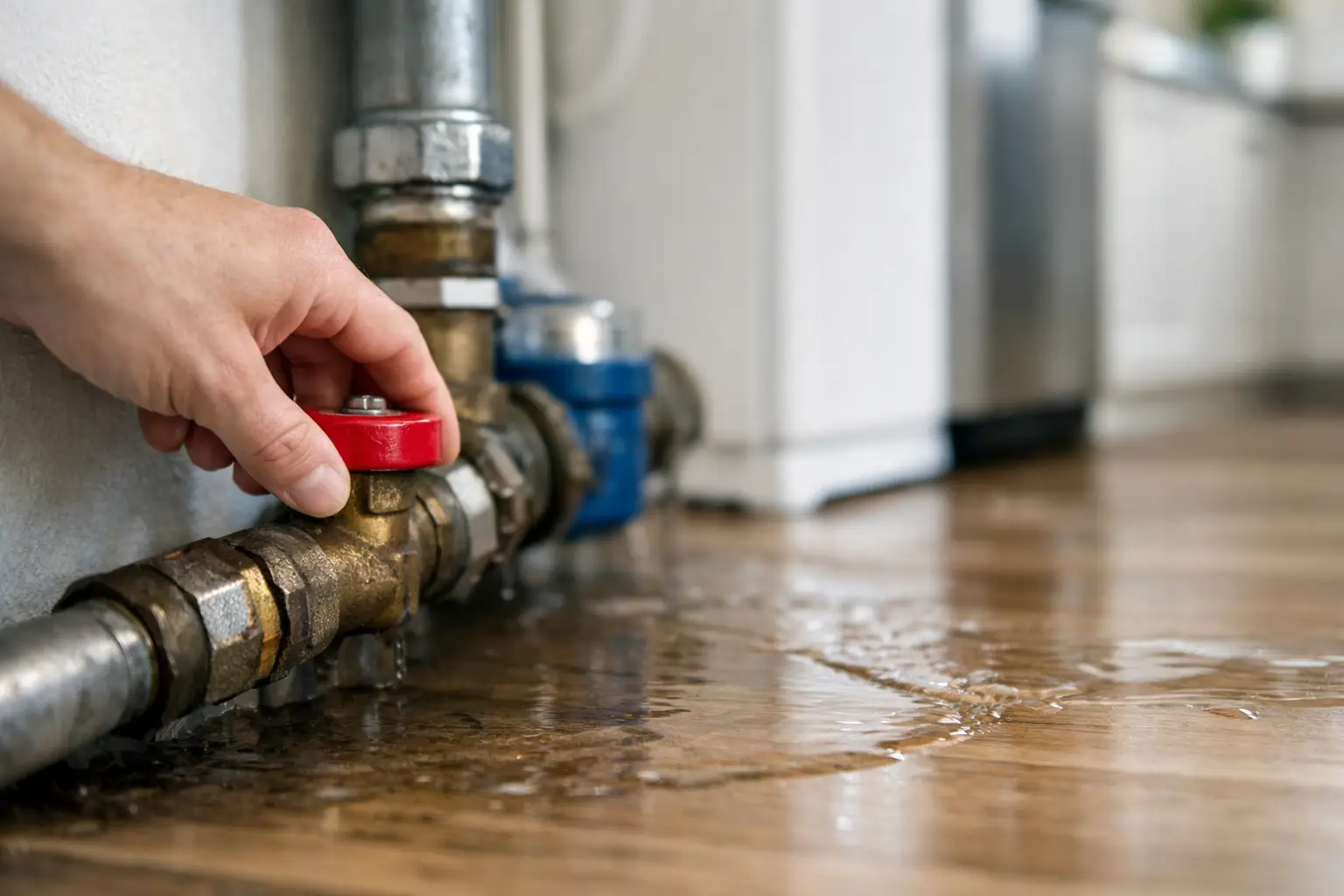
A burst supply line under the kitchen sink can release a surprising amount of water in just a few minutes. Knowing how to shut off water before a plumber arrives can protect floors, cabinets, drywall, and belongings from a small plumbing failure that turns into major water damage.
The right shutoff depends on where the water is coming from. If one toilet, faucet, or appliance is leaking, use its local valve when possible. If water is pouring from an unknown location, a pipe has burst, or a slab leak is suspected, shut off the home’s main water supply. Always put safety first: do not step into standing water near outlets, extension cords, appliances, or an electrical panel.
Shut Off Water at the Fixture First
A local shutoff stops water to one fixture while leaving the rest of the building usable. This is usually the best choice for a leaking toilet, faucet, refrigerator line, dishwasher, washing machine, or water heater connection.
Look below the fixture or directly behind it for a small valve attached to the water supply line. Most homes have either a round, wheel-style valve or a small lever valve. Turn a wheel-style valve clockwise until it stops. For a lever-style valve, turn the handle one-quarter turn so it sits perpendicular to the pipe.
Do not force a valve that is badly corroded, seized, or leaking around the handle. Older valves can break when turned aggressively, creating a larger problem. If the leak is manageable, place a bucket or towels below it and call a licensed plumber for help. If water is actively spraying or spreading, go directly to the main water shutoff.
How to Shut Off Water to a Toilet
The toilet shutoff valve is usually on the wall behind the toilet, near the floor. Follow the flexible supply line from the bottom of the tank to find it. Turn the valve clockwise to stop fresh water from refilling the tank.
For an overflowing toilet, remove the tank lid and lift the float or close the flapper at the bottom of the tank first. This can stop water from entering the bowl while you close the valve. Avoid flushing again until you know why the toilet overflowed. A clog, sewer issue, or failed internal toilet part may still need repair.
Shutoffs for Washing Machines and Appliances
Washing machines typically have hot and cold shutoff valves in a laundry box behind the machine. Turn off both valves if a hose leaks, the machine is overflowing, or water is appearing around the laundry area. If a rubber supply hose has failed, keep the valves off until the hoses have been replaced and the connection inspected.
Refrigerator ice makers, dishwashers, and filtered-water systems may have small valves under the kitchen sink or behind the appliance. These valves can be difficult to access, especially in tight cabinetry. If moving the appliance risks damaging a water line, shut off the main water instead and wait for professional service.
How to Shut Off Water at the Main Valve
Your main shutoff valve controls water flowing into the home or commercial suite. Every owner, tenant, property manager, and maintenance lead should know where it is before an emergency happens.
In many Orange County homes, the main water shutoff is located in a garage, utility room, exterior wall, basement area, or near the front of the house where the water service enters the building. It may also be in a covered box near the property line, close to the water meter. Condos, apartments, retail spaces, and office buildings may have an individual unit valve as well as a larger building-wide valve.
A wheel-style main valve closes when turned clockwise. It may take several full turns. A ball valve closes with a quarter turn, with the handle perpendicular to the pipe when the water is off. Once closed, open a cold-water faucet at the lowest practical point in the home, such as a first-floor sink or exterior spigot, to release pressure and confirm that water flow has stopped.
It can take a few moments for the remaining water in pipes to drain. Water may continue dripping from a damaged line after the valve is closed, but the flow should slow significantly. If it does not, the main valve may not be fully closed, may be faulty, or the leak may be on the utility side of the service line.
Do not confuse your property’s main shutoff with the utility-owned curb stop at the meter. Some meter boxes contain valves intended for water-provider use. If the only accessible valve requires a special key, is buried, or looks damaged, do not force it. Contact your water provider or a licensed plumbing professional.
What to Do After You Turn the Water Off
Stopping the water buys time, but it does not repair the failure. First, identify the area where water originated if it is safe to do so. Take photos or short videos of visible damage, the leaking pipe or fixture, and affected belongings. This documentation may help with an insurance claim or a landlord-property manager report.
Move rugs, furniture, electronics, and stored items away from wet areas. Use towels, buckets, and a wet vacuum only when electrical conditions are safe. Open cabinet doors near wet plumbing so trapped moisture can dry. Fast action can help reduce swelling in cabinets, mold growth, and damage beneath flooring.
If you shut off the whole property, avoid running faucets, flushing toilets, operating the dishwasher, or using the washing machine until the problem has been assessed. For a water heater, a short shutoff period is usually manageable, but if water will remain off for an extended time, follow the manufacturer’s instructions for placing the unit in vacation or off mode. Do not attempt gas-water-heater repairs or relighting if you smell gas or are unsure of the proper procedure.
When Turning Off the Water Is Not Enough
Some plumbing emergencies need a different response. A sewer backup is not solved by turning off the water supply alone, although stopping water use can prevent additional wastewater from entering the drain system. Keep people and pets away from contaminated water, and do not use chemical drain cleaners in an active backup.
A leak coming through the ceiling may originate from an upstairs bathroom, a roof issue, an air-conditioning drain, or a neighboring unit. Shutting off your own main valve can help if the source is within your plumbing system, but it will not stop water from another unit. Notify the building manager or owner immediately in multi-family properties.
Never shut off a fire sprinkler system to address a leak unless directed by the fire authority or a qualified fire protection professional. Fire sprinkler piping is separate from standard plumbing and must remain available for life safety.
Turn the Water Back On Slowly
Only restore water after the damaged fixture, pipe, or connection has been repaired or isolated. Make sure faucets are closed, appliances are off, and no one is working on the plumbing line. Open the main valve slowly to reduce pressure shock in the pipes.
Watch the repair area closely as pressure returns. Check for drips at fittings, valves, supply lines, and walls or cabinets near the original leak. If you hear hissing, see fresh water, or notice the water meter continuing to move when no fixtures are running, turn the water back off and arrange professional diagnosis.
For burst pipes, recurring leaks, slab leak concerns, failed shutoff valves, or water damage that spreads beyond a small area, a licensed plumber can identify the true cause and provide a durable repair. Lenora Plumbing is a family-owned Orange County plumbing contractor with C36 License #1100153, ready to help homeowners, landlords, and businesses address urgent plumbing failures with fair pricing and accountable workmanship.
Labeling your main shutoff valve today and showing everyone in the household where it is can make a stressful water emergency much easier to control tomorrow.
Need help with a plumbing problem?
Speak directly with Lenora Plumbing about service for your Orange County home or business.
Call (949) 992-7410