
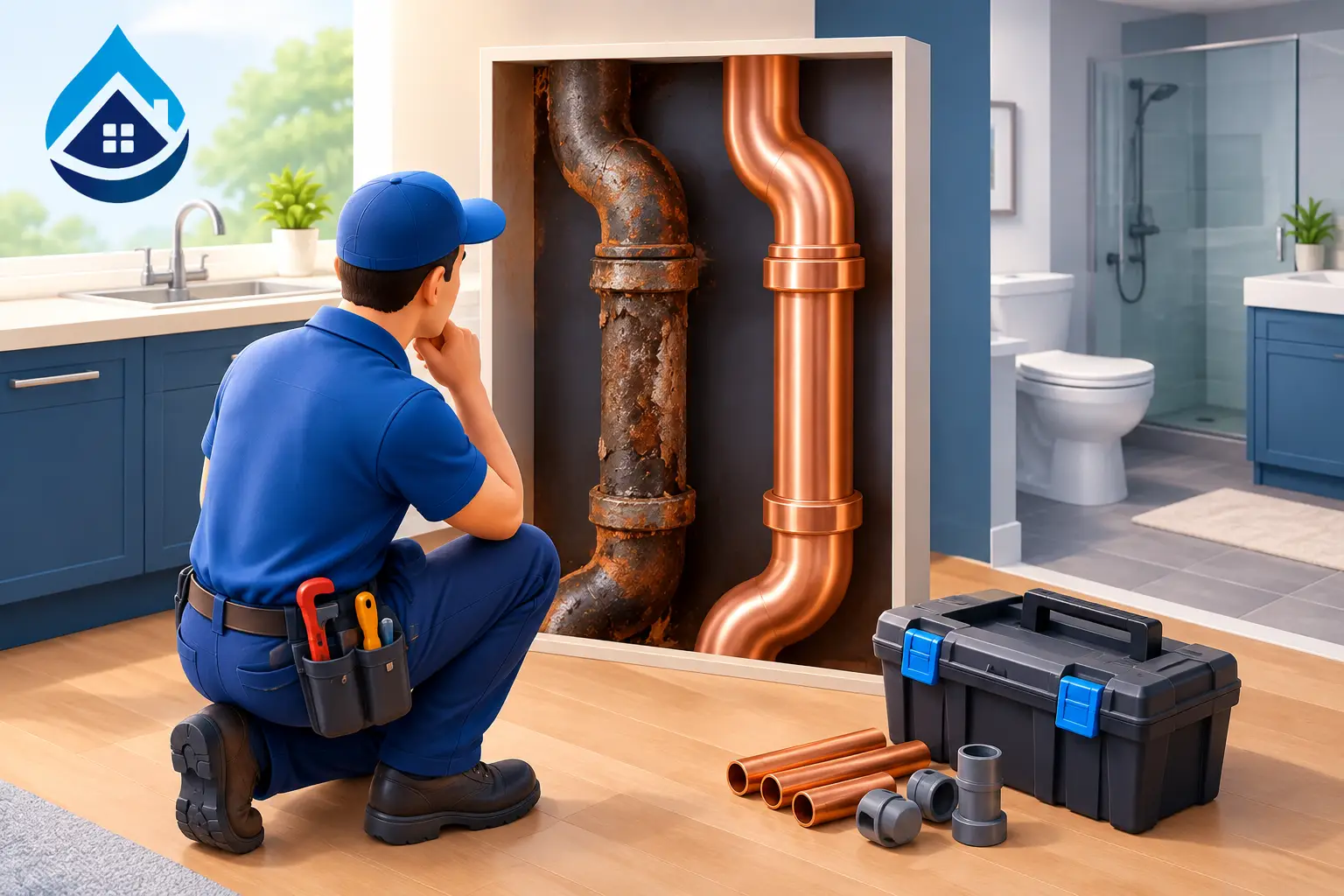
A small leak under a sink may be a simple repair. But recurring leaks, rusty water, weak pressure, or a sudden spike in your water bill can point to a larger problem hidden behind walls, under floors, or beneath a slab. Knowing when should pipes be replaced helps homeowners and property managers act before aging plumbing causes extensive water damage, mold growth, or costly disruption.
Pipe replacement is not automatically the answer to every plumbing issue. A licensed plumber should first identify the pipe material, locate the failure, assess the condition of the system, and explain whether a targeted repair or a larger repiping project makes better financial sense.
When Should Pipes Be Replaced Instead of Repaired?
A single damaged section of newer pipe can often be repaired effectively. Replacement becomes more reasonable when failures are frequent, widespread, or connected to the age and material of the plumbing system.
The key question is not simply whether a pipe is leaking today. It is whether the system is likely to keep failing. Repeated repair visits can add up quickly, especially when each leak requires opening drywall, flooring, cabinets, or concrete. Replacing deteriorated piping can reduce uncertainty and protect the parts of your property that are much more expensive to restore.
Your Pipes Have Reached Their Expected Service Life
Pipe lifespan depends on material, water quality, installation quality, and past repairs. Still, age is a useful starting point. Galvanized steel water pipes commonly last 20 to 50 years, while copper may last 50 years or longer under favorable conditions. Older cast iron drain lines can also deteriorate internally after decades of use.
Many Orange County homes have been remodeled over time, which can make the plumbing story less obvious. A newer kitchen or bathroom does not necessarily mean the supply lines or drain pipes behind the walls were updated. If the property has original plumbing from several decades ago, an inspection can clarify what materials are present and what condition they are in.
Age alone does not require immediate replacement. However, aging pipes combined with corrosion, leaks, restricted flow, or recurring drain problems deserves a closer look.
Leaks Keep Returning
One leak may come from a loose connection, an isolated puncture, or a failed fitting. Multiple leaks in different locations are more concerning. They can indicate corrosion from the inside out, deteriorating joints, shifting pipes, or water pressure conditions that have stressed the entire system.
Watch for water stains on ceilings, peeling paint, warped baseboards, damp carpet, or a persistent musty smell. Some leaks remain hidden for a long time, particularly in walls, crawl spaces, and slab foundations. Even a slow leak can damage framing, insulation, cabinets, and flooring before it becomes visible.
If repairs are becoming a pattern rather than an exception, replacing affected lines may be the more durable choice.
Water Looks, Tastes, or Smells Different
Discolored water is one of the more visible signs of pipe deterioration. Brown, yellow, or reddish water can be caused by rust and sediment in aging galvanized steel pipes. Blue-green staining near fixtures may suggest corrosion in copper piping.
Water discoloration can also come from a water heater, local supply conditions, or temporary sediment disturbance. That is why a professional diagnosis matters. But if discoloration appears regularly, occurs only in certain fixtures, or improves briefly after running the tap and then returns, the plumbing lines should be evaluated.
Changes in water taste or odor also deserve attention. Do not assume the problem is cosmetic, especially if the property has older plumbing materials.
Water Pressure Has Declined
Low water pressure can be frustrating during a shower, while filling a washing machine, or when several fixtures run at once. Mineral buildup, corrosion, and internal scaling can gradually narrow the inside diameter of old pipes. The result is less water flow even when the main supply pressure is adequate.
A clogged faucet aerator or a failing pressure regulator can create similar symptoms, so replacement is not always necessary. Yet when low pressure affects multiple fixtures throughout a building, aging supply pipes may be restricting the flow.
For commercial properties, reduced water pressure can affect restrooms, kitchens, laundry areas, and tenant satisfaction. Identifying the cause early helps owners plan the right repair without guessing.
Pipe Materials That Often Need Closer Attention
Not all plumbing materials age the same way. Understanding what is in your building helps set realistic expectations for maintenance and replacement.
Galvanized steel is common in older homes and is especially prone to internal rust and mineral buildup. It may look acceptable from the outside while becoming severely restricted on the inside. Cast iron drain lines can develop cracks, scale buildup, root intrusion, and deteriorated joints. Older polybutylene supply piping, often gray or blue-gray, has a history of failure and is generally worth discussing with a qualified plumbing professional.
Copper remains a durable option, but it is not immune to pinhole leaks or corrosion. Water chemistry, installation conditions, and electrical grounding issues can all affect its service life. Modern PEX piping is widely used for replacement projects because it resists corrosion, performs well in many applications, and can often be installed with less wall disruption than rigid piping.
The right replacement material depends on the building, local code requirements, water conditions, budget, and the scope of work. A good recommendation should explain the trade-offs clearly rather than treating one material as the answer for every property.
Signs Your Sewer or Drain Pipes May Need Replacement
Water supply pipes bring clean water into the property, while drain and sewer lines carry wastewater away. Their warning signs are different, but both can require replacement when damage is extensive.
Slow drains by themselves may be caused by a simple blockage. Persistent backups, recurring clogs in several fixtures, foul sewer odors, gurgling toilets, or wet areas in the yard can point to a damaged drain or sewer line. Tree roots, ground movement, cracked cast iron, and separated joints are common causes.
A camera inspection can show what is happening inside a drain line without unnecessary excavation. In some cases, cleaning or a focused repair is enough. If the line is crushed, heavily corroded, repeatedly invaded by roots, or sagging due to soil movement, replacement may provide a more dependable long-term solution.
Repair, Partial Replacement, or Whole-Home Repiping?
The best approach depends on the condition of the plumbing and the owner’s plans for the property. A localized repair is usually appropriate for a newer system with one clearly isolated failure. Partial replacement can work well when one section, such as a damaged branch line or a single bathroom group, has reached the end of its useful life.
Whole-home repiping is often considered when pipes are old, leaks have occurred in multiple areas, water pressure is poor throughout the home, or renovations will already require opening walls. Although the initial investment is larger, completing the work in one organized project can be less disruptive than repeated repairs over several years.
For landlords and property managers, planning matters. Coordinating a repiping project around tenant access, unit turnover, and restoration needs can limit downtime and avoid a patchwork of recurring problems. For homeowners, it may make sense to combine pipe replacement with a kitchen remodel, bathroom update, or flooring project.
What to Expect From a Professional Pipe Assessment
A reliable assessment begins with questions: How old is the building? Where have leaks occurred? Has the water bill changed? Are certain fixtures losing pressure? The plumber may inspect exposed piping, test pressure, check for moisture, review drain performance, and use specialized leak detection or camera equipment when needed.
You should receive a clear explanation of the findings and options. That includes what needs attention now, what can be monitored, what materials are recommended, and how the work may affect walls, floors, or access points. Transparent pricing and properly licensed, bonded, and insured work are especially important for projects that affect a large portion of a property.
Lenora Plumbing approaches pipe replacement with the practical goal of solving the actual problem, not overselling a larger project. A careful diagnosis can help you invest in the repair that makes sense for your home or facility.
Do Not Wait for Major Damage
Pipe problems rarely become less expensive with time. A hidden leak can slowly undermine finishes and structural materials, while a failing drain line can create sanitation concerns and interrupt daily routines. Acting at the first sign of repeated leaks, discoloration, pressure loss, or drainage trouble gives you more choices and more time to plan.
If you are unsure about the condition of your plumbing, schedule an inspection before the next small symptom becomes a major repair. A clear professional assessment can bring peace of mind and help protect the property your family, tenants, customers, or employees depend on.
Need help with a plumbing problem?
Speak directly with Lenora Plumbing about service for your Orange County home or business.
Call (949) 992-7410