
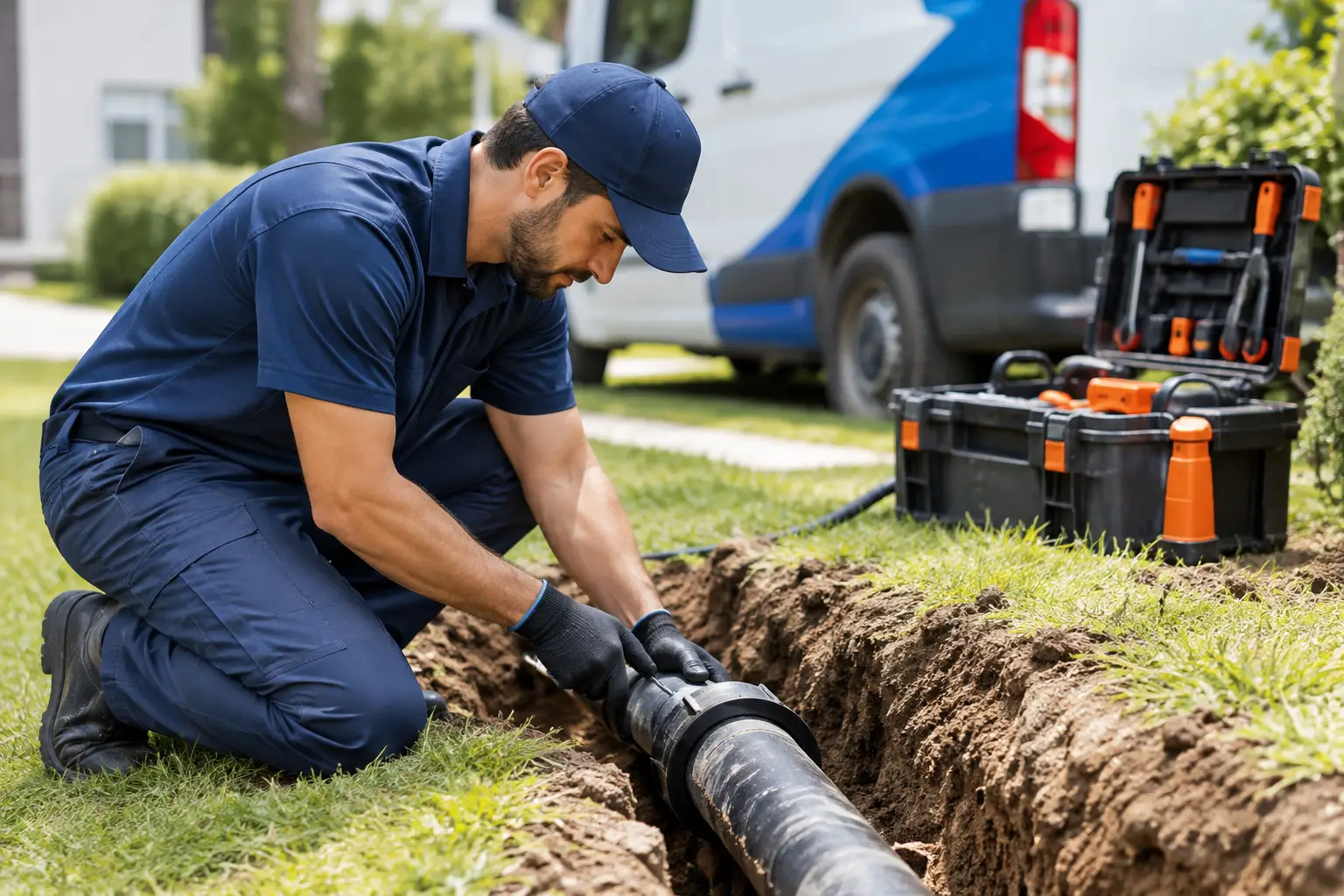
A sewer backup does not leave much room for guesswork. Wastewater coming up through a shower drain, toilets that will not flush, or foul odors around the yard can point to a damaged sewer line. Homeowners and property managers often ask who fixes sewer line damage because the answer affects the speed, cost, permits, and long-term reliability of the repair.
In most cases, a licensed plumbing contractor with sewer line repair experience is the right professional to call. The contractor can inspect the line, identify the source of the failure, explain whether the issue is on private property or in the public sewer system, and complete the appropriate repair. The key is getting a real diagnosis before anyone starts digging or recommends replacing pipe.
Who fixes sewer line damage on private property?
A licensed plumber or sewer line contractor typically repairs the portion of the sewer system owned by the property owner. This usually includes the lateral sewer line that runs from the building to the connection at or near the public sewer main. For homes, it may be the pipe between the house and the street. For commercial properties, it can include longer private lines, multiple cleanouts, grease-related drain connections, and sewer piping beneath parking areas or landscaped grounds.
Not every plumber performs extensive sewer excavation or trenchless pipe work, so ask whether the contractor handles sewer camera inspections, locating, repair, replacement, and permit coordination. A qualified contractor should be licensed, bonded, and insured, and should be willing to explain the findings in plain language.
In California, sewer line work often requires a contractor with the appropriate plumbing license. This matters because sewer repairs can involve public health requirements, underground utility safety, inspections, and local building rules. Choosing a properly licensed professional helps protect your property and gives you a clear point of accountability if the work needs follow-up.
When the city or utility may be responsible
The public sewer main under the street is generally maintained by the city, sanitation district, or local utility provider. If the blockage or break is in that public main, the agency responsible for the system may need to make the repair.
The dividing line is not always as simple as the curb. Responsibility can vary by municipality, and a property owner may still be responsible for the lateral line all the way to its connection with the main. That is why a sewer camera inspection is so valuable. It shows where the problem is located and provides evidence a contractor can use when discussing the issue with the local agency.
If several nearby properties have sewer backups at the same time, a public main issue becomes more likely. If the problem affects only one building, the cause is more often within that property’s private sewer lateral. Either way, do not assume the city will handle it without confirming the location of the failure.
What a sewer line professional looks for
Sewer line damage is not one problem with one repair. The pipe may be clogged, cracked, offset, crushed, sagging, leaking, or invaded by roots. Each condition calls for a different approach.
A professional diagnosis often begins with a sewer camera inspection. A small camera travels through the pipe and records its condition from the access point outward. This can reveal whether tree roots have entered through pipe joints, whether an older clay or cast-iron line has deteriorated, or whether a section has shifted because of soil movement.
The contractor may also locate the line from above ground, check cleanouts, and test drainage throughout the property. For a commercial building, the evaluation may include whether recurring drain use, grease buildup, or heavy traffic over buried piping is contributing to the problem. A clear diagnosis prevents the common mistake of repeatedly clearing a blockage that is actually caused by a broken pipe.
Common signs that the sewer line needs attention
Some sewer failures are obvious, but others start with smaller warning signs. Slow drains in more than one fixture, gurgling toilets, water pooling near a sewer line path, unusually green patches of lawn, and recurring clogs can all indicate a sewer issue. A sewage odor indoors or outdoors should also be taken seriously.
One slow sink does not automatically mean the main sewer line is damaged. It may be a local drain blockage. But when multiple fixtures drain poorly at once, especially lower-level showers, tubs, or toilets, the main sewer line should be inspected before the problem gets worse.
Repair options depend on the pipe and the damage
After identifying the issue, the contractor should discuss repair choices based on pipe material, depth, access, the extent of failure, and local requirements. The least disruptive option is not always the best option. A repair that costs less today may not make sense if the remaining pipe is near the end of its service life.
For isolated cracks, separated joints, or root intrusion in an otherwise sound line, spot repair may be appropriate. The damaged section is exposed and replaced, then the line is tested for proper flow. This can be a sensible solution when the rest of the sewer lateral is in good condition.
Trenchless methods may be available in some situations. Pipe lining creates a new interior surface inside certain existing pipes, while pipe bursting replaces an old line by pulling new pipe through the same path. These approaches can reduce disruption to driveways, landscaping, or hardscape, but they are not suitable for every sewer line. Severe collapses, major misalignment, limited access, or certain pipe conditions may require conventional excavation.
Full replacement is often recommended when an older line has widespread cracking, repeated root intrusion, multiple offsets, or failing sections along its length. It is a larger project, but it can end the cycle of repeat cleanings and patch repairs. A trustworthy contractor will explain why replacement is recommended and provide a clear scope of work rather than using scare tactics.
Why permits and locating matter before repairs begin
Sewer line work can cross areas where other utilities are buried. Gas, water, electrical, communications, and irrigation lines may be near the excavation path. Professional contractors take steps to locate utilities and plan the work safely before digging.
Permits and inspections may also be required, particularly for sewer lateral replacement or work near the public connection. While paperwork can feel like a delay, it helps ensure the new line meets code and is installed with the correct materials, slope, and connections. Poor slope can allow solids to settle in the pipe. Improper connections can create leaks, backups, and expensive corrections later.
For Orange County property owners, local requirements can differ by city and sewer district. Ask the contractor who will handle permits, inspections, utility coordination, restoration, and final testing. Those details belong in the estimate, along with what is and is not included.
Questions to ask before hiring a sewer repair contractor
Before approving work, ask for the camera findings and a straightforward explanation of the repair recommendation. You should know the approximate location and depth of the damage, whether the line is fully or partially blocked, and whether the contractor believes the issue is isolated or widespread.
Also ask about the repair method, anticipated restoration work, warranty terms, permit responsibilities, and how the final line will be tested. If an estimate includes excavation, clarify whether concrete, asphalt, landscaping, flooring, or other surfaces will be restored and to what extent. Comparing estimates is easier when each contractor defines the same scope of work.
Price matters, but the lowest number is not always the fair price. Sewer repairs involve hidden conditions, and a vague estimate can become expensive once work begins. Look for a contractor that communicates clearly, documents the diagnosis, and treats your property with care.
Protect the line after it is repaired
A repaired sewer line benefits from sensible maintenance. Keep wipes, paper towels, hygiene products, grease, and heavy food waste out of drains, even when a label says a product is flushable. These materials can collect at joints or rough areas and create stubborn blockages.
If mature trees sit near the sewer route, periodic camera inspections can catch root activity before it becomes a full blockage. Properties with older piping, frequent tenant turnover, or high-volume commercial use may benefit from a planned inspection schedule as well.
Sewer line damage is disruptive, but the right contractor can turn a confusing problem into a defined repair plan. Lenora Plumbing brings licensed workmanship, clear communication, and practical solutions to sewer line concerns, so property owners can make decisions with confidence and protect what matters most.
Need help with a plumbing problem?
Speak directly with Lenora Plumbing about service for your Orange County home or business.
Call (949) 992-7410