
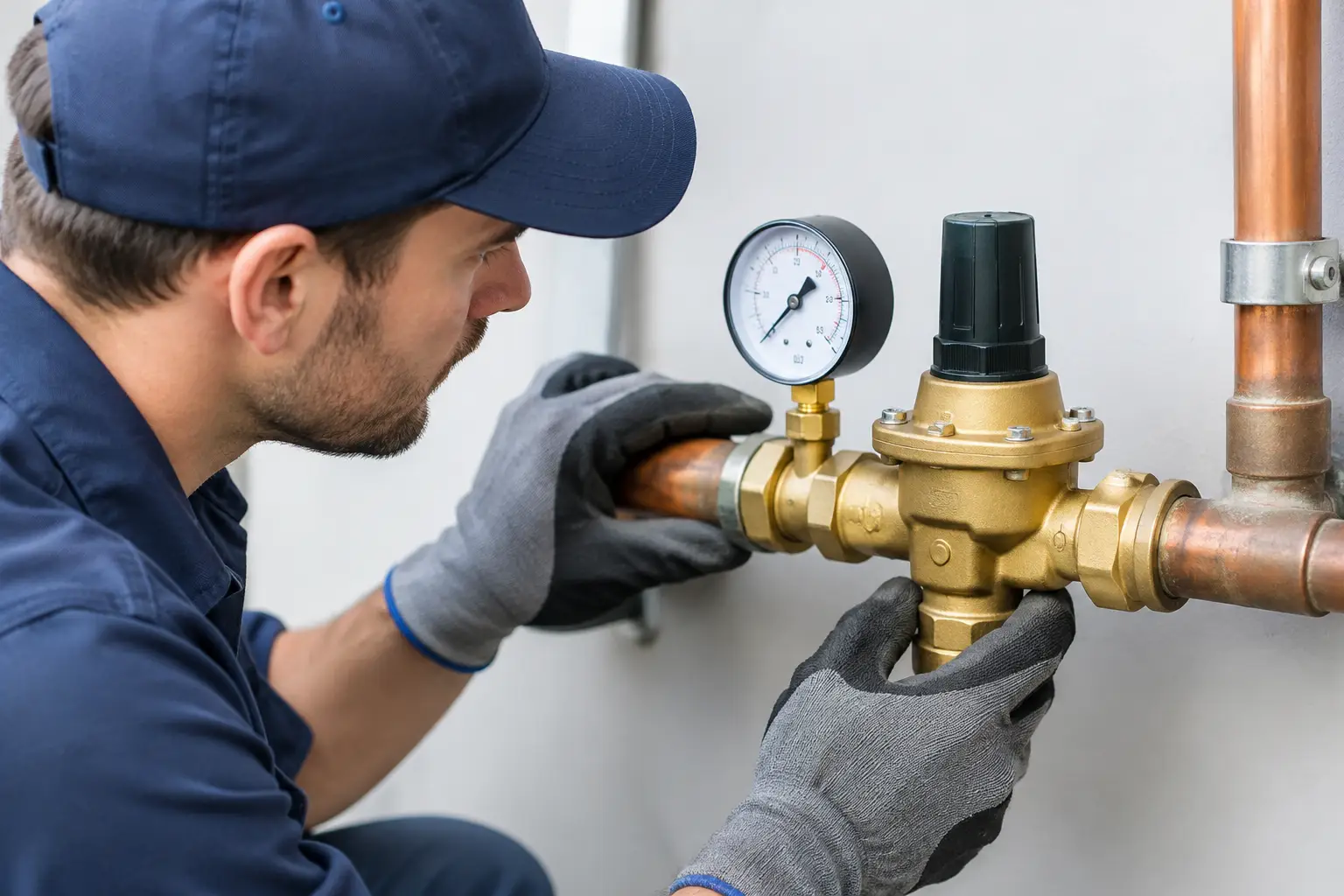
A shower that suddenly feels more forceful than usual may seem like a small win. But when water pressure climbs too high, it can quietly put stress on pipes, supply lines, valves, appliances, and plumbing fixtures throughout the property. A water pressure regulator helps keep that pressure in a safe, consistent range, protecting the plumbing system from damage that can become costly over time.
For homeowners, landlords, and property managers, the regulator is one of those important components that often goes unnoticed until something starts leaking, banging, or wearing out too soon. Knowing what it does and when it needs attention can help you make a smart repair decision before a minor issue becomes a larger plumbing project.
What a Water Pressure Regulator Does
A water pressure regulator, also called a pressure-reducing valve, is installed on the main water line where water enters a building. Its job is straightforward: it reduces incoming water pressure from the municipal supply and delivers water to the property at a steadier, safer setting.
Municipal pressure can vary by neighborhood, elevation, time of day, and demand on the water system. In many cases, the pressure coming from the street is higher than what residential fixtures and household appliances are designed to handle over the long term. A regulator acts as a gatekeeper, lowering that pressure before it reaches the rest of the plumbing.
Most homes perform well with water pressure in the general range of 40 to 60 psi. Pressure near or above 80 psi is typically considered too high and deserves professional evaluation. The right setting can depend on the property, pipe layout, fixture type, and local conditions, so the goal is not simply to turn pressure as low as possible. It is to maintain reliable water flow without creating unnecessary strain.
Signs Your Water Pressure Regulator May Be Failing
Pressure regulators do not last forever. Internal parts wear down, mineral buildup can affect performance, and age can make the valve less responsive. A failing regulator may cause pressure to run too high, too low, or fluctuate throughout the day.
One of the clearest signs is inconsistent water flow. You may notice that the shower pressure changes while you are bathing, faucets surge and then weaken, or water flow varies from one part of the home to another. Low flow can also come from clogs, corroded pipes, or fixture problems, which is why proper diagnosis matters.
Noisy plumbing is another warning sign. Banging, rattling, humming, or vibrating pipes can occur when pressure is excessive or unstable. These sounds are not always caused by the regulator, but they should not be ignored. Repeated pressure-related movement can loosen fittings and wear down valves over time.
Leaks that appear around appliance supply lines, toilet fill valves, faucet connections, and under-sink shutoff valves may point to a pressure issue as well. A single worn washer is common. However, when several fixtures develop leaks or need frequent repairs, high water pressure should be considered.
Watch for these additional clues:
- Toilets that continue running or require repeated fill-valve repairs
- A water heater temperature and pressure relief valve that drips
- Washing machine hoses, dishwasher connections, or ice-maker lines that fail prematurely
- Faucets that spray hard or produce sudden bursts of water
- Higher water bills without an obvious change in use
These symptoms do not automatically mean the regulator must be replaced. They do mean the system deserves a careful inspection, especially in an older home or a multifamily building where a pressure problem can affect several units.
Why High Water Pressure Can Cause Real Damage
High pressure creates more than an inconvenience at the sink. It places constant force on every pressurized section of the plumbing system. Pipes may tolerate that force for a while, but flexible supply lines, fixture valves, appliance connections, and aging seals often show the effects first.
Water heaters are particularly vulnerable to pressure-related stress. As water heats, it expands. In a closed plumbing system, that expansion needs to be managed properly. If the pressure regulator is failing or the system does not have the appropriate thermal expansion control, pressure can rise beyond normal levels and cause relief valves to discharge or components to wear faster.
For landlords and commercial property managers, pressure problems can be especially disruptive because one regulator may serve an entire building or section of a property. Small leaks in multiple units, recurring toilet repairs, or shortened appliance life can add up quickly. Addressing the source may be more cost-effective than continuing to repair individual symptoms.
Low pressure has its own drawbacks. If a regulator becomes restricted or sticks in a partially closed position, showers may feel weak, washing machines may fill slowly, and some fixtures may not perform as expected. The solution is not always to adjust the regulator. A damaged valve, undersized piping, mineral buildup, a leak, or a municipal supply issue can produce similar symptoms.
Can You Test Water Pressure Yourself?
A basic pressure gauge that attaches to an outdoor hose bib or laundry connection can provide a useful starting point. Attach the gauge to a suitable connection, make sure no water is running inside the property, and take a reading. It can also help to check pressure at different times of day because municipal supply pressure may change.
A single reading is helpful, but it does not tell the complete story. Pressure can increase overnight when neighborhood water demand drops. It can also rise when a water heater runs, depending on the system setup. If a gauge shows pressure approaching or exceeding 80 psi, or if readings swing widely, a licensed plumber should inspect the regulator and related components.
Avoid making major adjustments without understanding the condition of the valve. Many regulators have an adjustment screw, but turning it may not solve a valve that is worn out internally. An improper adjustment can also leave the property with inadequate flow or continued high pressure.
Repair or Replace: What Makes Sense?
Whether a regulator can be adjusted, repaired, or should be replaced depends on its age, condition, brand, installation quality, and the exact problem. Some models can be rebuilt with replacement internal parts. In other cases, installing a new regulator is the more dependable choice.
Replacement is often recommended when the valve no longer holds a stable pressure setting, shows corrosion or leakage, has a damaged body, or has reached the end of its service life. A plumber can also confirm that the regulator is correctly sized for the water line and property demand. That matters in larger homes, commercial spaces, and buildings with multiple fixtures operating at once.
During service, it is wise to inspect nearby shutoff valves, the main water line connection, water heater safety components, and any visible supply lines. A regulator replacement is an opportunity to correct related issues before they create water damage or repeated maintenance costs.
Professional Installation Protects the Whole System
A pressure regulator is not a complicated-looking device, but proper installation requires more than tightening fittings. The plumber must identify the source of the pressure concern, select the right valve, install it in the correct direction, set the pressure accurately, and test the system under normal operating conditions.
In Orange County, homes can have different pipe materials, water conditions, and incoming supply pressures from one neighborhood to the next. A qualified local plumber can account for those differences rather than treating every pressure complaint the same way. Lenora Plumbing provides licensed, bonded, and insured plumbing service with clear recommendations and fair pricing for homeowners and property professionals.
If you are hearing pipe noise, seeing repeated leaks, or noticing pressure that changes without warning, do not wait for a supply line or appliance connection to fail. A simple pressure check today can protect the plumbing you depend on every day.
Need help with a plumbing problem?
Speak directly with Lenora Plumbing about service for your Orange County home or business.
Call (949) 992-7410