
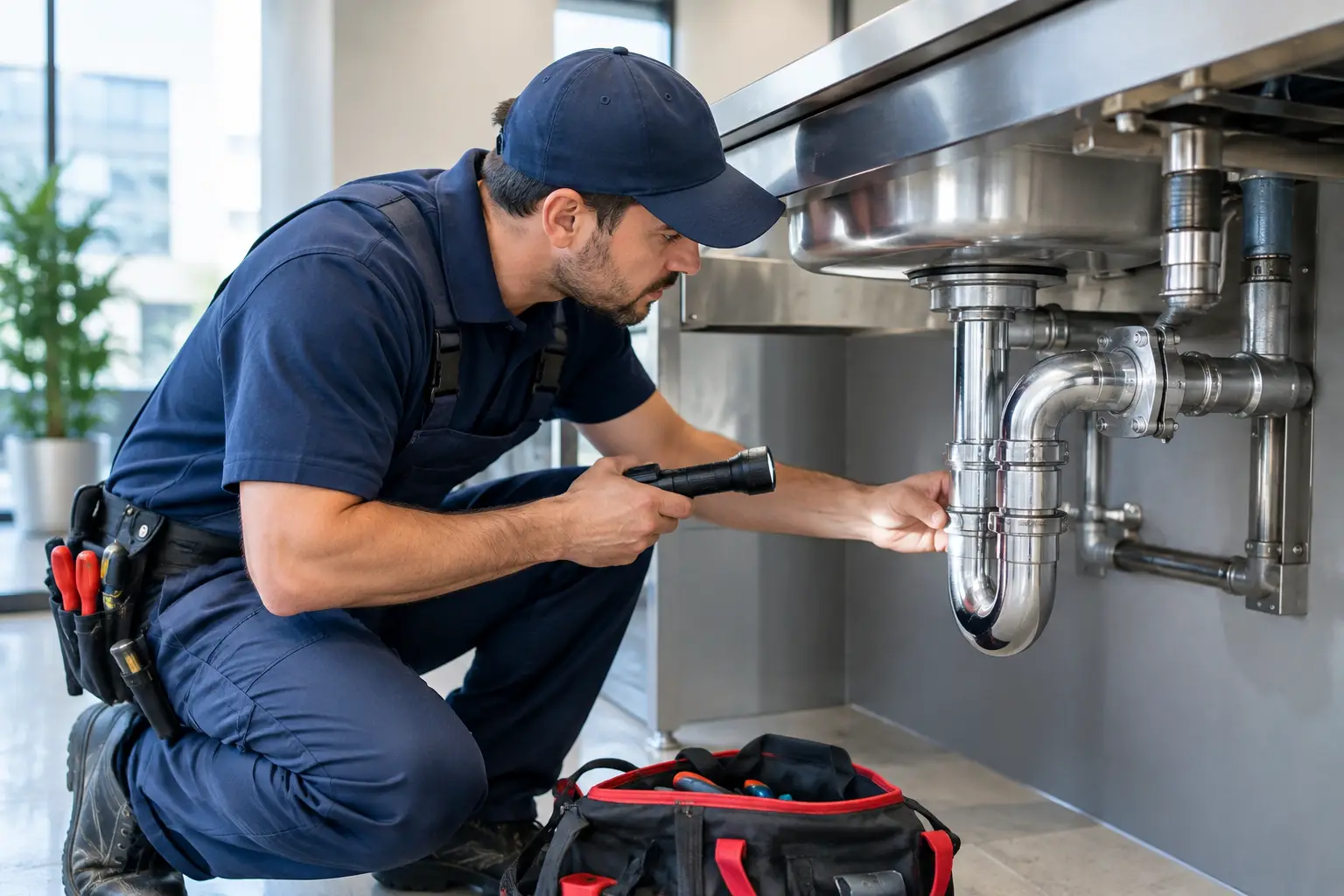
A restroom closed by a backup, water spreading beneath a break-room sink, or a sudden spike in the water bill can disrupt an entire property faster than most managers expect. The top commercial plumbing warning signs are not always dramatic at first. Small changes in drainage, water pressure, odors, and fixture performance often point to a larger issue developing behind walls, below floors, or in a shared sewer line.
For Orange County property managers, business owners, and facility teams, early action protects more than pipes. It helps protect tenants, customers, employees, inventory, finishes, and normal business operations. The right response depends on the building, its plumbing layout, and the source of the problem, but waiting for a minor issue to become visible damage is rarely the lower-cost option.
Top Commercial Plumbing Warning Signs You Should Not Ignore
Recurring drain clogs in more than one fixture
A single slow sink may be caused by soap buildup, food debris, or material caught close to the drain. When several sinks, toilets, floor drains, or showers drain slowly at the same time, the concern is different. The restriction may be farther down the line, where multiple fixtures connect to a branch drain or the main sewer line.
Repeated clogs deserve attention even if a plunger or store-bought cleaner seems to restore flow temporarily. Chemical cleaners can be hard on aging pipes and may not remove the actual obstruction. Grease accumulation, scale, tree root intrusion, damaged pipe sections, and improperly pitched lines can all create recurring drainage trouble.
Restaurants and food-service spaces have their own risk profile because grease can collect quickly in drain lines. Older office buildings, multifamily properties, schools, and retail centers may have aging piping or shared sewer systems that need a more thorough diagnosis. A professional drain inspection can identify the cause instead of repeatedly treating the symptom.
Sewer odors that return after cleaning
A persistent sewage-like odor is more than an unpleasant tenant complaint. It can signal a dry trap, a cracked drain line, a venting issue, or a sewer backup developing below the surface. In commercial settings, odors may appear around floor drains, restrooms, utility rooms, kitchens, or lower-level spaces.
A floor drain that is rarely used can lose the water seal in its trap, allowing odor to travel upward. That may be a simple maintenance issue. However, if adding water to the drain does not solve the problem, or if the odor appears alongside slow drains and gurgling fixtures, the building needs a closer look.
Do not assume an air freshener addresses the source. Odors can affect customer confidence and employee comfort, while concealed sewer issues can worsen without obvious water on the floor.
Gurgling, bubbling, or changing toilet water levels
Toilets should flush cleanly and refill to a consistent level. Gurgling sounds from a toilet, sink, or floor drain often mean air is being forced through the plumbing because water cannot move normally through the system. Bubbling in a toilet when another fixture drains can indicate a blockage in a shared line.
Changing water levels also deserve attention. Low water in a toilet bowl may relate to a venting issue or a fixture problem. Water rising too high after flushing can point to a developing blockage. Neither situation is one to leave for the next maintenance cycle, especially in a high-use restroom.
Water stains, soft walls, or unexplained moisture
A ceiling stain below an upstairs restroom or a soft area near a wall can be the first visible clue of a hidden leak. Commercial leaks are not limited to supply lines. Drain lines, roof drains, water heaters, valves, and appliance connections can all allow water into areas where it does not belong.
Watch for peeling paint, warped baseboards, swollen drywall, loose flooring, damp carpet edges, or mildew-like odors. In a retail, hospitality, or office environment, these signs can quickly become a safety concern and create costly finish repairs. In slab-on-grade buildings, warm spots on the floor, the sound of running water, or unexplained moisture may point to a leak beneath the slab.
The trade-off is straightforward: opening a small access area to locate and repair a leak is generally far less disruptive than allowing water to weaken drywall, damage flooring, or affect the structure over time.
A water bill that rises without a clear reason
Higher water use can be legitimate. Seasonal irrigation, increased occupancy, construction activity, or a new tenant can all change consumption. But a sharp increase with no operational explanation should prompt investigation.
Common sources include running toilets, leaking faucets, failed fill valves, hidden supply-line leaks, irrigation cross-connections, and underground pipe leaks. A toilet that runs intermittently can waste a surprising amount of water without drawing much attention in a busy building.
Compare recent bills with the same period last year when possible. If usage has jumped, document what has changed on the property and arrange for a professional evaluation. Finding a leak early can reduce both water waste and future repair costs.
Low water pressure or pressure that changes throughout the day
Low pressure at one fixture may be limited to a clogged aerator, a failing fixture, or a local valve. Low pressure throughout a suite or building can point to a broader issue such as a supply-line restriction, corroded pipe, pressure regulator failure, or leak.
Pressure that drops when multiple fixtures operate may be especially noticeable in hospitality properties, salons, medical offices, and other businesses where consistent water flow affects daily service. Excessively high pressure is also a problem. It can strain fixtures, valves, appliance hoses, and pipe connections, increasing the likelihood of leaks.
A licensed plumber can test the system and identify whether the solution is a fixture repair, valve adjustment, regulator replacement, pipe repair, or a larger supply-line assessment. The right repair depends on the system, not just the symptom.
Discolored water, sediment, or metallic taste
Brown, yellow, rusty, cloudy, or sediment-filled water deserves prompt review, particularly when it continues after briefly running the tap. Discoloration can result from internal pipe corrosion, sediment movement, water heater deterioration, or work performed on nearby water infrastructure. The cause may be temporary, but it should not be guessed at in a commercial property.
Hot-water-only discoloration often points toward the water heater or its connected lines. Cold-water discoloration throughout the building may involve the incoming supply or older interior piping. Document where the issue occurs, whether it affects hot or cold water, and when it began. Those details help speed up diagnosis.
Frequent fixture repairs and aging pipe materials
A building that needs constant faucet, toilet, valve, or drain repairs may be telling you something about the broader system. Individual fixtures do wear out, particularly in high-traffic restrooms. But repeated failures across multiple areas can indicate water quality concerns, pressure problems, neglected maintenance, or pipes reaching the end of their service life.
Older galvanized steel, cast iron, and certain outdated pipe materials can corrode, narrow internally, crack, or develop recurring drainage issues. Full replacement is not always necessary. In some cases, targeted repairs and planned upgrades make better financial sense. A qualified inspection gives owners and managers the information needed to prioritize work instead of reacting to each new failure.
What to Do When You Notice Commercial Plumbing Problems
Start by recording the location, timing, and visible symptoms. Note whether the problem affects one fixture or several, whether it occurs after heavy use, and whether there are odors, sounds, stains, or changes in the water bill. Clear information helps a plumber diagnose the issue efficiently.
If water is actively reaching electrical equipment, finished spaces, merchandise, or occupied areas, protect people from the affected location and limit water use at nearby fixtures when practical. Building staff should avoid taking apart concealed plumbing or relying on repeated chemical drain treatments, which can make a later repair more difficult.
For properties with multiple tenants or public-facing restrooms, preventive inspections and drain maintenance can be a practical investment. The schedule depends on use. A busy restaurant kitchen needs different attention than a small professional office, and an older multifamily property may need more frequent sewer-line monitoring than a newer retail suite.
Lenora Plumbing provides licensed, bonded, and insured commercial plumbing support for Orange County properties, with clear diagnosis, fair pricing, and repairs built to hold up under daily use. Whether the concern is a recurring clog, suspected leak, failing fixture, or sewer-line issue, addressing the first warning sign gives you more control over the repair and the timing.
A well-maintained plumbing system rarely demands attention. When it starts sending signals, treat them as useful information, not an inconvenience to postpone. A timely inspection can keep a small disruption from becoming the reason a business, tenant, or facility has to pause its day.
Need help with a plumbing problem?
Speak directly with Lenora Plumbing about service for your Orange County home or business.
Call (949) 992-7410