
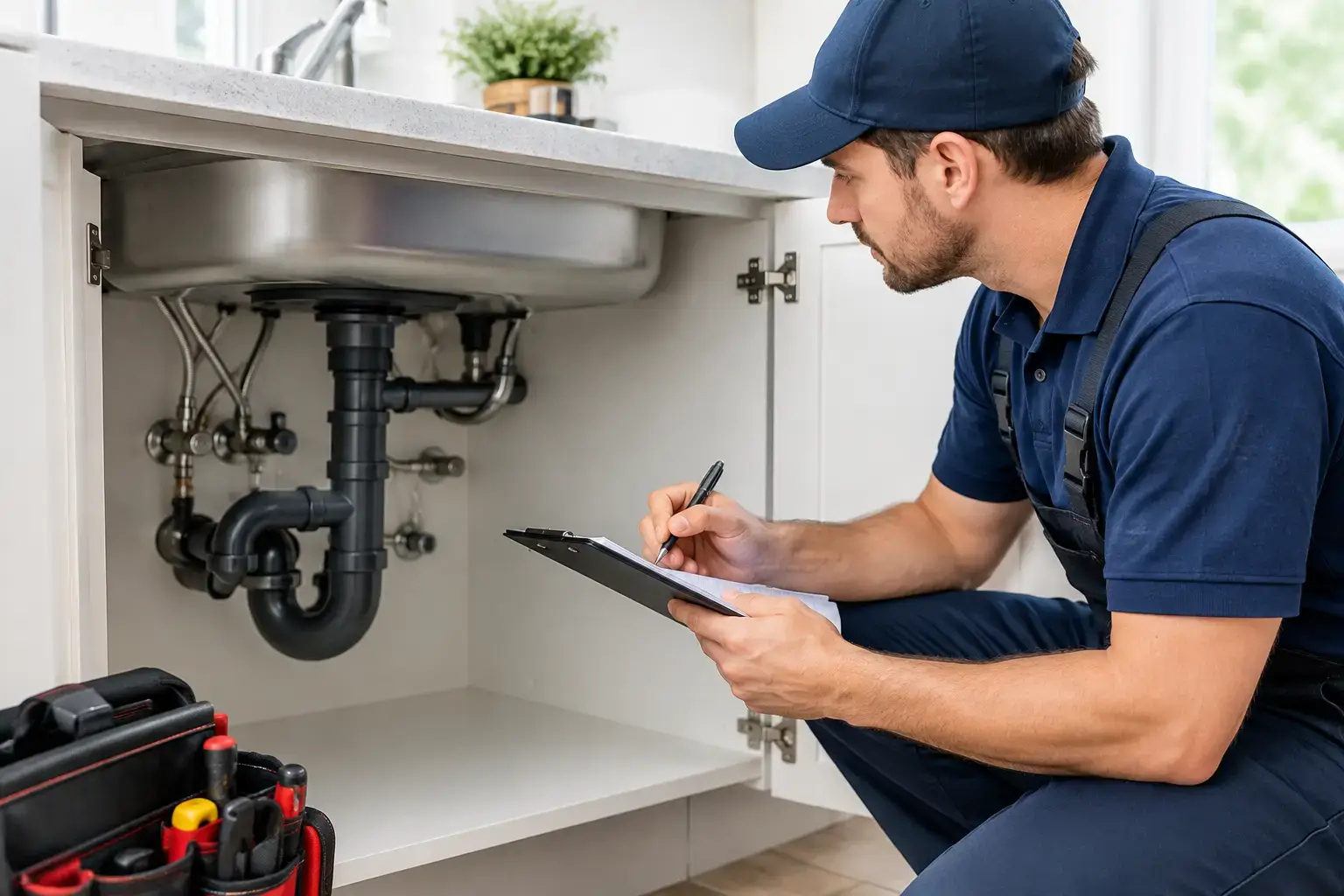
A small stain below a sink, a toilet that refills when no one has used it, or a water bill that rises without explanation can be an early warning, not a minor annoyance. This plumbing inspection checklist helps homeowners, landlords, and property managers spot trouble before it leads to damaged finishes, wasted water, or larger repairs.
You do not need to take apart pipes or handle specialized equipment to perform a useful visual inspection. The goal is to notice changes, document what you find, and call a licensed plumber when a concern involves hidden leaks, sewer lines, gas piping, or repairs beyond a simple adjustment.
Plumbing Inspection Checklist: Start With the Water Supply
Begin where water enters the property. Locate the main water shutoff valve and make sure every responsible adult or building representative knows where it is. It should turn without excessive force and should not show active corrosion, dripping, or a crusty mineral buildup around the valve body.
Check the water meter when all fixtures and appliances are off. If the meter’s leak indicator is moving, or the reading changes over a short period with no water use, there may be a hidden leak. This does not identify the exact source, but it gives you a clear reason to arrange professional diagnosis.
Inside the home, inspect exposed supply lines at sinks, toilets, washing machines, refrigerators with water dispensers, and water heaters. Look for moisture, rust, greenish corrosion on copper, bulging braided hoses, or wet cabinet floors. A supply line can fail without much warning, especially when it is old, kinked, or visibly worn.
Water pressure also deserves attention. Strong pressure may feel convenient, but unusually high pressure can put extra strain on valves, fixtures, appliance hoses, and pipe connections. Low pressure may point to a clogged aerator or showerhead, though it can also signal a broader problem with a pressure regulator, piping, or the incoming water supply. When pressure changes affect multiple fixtures, a professional inspection is the practical next step.
Check Bathrooms One Fixture at a Time
Bathrooms contain many connections in a small area, so they are a common place for slow leaks to start. Turn on each faucet and observe the water flow. Sputtering, weak flow, or water that takes a long time to clear can reveal sediment buildup or a supply issue.
Look below every sink with a flashlight. The drain trap, shutoff valves, supply lines, and faucet base should be dry. Pay attention to swollen cabinet material, discoloration, or a musty smell. These signs can remain after a past leak, but they can also mean moisture is still present behind the cabinet or wall.
Test toilets by flushing each one and listening after the tank refills. A toilet that runs intermittently can waste a surprising amount of water. You can place a few drops of food coloring in the tank, wait without flushing, and check whether color reaches the bowl. If it does, the flapper or another tank component may be leaking.
Inspect the floor around the toilet base as well. Soft flooring, loose tile, staining, or a sewer-like odor should not be ignored. The issue may involve a failed wax ring, loose mounting hardware, or damage below the finished floor. Caulking alone will not solve that type of problem.
In showers and tubs, check for slow drains, cracked grout, loose caulk, and water escaping around doors or curtains. Surface caulk is a maintenance item, but recurring moisture or staining on the ceiling below a bathroom requires a closer look. The source could be the drain, overflow assembly, supply plumbing, or waterproofing behind the wall.
Inspect the Kitchen, Laundry Area, and Water Heater
The kitchen sink sees daily use, which makes it an easy place to overlook small leaks. Run both hot and cold water, then fill and drain the sink while watching the cabinet below. Check the garbage disposal connection, dishwasher drain hose, and the area around the sink rim. A leak from a disposal or drain can stay hidden until the cabinet base begins to deteriorate.
If the refrigerator has an ice maker or water dispenser, inspect its supply line and the floor behind the appliance. These lines are often out of sight for years. A slow leak can damage flooring, baseboards, and nearby cabinets before it becomes obvious.
At the washing machine, look closely at hot and cold supply hoses. Replace hoses that are cracked, corroded, stiff, or bulging. Confirm that the drain hose is secure and that water is not overflowing from the standpipe during a drain cycle. For rental properties and commercial laundry areas, this check is especially worthwhile because frequent use increases wear.
Your water heater needs a visual inspection even if it appears to be working normally. Look for standing water, corrosion at pipe connections, rust around the tank, and moisture at the temperature and pressure relief valve discharge pipe. Make sure the discharge pipe points safely downward and is not capped. Gas water heaters should also be checked for proper venting and any unusual odors. Do not attempt gas-piping repairs yourself.
A popping or rumbling sound may indicate sediment accumulation, particularly in areas with hard water. Flushing a tank can help in some cases, but the right approach depends on the heater’s age, condition, and manufacturer guidance. An older unit with visible corrosion may need a professional assessment rather than routine flushing.
Look for Drain and Sewer Warning Signs
Drain problems are not always a simple clog. Test sinks, tubs, showers, and floor drains to see whether they drain at a normal speed. Note whether water backs up in a different fixture, such as water rising in a bathtub when a washing machine drains. That pattern can point to a blockage farther down the branch line or sewer line.
Odors matter, too. A dry floor drain trap can allow sewer gas odors into a room, and adding water may restore the trap seal. But persistent sewer odors, gurgling drains, or repeated backups need professional attention. These issues can involve venting, damaged drain piping, root intrusion, or a sewer line obstruction.
Outside, check cleanout caps, visible drain connections, and the area around the sewer line route for unusual wet spots, lush patches of grass, or foul odors. None of these signs proves a sewer issue on its own, but together they are worth documenting for a licensed plumber.
Do Not Skip Visible Pipes and Outdoor Fixtures
Walk through garages, crawl spaces, utility closets, and exterior walls where pipes may be visible. Check for corrosion, dripping joints, unsupported pipes, damaged insulation, and stains on framing or drywall. In Southern California, slab leaks can be harder to detect because the affected piping is beneath the foundation. Warm spots on floors, unexplained moisture, the sound of water when fixtures are off, or a sudden increase in water use are all reasons to schedule leak detection.
Test outdoor hose bibs and irrigation connections. A hose bib that drips after being shut off may need a washer, cartridge, or valve repair. Inspect irrigation valves and exposed lines for pooling water. Even a small outdoor leak can raise water costs over time.
When a DIY Check Should End
A homeowner inspection is useful for catching visible problems, but it has limits. Stop and contact a licensed, bonded, and insured plumber if you find signs of a slab leak, sewer backup, gas odor, water heater leakage, persistent moisture inside walls, or repeated drain problems. These issues require the right diagnostic tools and repairs that protect the property rather than temporarily hiding the symptom.
For landlords and facilities teams, keep a dated record of inspections, water meter readings, tenant reports, and repairs. A simple record helps identify recurring problems and supports faster, more accurate service decisions.
Lenora Plumbing brings experienced, practical diagnosis to homes and properties across Orange County. A regular inspection habit cannot prevent every plumbing failure, but it can give you time to act while the repair is still smaller, clearer, and easier to manage.
Need help with a plumbing problem?
Speak directly with Lenora Plumbing about service for your Orange County home or business.
Call (949) 992-7410