
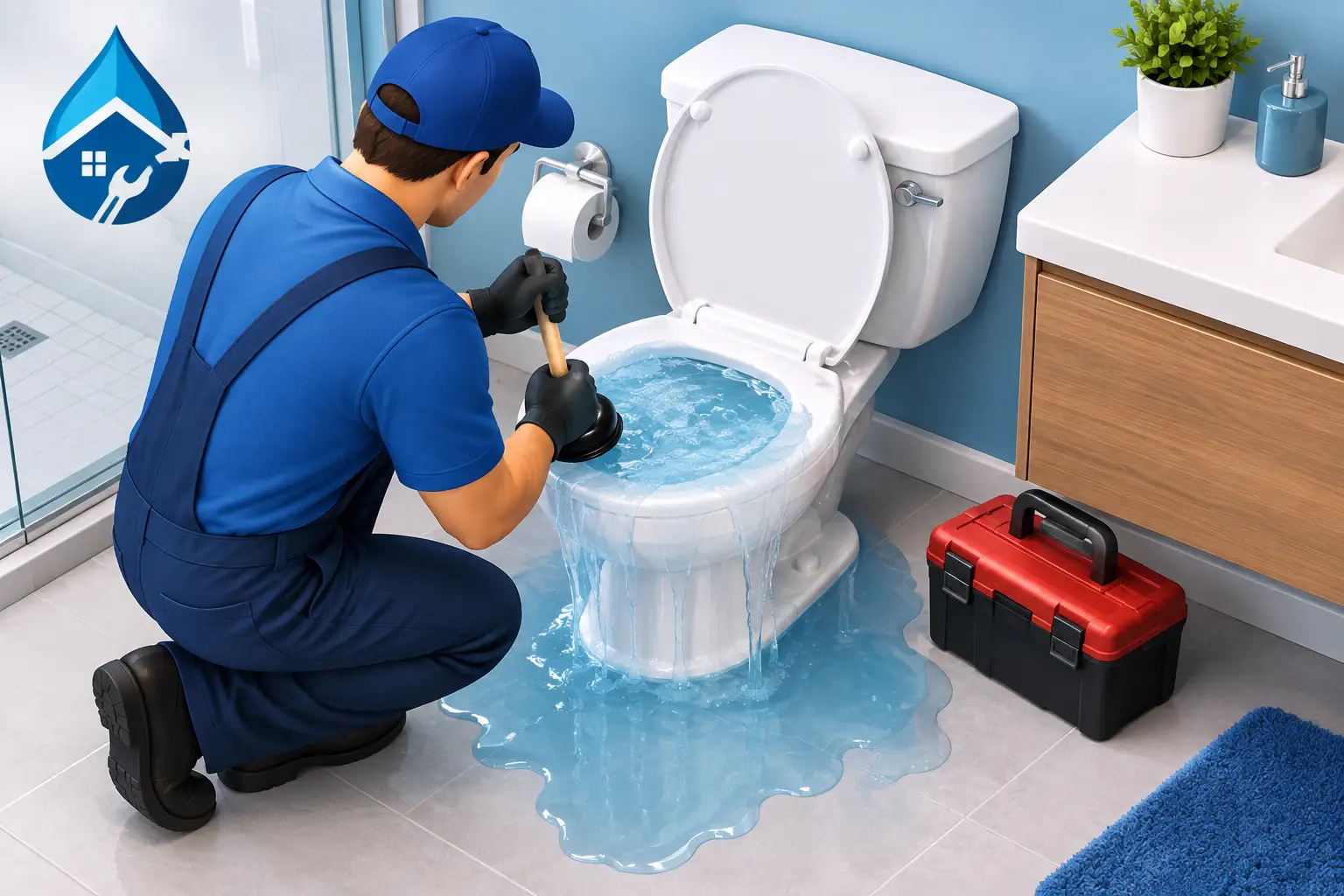
A toilet bowl rising toward the rim gives you only a few seconds to act. Knowing how to stop toilet overflow can keep contaminated water off your flooring, protect the room below, and give you time to identify whether you are dealing with a simple clog or a larger drain problem.
The priority is not flushing again to see if it clears. Stop the incoming water first, contain what has spilled, and then decide whether a careful DIY attempt makes sense. A toilet that repeatedly backs up, overflows without being flushed, or causes water to rise in another fixture needs professional diagnosis rather than more plunging.
How to Stop Toilet Overflow Immediately
Start by removing the toilet tank lid. Set it down carefully on a towel or solid floor surface. Porcelain lids crack easily, and a replacement is rarely convenient.
Inside the tank, find the rubber flapper at the bottom. Push it closed if it is still open. The flapper controls the water flowing from the tank into the bowl, so closing it can stop the bowl from receiving more water while you take the next step.
Then turn the shutoff valve clockwise. It is usually located on the wall or floor behind the toilet, connected to the supply line. Turn it until it stops, but do not force a stiff or corroded valve. This shuts off the fresh water supply feeding the tank.
If the bowl is filling quickly and you cannot reach the valve in time, lift the float inside the tank. Depending on your toilet, it may be a floating cup on a vertical shaft or a ball attached to an arm. Lifting it tells the fill valve to stop sending water into the tank. Hold it up until the water stops, then close the shutoff valve.
Do not press the flush handle again. Another flush can turn a contained problem into water damage across the bathroom.
Contain the Water Before You Clear the Clog
Put on rubber gloves if you have them. Use old towels, rags, or absorbent paper around the toilet base to keep water from spreading under cabinets, into hallways, or through flooring seams. If the water has reached a bathroom outlet, extension cord, or powered appliance, avoid that area until power can be safely isolated.
Use a bucket or disposable container to remove some water from an overly full bowl. Leave enough room to work with a plunger without splashing. Never use a household vacuum to collect toilet water. A wet/dry vacuum should only be used when it is designed for liquid pickup and can be disinfected afterward.
After the immediate mess is controlled, clean hard surfaces with an appropriate disinfectant. Wash towels separately using hot water, and discard items that cannot be adequately cleaned. Water from a toilet overflow may contain bacteria even when the bowl looked relatively clean before the backup.
Use the Right Plunger for a Toilet Clog
A flat-bottomed sink plunger is not the best tool for a toilet. Use a flange plunger, which has a soft extension that fits into the toilet drain opening and creates a tighter seal.
Place the plunger in the bowl at an angle so the cup fills with water instead of air. Press down gently first to establish the seal, then make firm, controlled strokes for 15 to 20 seconds. Avoid frantic, forceful plunging that can splash dirty water or damage a loose wax seal at the base of an older toilet.
Lift the plunger slowly after a few rounds. If the bowl drains normally, wait for the tank to refill, then perform one test flush while watching the water level closely. Keep the shutoff valve accessible during this test. If the water begins rising again, stop the test by closing the flapper or shutting off the valve.
A plunger works best on a nearby blockage caused by excess toilet paper, wipes, or waste. It may not solve a clog farther down the branch line or in the main sewer line.
Try a Toilet Auger for a Stubborn Blockage
If plunging does not restore normal drainage, a toilet auger can reach deeper into the toilet trap. This tool has a protective sleeve designed to reduce the chance of scratching porcelain.
Feed the cable gently through the bowl opening, crank the handle when you reach resistance, and pull it back slowly. You may break apart the obstruction or retrieve an item that was accidentally flushed. Children’s toys, toothbrushes, small containers, and hygiene products are common causes of stubborn toilet clogs.
Do not force a standard drain snake through a toilet. Its exposed metal cable can damage the bowl, and it may not navigate the toilet trap correctly. Avoid chemical drain cleaners as well. They often fail to clear dense toilet clogs, can damage plumbing components, and create a hazardous situation for anyone working on the line afterward.
Know When the Problem Is Bigger Than One Toilet
A single overflow after an obvious paper clog may be manageable. The situation changes when other fixtures are involved. If flushing one toilet makes water rise in a shower, tub, floor drain, or nearby sink, the blockage may be farther down the drain system.
Watch for slow drains throughout the house, gurgling sounds from toilets or tubs, sewage odors, or repeated clogs in the same bathroom. These signs can point to a blocked sewer line, root intrusion, a damaged pipe, or a drain line with poor slope. In those cases, continued flushing and plunging can push wastewater back into the home.
Homes with older plumbing may also have a narrowed drain line caused by scale buildup or deteriorating pipe material. For landlords and property managers, repeated toilet overflows in the same unit should be documented and inspected. The visible overflow may be the symptom, not the actual failure.
What Not to Flush Again
Toilets are designed for human waste and reasonable amounts of toilet paper. Products labeled “flushable” can still snag inside bends, combine with grease or hair farther down the line, and create difficult blockages.
Keep wipes, paper towels, facial tissues, cotton swabs, dental floss, feminine hygiene products, diapers, and cat litter out of the toilet. Even small objects can lodge in the trap and catch debris until the toilet stops draining. Teaching children what belongs in the toilet prevents many avoidable service calls and water-damage repairs.
If a household member has flushed an object and the toilet is now backing up, do not keep flushing in hopes that it will move through. An auger or professional inspection is a safer next step.
When to Call a Licensed Plumber
Call a licensed plumber when the toilet will not clear after careful plunging, the bowl overflows repeatedly, wastewater appears in other drains, or you suspect an object is stuck in the toilet. You should also arrange an inspection if water is leaking from the toilet base after the clog is cleared. That can indicate a failed wax ring or a shifted toilet, and it can damage the subfloor over time.
A qualified plumber can determine whether the obstruction is in the toilet, the bathroom drain, or the main sewer line. Proper equipment can clear the line without guessing, while a camera inspection may reveal roots, broken piping, or recurring buildup that needs a lasting repair. For Orange County homeowners and property managers, Lenora Plumbing provides licensed, bonded, and insured plumbing work with clear recommendations and fair pricing.
Once the water has stopped, resist the urge to treat the incident as finished just because the bowl finally drains. Dry the area thoroughly, watch the next few flushes, and pay attention to recurring slow drainage. A small warning handled early is far easier on your home, your flooring, and your peace of mind than a second overflow.
Need help with a plumbing problem?
Speak directly with Lenora Plumbing about service for your Orange County home or business.
Call (949) 992-7410