
A kitchen sink that drains slowly after every meal usually is not dealing with a mystery clog. It is often grease. Learning how to unclog a grease drain can restore normal flow when the blockage is close to the sink, but the wrong fix can push the problem farther down the line or damage your pipes.
Grease does not stay liquid once it leaves a hot pan. As it moves through cooler drainpipes, it thickens and sticks to pipe walls. Food scraps, coffee grounds, soap residue, and debris then collect on that sticky layer. Over time, the opening inside the pipe gets smaller until water begins pooling in the sink.
The good news is that many minor kitchen grease clogs respond to careful cleaning. The key is to start gently, use methods that fit your plumbing system, and know when a repeat backup points to a deeper drain issue.
How to unclog a grease drain without harming pipes
Before using any cleaner, remove standing water from the sink with a cup or small container. Put a bucket under the cabinet as a precaution, especially if the sink has been backing up. Never combine drain products or use a chemical cleaner after trying another chemical. Mixed products can create dangerous fumes or heat.
Start by removing the sink stopper and clearing visible debris around the drain opening. If you have a double-bowl sink, plug the second drain opening before plunging so the pressure stays focused on the clogged side.
Try hot water and dish soap first
For a light grease buildup, add a generous squirt of grease-cutting dish soap to the drain. Follow it with hot tap water for several minutes. Hot tap water is usually a safer first choice than a large pot of boiling water, particularly in homes with older plastic drain components or PVC piping.
The soap helps break up the oily film while the hot water carries loosened material along the pipe. If the water begins draining faster, continue flushing with hot tap water for another minute or two. This method is best for slow drains, not a sink that is completely full and unable to move water.
Use a sink plunger correctly
A flat-bottom sink plunger can loosen a soft grease clog near the trap. Add enough water to cover the rubber cup, seal the overflow opening if your sink has one, and make 15 to 20 firm plunges. Keep the cup flat against the drain rather than pumping at an angle.
Check the sink after each set. If it drains, run hot water and dish soap to clear the remaining residue. If plunging brings up dark sludge or food particles, clean those out rather than washing them back into the drain.
Clean the P-trap when the clog is close
The curved pipe beneath the sink, called the P-trap, catches water to block sewer gases. It is also a common place for kitchen grease and food debris to accumulate. If hot water and plunging do not help, cleaning the trap may solve the problem.
Turn off the garbage disposal at the breaker if your sink has one. Place a bucket and towels under the trap, then carefully loosen the slip nuts by hand. Pour the contents into the bucket and clean the trap with a brush. Check the short horizontal pipe leading into the wall as well, since grease often collects there.
Reassemble the connections snugly but do not overtighten them. Run water slowly at first and inspect for drips. If the trap is clean but water still will not drain, the blockage is likely farther inside the branch drain.
Use a hand auger for a deeper clog
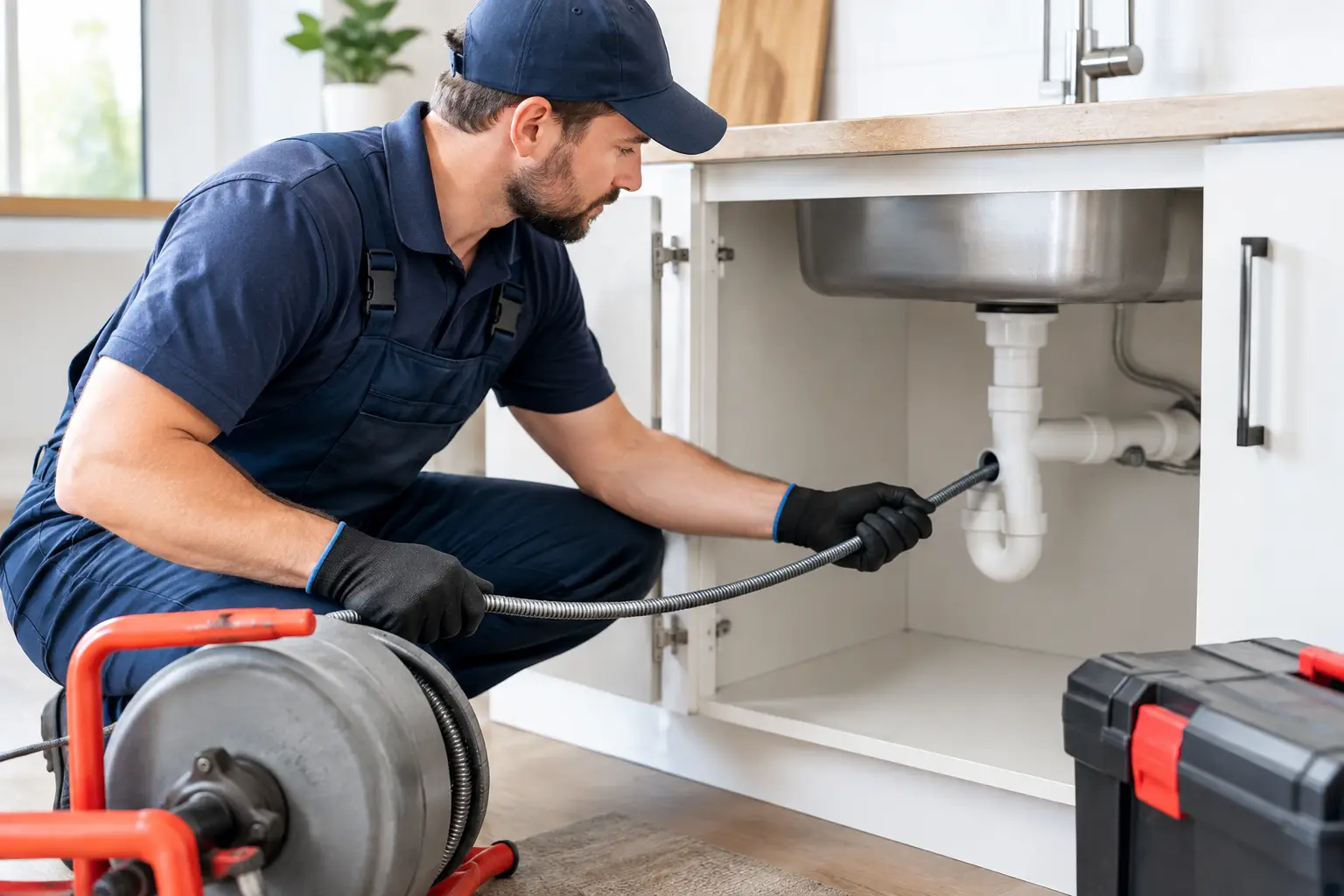
A hand-crank drain auger, sometimes called a drain snake, can reach beyond the trap and break up a localized blockage. Feed the cable gently into the pipe after removing the P-trap. Turn the handle as you advance it, and do not force the cable if it stops abruptly.
Pull the cable back slowly, clean it, and repeat if needed. Then reinstall the trap and flush the line with hot tap water. A hand auger can be effective, but aggressive use can damage older pipes, scratch fixtures, or leave a cable stuck in the line. Stop if you meet hard resistance or the cable will not advance.
What not to pour down a grease-clogged drain
A clogged grease drain is tempting to attack with whatever is under the sink. Some common home remedies are unreliable, and others create a bigger repair later.
Avoid pouring cooking oil, bacon grease, butter, pan drippings, mayonnaise, salad dressing, or creamy sauces into the sink, even if you chase them with hot water. Small amounts build up over time. Let grease cool in a can or disposable container, then place it in the trash.
Chemical drain openers are another poor choice for recurring grease clogs. Strong caustic products can sit inside a blocked pipe, generate heat, weaken aging plumbing connections, and make later service more hazardous. They may create a narrow opening through the buildup without fully clearing the drain, so the clog returns quickly.
Baking soda and vinegar are generally less risky, but they are not a dependable solution for thick grease. The fizzing action can help freshen a drain, yet it does not replace physical cleaning or professional drain equipment when grease has hardened inside the line.
Garbage disposals need special attention. A disposal grinds food but does not eliminate grease. Fibrous scraps, rice, pasta, coffee grounds, eggshells, and large amounts of food can combine with grease and create stubborn clogs in the disposal outlet or drain trap.
When a grease clog needs professional drain cleaning
A one-time slow sink may be manageable at home. Repeated clogs are different. They often mean grease has coated a longer section of pipe, there is a partial obstruction farther down the line, or the pipe has a slope or condition issue that allows waste to settle.
Schedule professional help if the sink backs up again within days or weeks, if more than one fixture drains slowly, or if water rises in another sink when the dishwasher runs. Gurgling sounds, unpleasant drain odors, cabinet leaks, and water backing up from a cleanout are also signs that the problem may extend beyond the kitchen trap.
For restaurants, schools, hospitality properties, and other commercial kitchens, recurring grease drainage problems may involve a grease interceptor, a shared branch line, or maintenance gaps in the grease-management system. These situations require a diagnosis that considers the full plumbing layout, not simply the nearest sink.
Licensed plumbers can use the right equipment to clear the line, inspect the cause of repeated blockages, and recommend repairs when needed. For Orange County homeowners and property managers, Lenora Plumbing provides practical drain diagnosis and cleaning with clear communication about what the issue requires.
Keep grease from returning to the drain
Prevention is less complicated than clearing a hardened clog. Wipe pans, plates, and utensils with a paper towel before washing them. Collect cooled grease in a container instead of rinsing it away, and use sink strainers to keep food scraps from entering the drain.
Run cold water when operating a garbage disposal, then keep it running briefly after the grinding stops. Cold water helps keep fats more solid while they move through the disposal, but it is still not permission to send grease into the plumbing. Periodically flushing the kitchen drain with hot tap water and dish soap can help remove fresh residue before it becomes a restriction.
If your kitchen sink keeps slowing down despite good habits, treat that pattern as useful information. A proper inspection now can protect cabinets, floors, and the pipes hidden behind your walls from a much more disruptive backup later.
Need help with a plumbing problem?
Speak directly with Lenora Plumbing about service for your Orange County home or business.
Call (949) 992-7410