
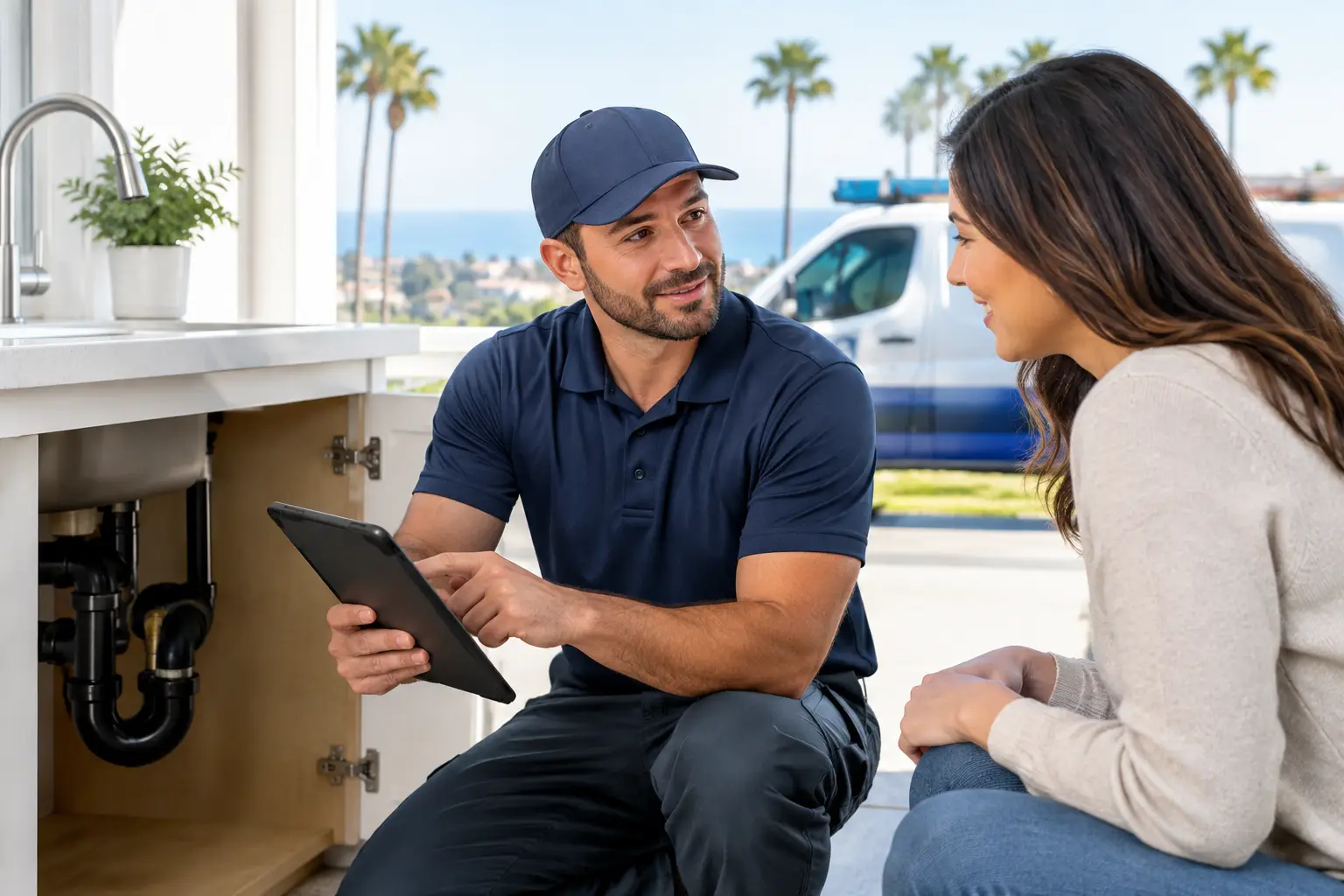
A five-star score can be reassuring when a toilet will not stop running, a drain keeps backing up, or a water bill suddenly climbs. But plumber ratings are most useful when you look beyond the average number. The details behind the rating can tell you whether a company communicates clearly, diagnoses the actual problem, respects the property, and stands behind its work.
For Orange County homeowners, landlords, and property managers, choosing a plumber is not simply about finding the highest score on a search page. Plumbing work can affect walls, flooring, foundations, tenant comfort, business operations, and water costs. A thoughtful review process helps you choose a licensed professional who is prepared to handle the specific work your property needs.
What Plumber Ratings Can Tell You
Ratings provide a quick view of a company’s public reputation. A strong overall score, especially when supported by a meaningful number of recent reviews, may indicate that customers consistently had a good experience. Still, no rating tells the complete story by itself.
A customer who needed a simple faucet repair may rate a company highly for punctuality and price. That is valuable feedback, but it does not necessarily show how the same company handles a sewer line issue, slab leak, gas line repair, or commercial plumbing project. Look for reviews that describe work similar to yours.
The most helpful reviews explain what happened before, during, and after the service visit. They might mention whether the technician arrived within the scheduled window, explained the diagnosis in plain language, provided pricing before work began, protected the work area, and completed a durable repair. Specific details carry more weight than a short comment that only says good job.
Look Past the Star Average
A perfect score from a handful of reviews can be less informative than a slightly lower score supported by years of detailed feedback. Review volume matters, but recency matters too. A company should be evaluated on how it serves customers now, not only on experiences from several years ago.
Read a cross-section of reviews rather than stopping with the first few. Start with the newest comments, then scan reviews from different seasons and different types of jobs. Drain problems, water heater concerns, pipe leaks, remodel work, and recurring sewer issues each reveal different parts of a contractor’s skill set.
Pay close attention to patterns. One unhappy customer does not automatically mean a company is unreliable. Plumbing work can uncover hidden damage, aging pipes, code issues, or conditions that were not visible during an initial inspection. The better question is how the company responded. Did it communicate professionally? Did it explain the options? Did it take reasonable responsibility when something required follow-up?
A dependable contractor will not promise that every repair is simple. They should be honest about what they can see, what may require further testing, and how the cost could change if additional damage is found. That kind of clarity is often more meaningful than a flawless rating.
Review Details That Matter Most
When comparing plumbing companies, look for comments about diagnosis, workmanship, pricing, cleanliness, and communication. These are the areas that tend to affect the value of the job long after the service call is over.
Diagnosis matters because the visible symptom is not always the source of the problem. A ceiling stain may come from a leaking supply line, a drain connection, a roof-related issue, or plumbing in an upstairs bathroom. A recurring clog may be caused by buildup near a fixture, a damaged pipe, root intrusion, or a deeper sewer line concern. Ratings that mention careful inspection and a clear explanation can be especially useful.
Workmanship matters because a low-cost repair that fails quickly is not a bargain. Reviews that describe lasting results, orderly job sites, proper testing, and professional installation are stronger signals than comments focused only on speed.
Pricing feedback also deserves context. Fair pricing does not always mean the lowest quoted number. It means the customer understood the scope of work, received a reasonable explanation of costs, and did not feel pressured or surprised. Comparing estimates is smart when time allows, but compare the proposed repair, materials, warranty terms, and cleanup – not just the total at the bottom.
Verify What Ratings Cannot Prove
Online feedback is useful, but it should not replace basic credential checks. A review cannot confirm whether a contractor is properly licensed for the work, insured, bonded, or qualified to work on specialized plumbing systems.
In California, homeowners and commercial property decision-makers should verify an active contractor license and make sure the license classification fits the job. For plumbing work, a C-36 plumbing contractor license is an important credential. Ask the company directly about licensing, insurance, and the scope of work it will perform.
This step is particularly important for pipe replacement, gas line work, sewer repairs, remodeling, and projects involving permits or inspections. These jobs can involve building codes, safety requirements, and coordination with other trades. A qualified contractor should be comfortable discussing the process without using technical language to confuse you.
For larger projects, ask who will perform the work and who will be responsible for the final result. A local family-owned company with experienced technicians may offer a more direct line of accountability than a service provider that sends work through several layers of subcontractors. It depends on the project, but knowing who owns the job helps prevent confusion later.
How to Compare Plumber Ratings Fairly
Use the same standards for every company you consider. First, review the overall rating and the number of reviews. Next, read recent comments about jobs similar to yours. Then verify credentials and request a clear estimate or service explanation.
If you are a landlord or property manager, look for evidence that the contractor can communicate with multiple parties, document work clearly, and minimize disruption to residents. If you manage a restaurant, school, office, or hospitality property, you may need a plumber with the staffing and experience to address larger systems and coordinate around daily operations.
Homeowners should also think about the age and history of the property. Older Orange County homes may have aging supply lines, corroded piping, drain issues, or prior repairs that complicate a straightforward fix. The right plumber will take the property’s condition seriously instead of offering a one-size-fits-all answer.
Do not be afraid to ask a few direct questions before scheduling work. You can ask whether the company has handled similar repairs, what the diagnostic process involves, whether pricing will be reviewed before repairs begin, and how the completed work will be tested. A professional response should be clear, patient, and practical.
Watch for Rating Red Flags
Ratings can be manipulated or misleading, so use common sense. Be cautious when reviews are unusually vague, appear in a sudden cluster with nearly identical wording, or focus on discounts without describing the service. Those comments may not tell you much about the company’s actual plumbing ability.
It is also worth reviewing lower-rated comments. Look for repeated concerns about missed appointments, unclear charges, unfinished work, poor cleanup, or difficulty reaching the company afterward. A single complaint may reflect a unique situation. Repeated complaints about the same issue are more meaningful.
Be careful with companies that make broad promises but offer little information about credentials, services, or the repair process. Plumbing problems can be stressful, and some customers feel pressure to approve work quickly. A trusted partner should make space for informed decisions, particularly when the repair is extensive or the diagnosis is uncertain.
Choose Accountability Over a Number
The best plumbing decision is rarely based on one score alone. Strong plumber ratings should support what you learn from direct communication, verified credentials, detailed service information, and a clear estimate. When those pieces line up, you have a better reason to feel confident about inviting a contractor into your home or business.
Lenora Plumbing approaches every job with that level of accountability: licensed workmanship, fair prices, clear communication, and respect for the property behind the repair. Before choosing any plumbing contractor, take a few extra minutes to read the details, ask practical questions, and select the team that treats your problem like it deserves a lasting solution.
Need help with a plumbing problem?
Speak directly with Lenora Plumbing about service for your Orange County home or business.
Call (949) 992-7410