
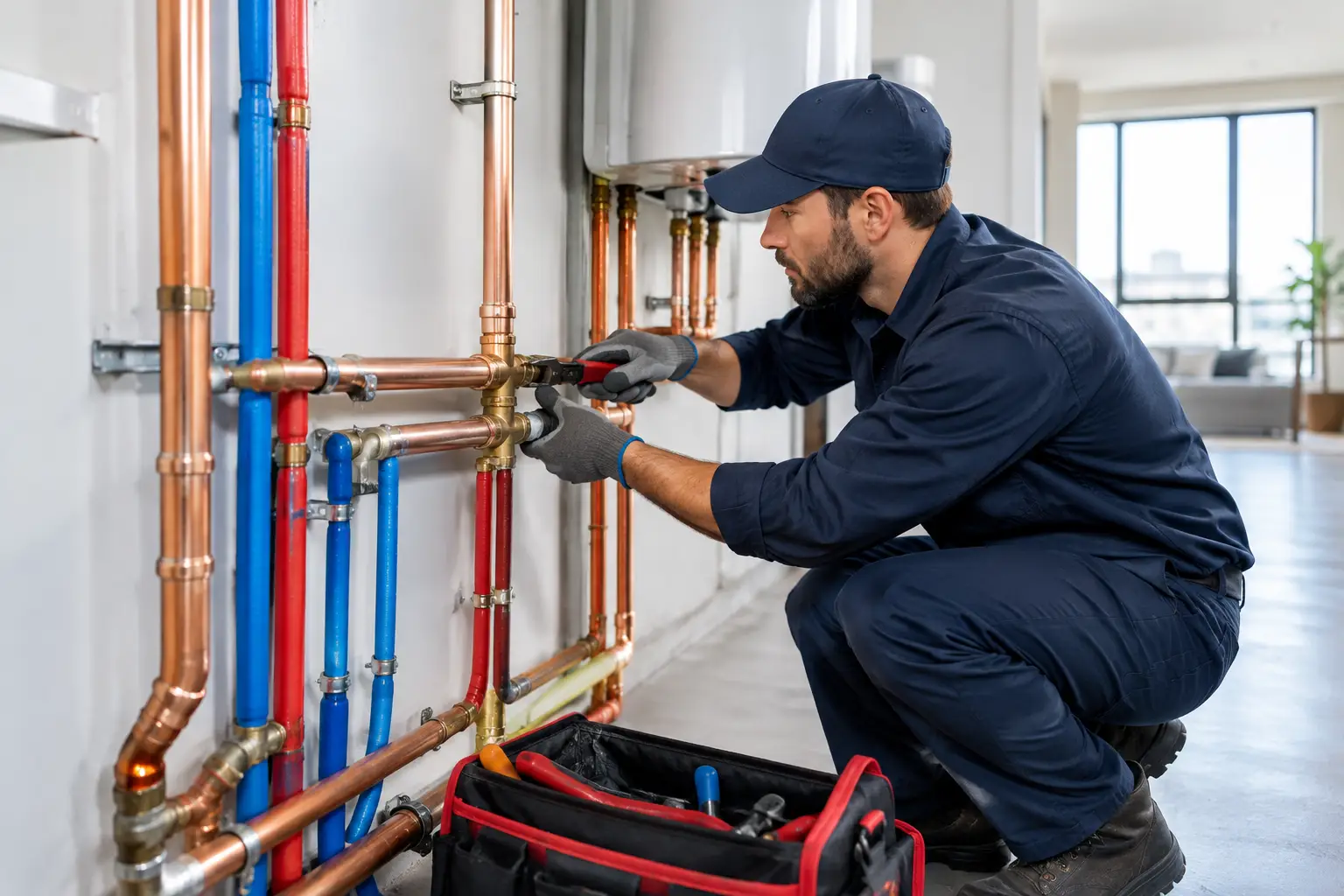
A useful apartment repiping example starts with a problem many property owners recognize: recurring pinhole leaks in an older building, rising water bills, and tenants reporting rusty water or weak pressure at different times of day. Replacing one damaged section may stop the immediate leak, but it does not solve a failing pipe system. A planned repipe addresses the source of repeated repairs while giving owners a clearer path for scheduling, budgeting, and protecting occupied units.
For a 12-unit Orange County apartment building built in the 1970s, a repiping project can look very different from a single-family home repipe. There are multiple kitchens, bathrooms, risers, shutoff points, common areas, tenant schedules, and restoration needs. The right scope depends on the building layout, pipe material, access conditions, and the condition of both water and drain lines.
What This Apartment Repiping Example Looks Like
Consider a two-story, 12-unit building with six apartments upstairs and six downstairs. Each unit has one bathroom and one kitchen. The original galvanized steel water lines have begun to corrode internally, reducing water flow and causing discolored water. Over the last 18 months, the owner has paid for several leak repairs in walls and ceilings.
A licensed plumber begins with an on-site assessment. This includes checking visible piping, evaluating water pressure, identifying prior leak locations, reviewing the building’s shutoff configuration, and tracing the most practical routes for new supply lines. If there are signs of slab leaks or hidden moisture, the inspection may also include leak detection work before the final scope is set.
In this example, the main water service is still in acceptable condition, but the interior hot and cold water distribution lines need replacement. The proposed work includes new piping from the main distribution point to each apartment, new shutoff valves where appropriate, connections to fixtures, pressure testing, and coordinated access to units.
The goal is not to replace pipe simply because it is old. It is to replace the sections that have reached the point where repairs are becoming repetitive, disruptive, and more expensive than a planned solution.
Why Repeated Spot Repairs Can Cost More
A single pinhole leak may seem minor until it damages drywall, flooring, cabinets, insulation, or a neighboring unit below. In an apartment property, one pipe failure can create costs beyond the plumbing repair itself. There may be restoration work, tenant coordination, lost use of a room, and time spent managing the issue.
Spot repair still makes sense when a pipe failure is isolated, the remaining system is in good condition, and there is no pattern of corrosion. It becomes less practical when leaks appear in separate units, water pressure has declined across the property, or the pipe material is known to have a limited service life.
For the 12-unit example, the owner had already paid for four separate leak repairs. Each repair required opening finished walls or ceilings, then arranging patching and painting. A repipe required a larger upfront investment, but it reduced the likelihood of continuing damage from aging supply lines.
Choosing the Right Pipe Material
For interior water supply repiping, PEX and copper are common options. Neither is automatically right for every apartment building.
PEX is flexible, which can reduce the number of fittings and allow installers to route lines through walls and ceilings with less opening in some layouts. It is also resistant to corrosion. For properties where access is tight and the new lines need to be routed around existing framing, PEX can be a practical choice.
Copper remains a proven material and may be preferred for specific building conditions, owner preferences, or project requirements. It is rigid, durable, and familiar to many property owners and maintenance teams. However, copper installation can involve more fittings and labor depending on the layout.
The best recommendation should account for local code requirements, water conditions, available access, the building’s existing plumbing design, and the owner’s long-term maintenance plan. A professional estimate should clearly identify the proposed material, pipe sizing, fixture connections, and any work excluded from the base price.
Planning Work Around Occupied Units
Tenant communication is one of the most important parts of an apartment repiping project. Residents need clear notice of when plumbers will need access, how long water will be shut off, which areas may be affected, and what restoration work will follow.
In this example, work is scheduled in phases rather than opening every unit at once. The crew begins with two or three units in the same stack, completes the new supply lines and connections, tests the work, then moves to the next group. This approach helps keep the project organized and limits disruption across the property.
A typical unit may need access to the kitchen, bathroom, utility closet, and areas where piping runs behind walls or ceilings. Furniture may need to be moved away from work areas, and the crew should use reasonable protection for floors and nearby surfaces. Water shutoffs are coordinated so residents are not left guessing when service will be restored.
For property managers, a written schedule is especially helpful. It should identify unit access dates, expected water interruptions, contact information for the project representative, and instructions for tenants who cannot be present during the scheduled window.
Installation and Testing Steps
Once the route and material are approved, the installation begins with controlled access openings. These may be behind bathroom fixtures, in closets, under sinks, or in selected ceiling areas. The objective is to create enough access for quality workmanship while avoiding unnecessary demolition.
Old water lines are disconnected or abandoned in place when removal would require excessive demolition and local requirements allow it. New hot and cold lines are installed, supported correctly, and routed to serve each fixture. New shutoff valves may be added to make future maintenance easier at individual units or fixture groups.
Before walls are closed, the new piping is pressure tested. This step matters. A proper test helps verify that the system holds pressure and that connections are secure before drywall and finishes conceal the work. Fixtures are then checked for operation, pressure balance, and leaks.
In a well-managed project, the plumbing crew also labels key shutoffs and explains the new system to the owner or property manager. Knowing which valve controls a unit, riser, or fixture area can save time during future maintenance.
Wall Repair, Paint, and Restoration Expectations
Repiping is not only a pipe project. It is also an access and restoration project. Owners should ask upfront who is responsible for drywall repair, texture matching, painting, tile replacement, cabinet work, and cleaning after plumbing access is complete.
Some plumbing contractors include basic wall patching, while painting and finish matching may be handled separately. In properties with older textures, custom paint colors, wallpaper, or tile, matching existing finishes can take additional planning. A clear scope prevents misunderstandings after the piping work is done.
For this apartment repiping example, the plumbing estimate separates pipe installation and testing from final paint work. The owner can then decide whether to use an in-house maintenance team, a restoration contractor, or a single provider for coordinated repairs.
What Affects Apartment Repiping Cost?
There is no honest one-price answer for apartment repiping because the scope can vary widely. Unit count is only one factor. A six-unit building with accessible crawlspace piping may be simpler than a four-unit building with pipes buried in slabs or concealed behind extensive tile.
Cost is influenced by the number of kitchens and bathrooms, building stories, pipe material, access difficulty, required permits, wall restoration, main line upgrades, and whether the project includes drain or sewer piping. Occupancy also matters. Phased work in occupied apartments often requires more coordination than work in vacant units.
The most useful estimate is detailed enough to show what is included. It should explain the affected pipes, proposed material, number of fixture connections, testing process, permit responsibilities, restoration limits, and expected project schedule. Fair prices matter, but clear scope matters just as much when comparing bids.
When to Start the Conversation
Property owners do not need to wait for extensive damage to ask whether repiping is appropriate. Repeated leaks, rust-colored water, low pressure, corroded galvanized pipe, unexplained water use, and frequent tenant complaints are all reasons to arrange a professional evaluation.
Lenora Plumbing can help apartment owners and property managers assess the condition of aging water lines, explain practical repair options, and provide licensed, insured workmanship for a project built around the property’s needs. The most helpful next step is a thorough inspection that turns recurring plumbing problems into a clear, manageable plan before another small leak becomes a larger property repair.
Need help with a plumbing problem?
Speak directly with Lenora Plumbing about service for your Orange County home or business.
Call (949) 992-7410