
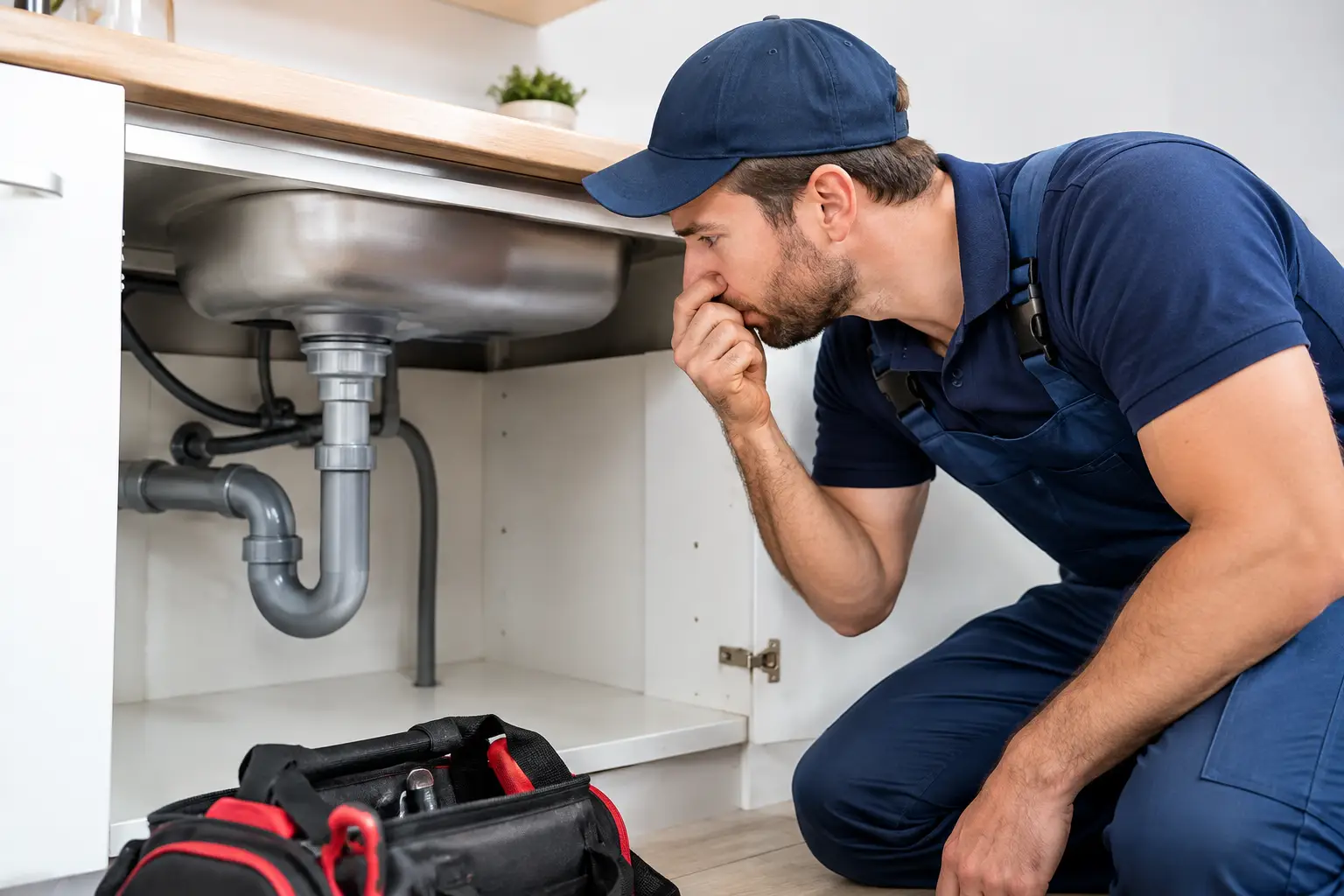
A drain odor can make a clean kitchen, bathroom, or laundry room feel unpleasant fast. If you are asking, why does my drain smell, the answer is usually not the drain itself. The odor often comes from a dry trap, buildup inside the pipe, a venting issue, or a sewer-line problem that needs a closer look.
The good news is that some causes are simple to correct. Others are warning signs that should not be ignored, especially if the smell is persistent, spreads through the home, or comes with slow drains and gurgling sounds.
Why Does My Drain Smell?
Plumbing drains are designed to carry wastewater away while keeping sewer gases out of your living space. Each fixture drain has a curved section of pipe called a P-trap. It holds water, creating a seal between your home and the sewer system.
When that seal is missing, compromised, or overwhelmed by buildup, odors can travel back through the drain opening. The smell may be musty, sour, rotten, or similar to sewage. The type of odor and the fixture involved can help narrow down the cause.
A dry P-trap is letting sewer gas through
A dry P-trap is one of the most common reasons for a smelly drain. This often happens in guest bathrooms, unused showers, floor drains, laundry sinks, or rarely used utility rooms. Water in the trap can slowly evaporate, leaving an open path for odors to enter the room.
Run water into the drain for 30 to 60 seconds. For a floor drain or other fixture that goes unused for long periods, adding a small amount of mineral oil after the water can slow evaporation. If the smell returns soon after you refill the trap, there may be a leak, venting concern, or another issue that requires professional diagnosis.
Organic buildup inside the drain
Bathroom sinks collect toothpaste, soap residue, hair, skin oils, and shaving products. Kitchen sinks collect food particles, grease, and dish soap residue. Over time, bacteria feed on this material and can create a sour or rotten odor.
This type of smell is often strongest right at the drain opening. You may also notice water draining more slowly than usual. A surface cleaning alone may not remove the buildup farther down the pipe or around the sink overflow opening.
For a bathroom sink, remove visible debris from the stopper and clean it thoroughly. Then use hot tap water and a small amount of dish soap to rinse the drain. Avoid repeatedly pouring harsh chemical drain cleaners into the plumbing. These products may not remove the real obstruction, and frequent use can damage certain pipes, seals, and fixtures.
A dirty garbage disposal
If the odor is coming from the kitchen sink, the garbage disposal may be the source. Food residue can collect beneath the splash guard and on the grinding chamber, even when the disposal appears to work normally.
Turn off the disposal before cleaning it. Wipe the underside of the rubber splash guard with a brush or cloth, then run cold water while the unit operates. Small amounts of ice and citrus peel can help freshen the chamber, but they will not solve a deeper drain blockage or sewer odor. Never put your hand into a disposal.
The sink overflow needs cleaning
Many bathroom sinks have an overflow channel, usually a small opening near the top of the basin. It helps prevent water from spilling over, but it can also hold moisture, soap film, and bacteria. When the drain smells but looks clean, this hidden channel is worth checking.
Flush the overflow opening gently with warm water and a mild cleaning solution, then rinse it well. If the odor remains, the problem may be farther inside the drain assembly.
When a Smelly Drain Points to a Bigger Plumbing Problem
A drain smell is not always a cleaning issue. Several plumbing concerns can allow sewer gases into the house or cause waste to sit in the line longer than it should.
A partial clog is slowing the drain
A partial blockage traps organic material in the pipe. Water may still drain, just more slowly, which makes it easy to postpone repair. Unfortunately, the trapped material continues to decompose and can create odors, recurring backups, and more difficult clogs over time.
A plunger may help with a small, isolated clog. If multiple fixtures are draining slowly, however, the issue may be in a shared branch line or the main sewer line. That is a situation where professional drain cleaning can identify the blockage without guessing.
The plumbing vent may be blocked or damaged
Your home’s drain-waste-vent system needs air to keep water moving smoothly through the pipes. A vent blockage can cause gurgling, slow drainage, and changes in the water level inside a toilet bowl. It can also pull water out of a P-trap, allowing sewer odors to escape.
Vent problems are not a typical do-it-yourself repair. The vent pipe often extends through the roof, and the underlying issue may be debris, a damaged pipe, or improper installation. A licensed plumber can evaluate the system safely and determine whether the odor is related to venting.
A loose seal or damaged pipe is leaking sewer gas
A toilet that smells around the base may have a failing wax ring or a loose connection. A sewage-like odor near a wall, under a cabinet, or around a floor drain can also point to a cracked pipe, failed seal, or disconnected fitting.
Do not cover these odors with air freshener and assume the problem is handled. Sewer gases are unpleasant for a reason, and the source should be found. Watch for damp spots, staining, soft flooring, or a smell that becomes stronger after flushing or running water.
The sewer line may need attention
When several drains smell, toilets bubble, or wastewater backs up in a shower or tub, the problem may involve the sewer line. Tree roots, grease buildup, aging pipe materials, scale, or damage can restrict the line and interfere with normal drainage.
This is especially relevant for older Orange County properties, where the condition and age of buried piping can vary widely. A camera inspection can show what is actually inside the line, helping avoid repairs based on assumptions. The right solution depends on the pipe material, the location of the problem, and whether the line can be cleaned, repaired, or replaced.
Safe Steps to Try Before Calling a Plumber
Start with the fixture that smells and keep the approach simple. Run water to refill the trap, remove visible hair or debris, and clean the stopper, splash guard, or overflow channel if applicable. Use a plunger only when there is standing water or slow drainage, and make sure you have not recently added chemical cleaner to the drain.
Do not mix cleaning products, including bleach, vinegar, or commercial drain chemicals. Mixed products can create dangerous fumes or reactions. Also avoid forcing drain snakes aggressively through delicate fixture drains. A cable can damage porcelain, scratch a finish, or get caught in the piping if used incorrectly.
If the odor is brief and disappears after cleaning and refilling the trap, monitor the fixture. If it returns, becomes stronger, or is accompanied by drainage problems, it is time to move beyond surface cleaning.
When to Schedule Professional Drain Service
Professional help is the practical choice when the smell affects more than one drain, keeps coming back, or smells distinctly like sewage. You should also schedule service if drains gurgle, toilets bubble, water drains slowly throughout the home, or you see signs of moisture near pipes or fixtures.
A qualified plumber can inspect traps and seals, clear accumulated buildup, test the venting system, and evaluate the sewer line when necessary. This targeted approach protects your plumbing from unnecessary damage and helps prevent a minor odor from turning into a larger repair.
Lenora Plumbing provides licensed, bonded, and insured drain and sewer service for homeowners and property managers throughout Orange County. Clear diagnosis and fair pricing matter because the right repair should address the source of the odor, not just cover it up.
A drain that smells once after a sink goes unused may only need water in its trap. A smell that persists is your home asking for attention. Taking action early can restore a fresher space and help keep the plumbing system working the way it should.
Need help with a plumbing problem?
Speak directly with Lenora Plumbing about service for your Orange County home or business.
Call (949) 992-7410