
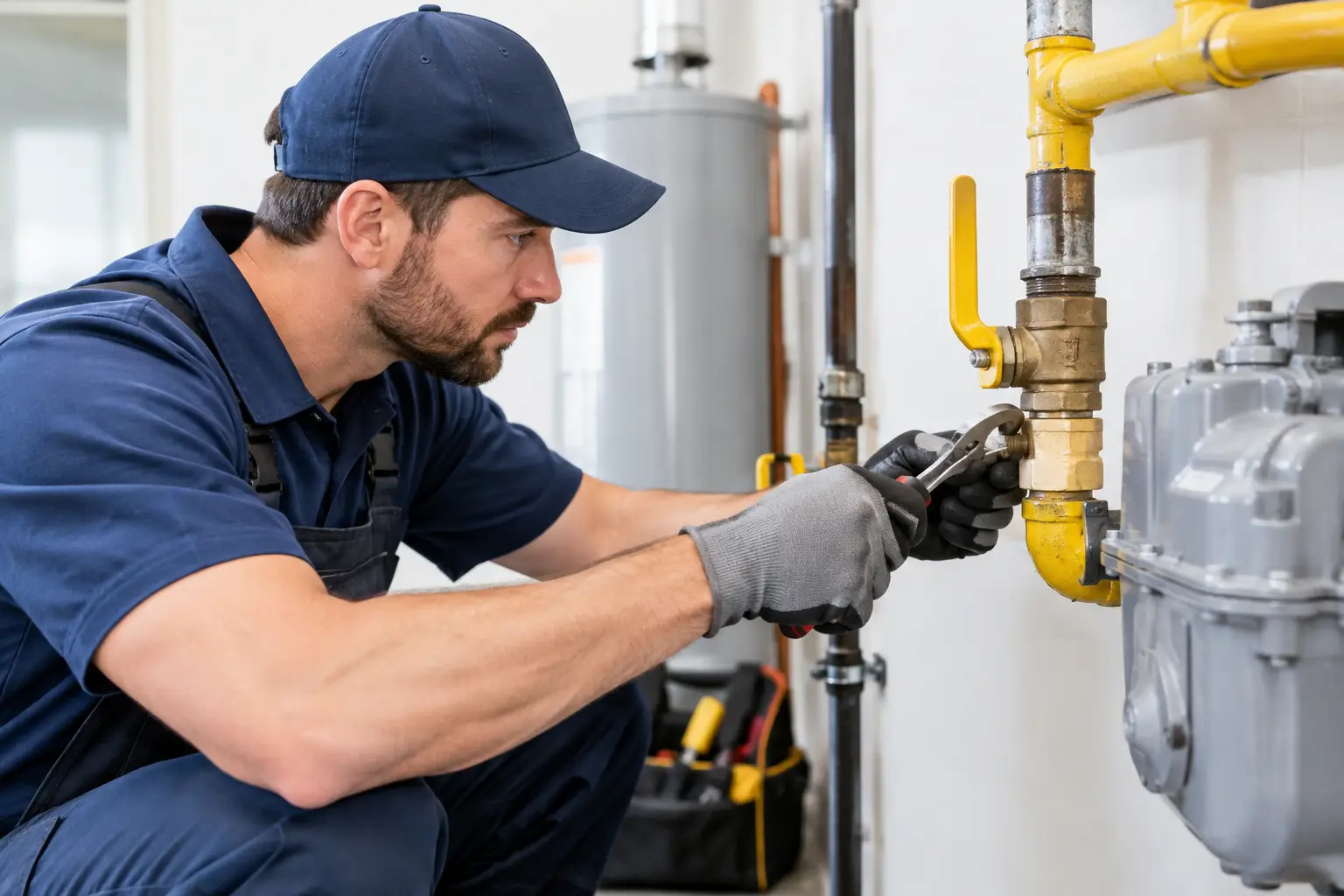
A faint sulfur or rotten-egg smell near a stove, water heater, furnace, or outdoor meter is not a repair to put off. Can plumbers repair gas lines? Yes, a properly licensed plumbing contractor can typically diagnose, repair, replace, and test gas piping on the property side of the meter. The exact scope depends on the source of the issue, local permit requirements, and the type of gas system involved.
For Orange County homeowners, landlords, and property managers, the safest next step is to stop using open flames or electrical switches near a suspected leak, move away from the area, and contact the gas utility from a safe location. Once the utility has addressed any immediate hazard and shutoff needs, a qualified plumbing professional can identify what failed and complete the required repair.
Can Plumbers Repair Gas Lines in California?
California-licensed plumbing contractors are generally qualified to work on fuel gas piping that serves appliances in homes and commercial properties. That includes natural gas and, in many cases, propane piping within the building or on the customer-owned side of the service.
A plumber’s work may include repairing a leaking fitting, replacing corroded black iron pipe, rerouting a line for a remodel, adding a connection for an approved appliance, or replacing an undersized gas line. The contractor should understand gas-piping sizing, approved materials, pressure testing, shutoff valves, appliance requirements, and applicable building codes.
However, not every gas-related issue belongs to a plumber. The gas utility is responsible for its equipment and the supply line on its side of the meter. Problems involving the meter, street-side service, or utility-owned regulator must be handled by the utility. Appliance defects may also require service from an appliance technician or HVAC professional, depending on the equipment.
The key distinction is simple: a licensed plumber repairs the customer-owned gas piping system, while the utility manages its own supply equipment.
What Gas Line Repairs Can a Plumber Handle?
Gas piping problems are rarely one-size-fits-all. A loose connection behind a range calls for a different solution than a decades-old buried yard line with widespread corrosion. A professional diagnosis matters because sealing the visible spot is not always enough to protect the rest of the system.
Leaking fittings, valves, and exposed pipe
Leaks often occur at threaded connections, flexible appliance connectors, shutoff valves, unions, or fittings that have shifted over time. A plumber can isolate the affected section, remove compromised components, install approved materials, and pressure-test the repair.
Older pipe can rust from the outside in, particularly in damp locations, crawlspaces, garages, and exterior runs. If corrosion is limited, replacing one section may be reasonable. If corrosion appears in several places, a larger replacement may provide better long-term value than repeated spot repairs.
Damaged or aging gas lines
Black iron pipe remains common in many Southern California properties, but age, moisture, prior alterations, and physical damage can reduce its reliability. CSST, copper where permitted and properly installed, and other approved systems have different installation rules. A contractor should select materials that meet local code and are appropriate for the location.
Gas lines may also be damaged during landscaping, foundation work, renovations, or appliance changes. Buried lines deserve particular caution. The repair may involve locating the route, exposing the damaged section carefully, replacing it with approved pipe, and confirming the system holds pressure before it returns to service.
New appliance connections and gas line upgrades
A gas line that adequately served a cooktop and water heater may not be large enough after adding a high-BTU range, pool heater, dryer, fireplace, or outdoor kitchen. Gas pipe sizing is based on more than pipe diameter. It considers the total demand of connected appliances, the length of the run, gas type, and pressure available to the system.
Undersized piping can cause weak appliance performance, delayed ignition, burner problems, or equipment shutdowns. A plumber can calculate the required capacity and recommend whether a branch line or a larger main line is needed.
Why Gas Line Work Requires Licensed Professionals
Water leaks can damage finishes and framing. Gas leaks can create a fire, explosion, or carbon monoxide risk. That difference is why gas piping should never be treated as a do-it-yourself repair, even when the issue appears to be a simple fitting.
Professional work brings several safeguards that improvised repairs cannot offer. The contractor can confirm where the leak is actually coming from, determine whether the pipe is sound beyond the visible area, use code-approved components, and test the completed work at the proper pressure. When a permit is required, proper documentation and inspection also help protect the property owner.
For rental and commercial properties, licensed work provides a clearer record of maintenance and repair decisions. That matters when protecting tenants, employees, guests, and operations. It can also prevent costly rework when a property is sold, renovated, or inspected.
In California, ask whether the contractor holds the appropriate active license for plumbing work. Lenora Plumbing operates under C36 License #1100153 and brings licensed, bonded, and insured accountability to gas line repairs and related plumbing work.
What to Expect During a Gas Line Repair Visit
A reliable repair starts with diagnosis, not assumptions. The technician will discuss what you noticed, inspect accessible piping and appliance connections, and use appropriate leak-detection methods to identify the issue. In some cases, the source is obvious. In others, testing reveals a pressure loss somewhere along the system that needs further tracing.
After identifying the problem, the plumber should explain the repair options in plain language. You may have a choice between replacing a fitting, repairing a short section, rerouting a line, or upgrading a larger portion of the system. The best option depends on the pipe’s condition, the age of the installation, future appliance plans, access, and the cost of repeated repairs.
If permits or inspections apply, the contractor should account for them before work begins. Gas piping modifications are often subject to local requirements, especially when new lines are installed or appliance loads change. Skipping this step may seem convenient, but it can create safety, resale, and insurance complications later.
Once repairs are complete, the system should be pressure-tested according to applicable requirements. The technician can then restore connections as appropriate and verify that appliances operate correctly. Keep copies of invoices, permits, and inspection records with your home or facility maintenance documents.
Signs You Should Call About a Possible Gas Line Problem
The most recognizable warning is the sulfur-like odor added to natural gas. You may also hear a hissing sound near a pipe or appliance, notice dead vegetation along an outdoor gas line route, or see unexplained appliance performance issues. Do not try to locate a suspected leak with a flame, and do not apply tape, sealant, or a temporary patch to gas piping.
If you smell gas indoors or outdoors, leave the immediate area, avoid creating sparks, and contact the gas utility from a safe place. Do not return until the situation has been assessed. Afterward, a licensed plumber can make customer-side repairs the utility identifies or recommends.
Some problems are less obvious. A homeowner may be planning a kitchen remodel and discover that the existing line cannot support a larger range. A property manager may notice recurring appliance outages in one building. A contractor may need a gas line moved before a wall is opened. Addressing these concerns before construction or occupancy avoids delays and helps keep the project on schedule.
Choosing the Right Contractor for Gas Piping
The lowest estimate is not always the lowest-cost outcome. Gas line work should be priced clearly, but the proposal should also explain what is being repaired, what materials will be used, whether testing is included, and whether permits are needed. Vague answers can lead to change orders or incomplete work.
Look for a contractor that communicates directly, carries proper licensing and insurance, and is willing to explain the condition of the piping without pressure. For older properties, ask whether the inspection found corrosion or capacity concerns beyond the immediate leak. A thoughtful answer may help you plan repairs before a small issue becomes a major disruption.
Gas line repairs are about more than restoring service. They are an opportunity to make sure the piping behind your walls, beneath your yard, or beside your appliances is safe for the way your property is used now. A qualified local plumber can give you a clear diagnosis, fair options, and workmanship you can rely on long after the tools are packed away.
Need help with a plumbing problem?
Speak directly with Lenora Plumbing about service for your Orange County home or business.
Call (949) 992-7410