
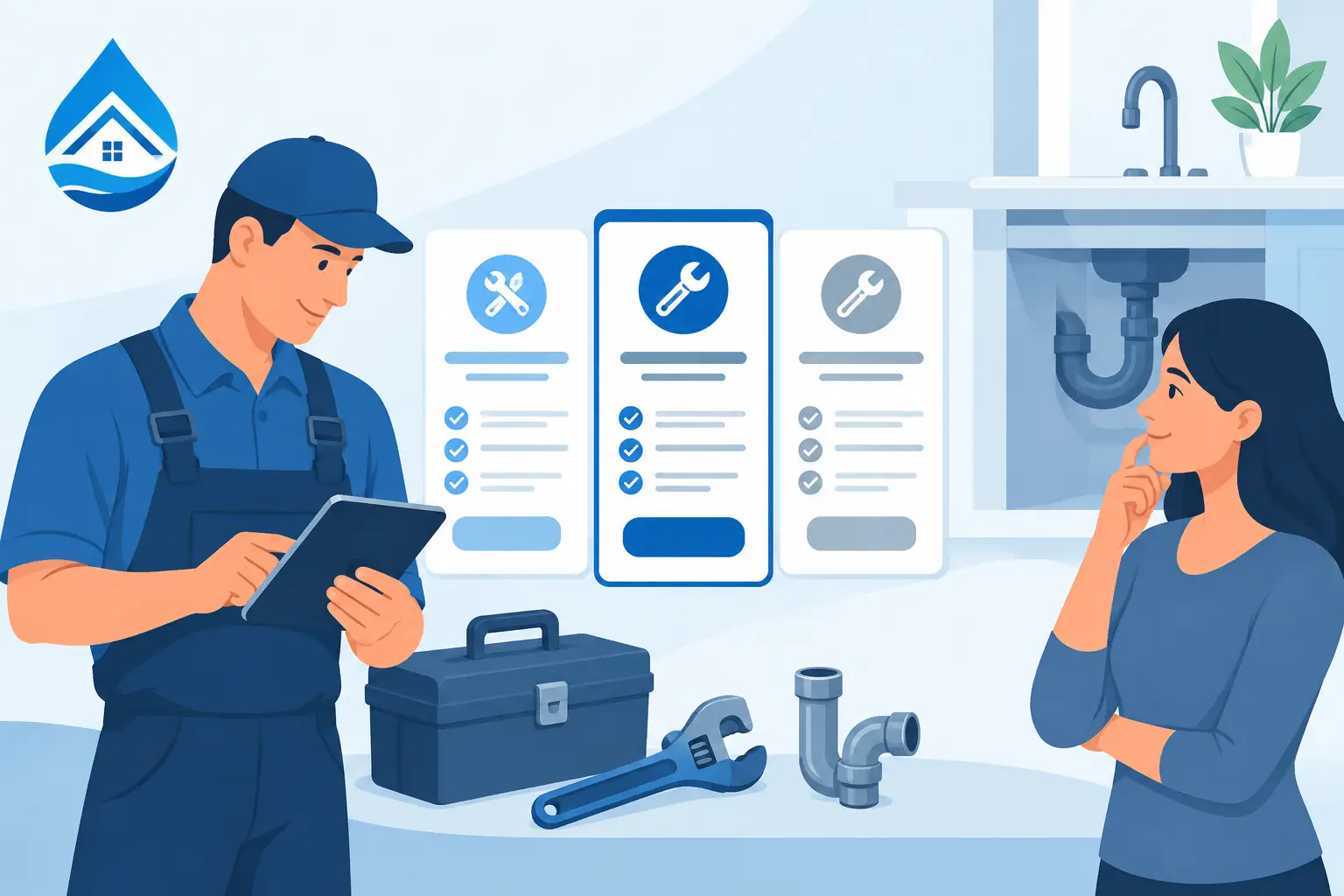
A plumbing problem rarely arrives at a convenient time. A leaking water heater, backed-up sewer line, or unexplained spike in your water bill can put you under pressure to say yes to the first price you hear. A careful plumbing quote comparison helps you make a faster, more confident decision without choosing a repair that creates another problem a few months later.
The goal is not simply to find the lowest number. It is to understand what each plumber is proposing, what is included in the price, and whether the repair addresses the actual cause of the issue. For Orange County homeowners, landlords, and property managers, that difference can protect a home, tenant space, or business from water damage, repeat service calls, and unnecessary downtime.
Start With the Same Scope of Work
A quote can only be compared fairly when each company is pricing the same work. This sounds simple, but plumbing estimates often differ because one contractor is quoting a temporary repair while another is quoting a long-term solution.
For example, a slow drain may be priced as a basic cable cleaning by one plumber and as camera inspection plus hydro jetting by another. Neither option is automatically wrong. If the blockage is a small buildup near a fixture, basic cleaning may be enough. If the line has grease accumulation, tree-root intrusion, or a damaged section of pipe, the less expensive service may restore drainage briefly without resolving the real problem.
Ask each contractor to explain the diagnosis and write down the recommended repair. For a useful comparison, the quote should clearly state the affected fixture, pipe, drain, sewer line, gas line, or water heater; the work being performed; and the materials or equipment required. A vague estimate such as “repair leak” leaves too much room for confusion.
Questions That Clarify the Scope
Before accepting any estimate, ask whether the price includes diagnosis, labor, materials, equipment, permits when required, testing, cleanup, and disposal of old parts. If walls, flooring, concrete, cabinets, or landscaping may need to be opened, confirm who is responsible for access and restoration.
It also helps to ask what the quote does not include. A plumber who explains exclusions upfront is not necessarily raising a red flag. Plumbing problems can hide conditions that no one can see until work begins. Clear exclusions simply give you a realistic picture of potential costs before the job is underway.
Compare the Repair Method, Not Just the Total
A lower quote may reflect less labor, a smaller repair area, lower-grade parts, or fewer diagnostic steps. Sometimes that is appropriate. Replacing a worn toilet flapper, for instance, should not require an elaborate project plan. But for slab leaks, sewer backups, recurring drain clogs, pipe replacement, or gas line repairs, the method matters as much as the price.
Consider a pipe leak behind a wall. One quote may cover patching a visible section of pipe. Another may include locating the source, replacing compromised piping, pressure testing the repair, and checking nearby connections. The second option can cost more because it is designed to reduce the chance of another leak in the same area.
For major work, ask why a specific method is recommended and what alternatives are available. There may be a less invasive option, such as rerouting a line rather than opening a slab. There may also be a reason that a more complete repair is the better value over time. A professional contractor should be able to explain the trade-off in plain language.
Look for Clear Pricing and Allowances
A trustworthy estimate should tell you whether the quote is fixed, estimated, or based on time and materials. Each pricing model has a place.
A fixed price can provide certainty for a clearly defined repair, such as replacing a standard garbage disposal or installing a known fixture. Time-and-materials pricing can be reasonable when the full condition of the plumbing system is unknown, especially during emergency leak detection or difficult drain and sewer work. In that situation, ask about labor rates, minimum charges, equipment fees, and whether there is a not-to-exceed amount without your approval.
Be cautious when a quote is dramatically lower than the others but does not identify the materials, labor, or conditions covered. The initial number may only cover a service visit, a limited repair attempt, or basic parts. Low prices can become expensive when essential work is added later without a clear discussion.
For renovation and commercial projects, review allowances closely. An allowance is a placeholder amount for an item that has not been selected or fully measured yet. It is useful, but it is not a guaranteed final cost. Confirm the assumed fixture type, pipe material, valve quality, and access conditions so there are fewer surprises once construction begins.
Verify Licensing, Insurance, and Responsibility
Price is only one part of a plumbing quote comparison. The contractor performing the work should have the proper California licensing for the job, along with bonding and insurance. This matters when work affects water supply, drainage, gas piping, sewer lines, or a building’s structure.
Licensed work helps protect the property owner and supports compliance with applicable code requirements. Insurance and bonding offer another layer of accountability if something goes wrong. For landlords, commercial property managers, schools, hospitality operators, and general contractors, these qualifications are especially important because a poor repair can affect tenants, customers, staff, and operations.
Ask whether permits or inspections are required for the proposed work. A permit is not needed for every repair, but it may be necessary for work such as certain water heater installations, gas line changes, major repiping, or sewer-related projects. A quote should identify who will handle the permit process and associated fees.
Lenora Plumbing is a family-owned local contractor with California C36 License #1100153, bonded and insured, providing residential and commercial plumbing support throughout Orange County and surrounding communities.
Do Not Overlook Warranty and Follow-Up Service
A repair warranty is not just a selling point. It tells you whether a company stands behind its workmanship and the products it installs. Compare the warranty on labor separately from the manufacturer warranty on parts or fixtures. A new part may have a manufacturer warranty, but that does not always cover labor to diagnose, remove, or reinstall it.
Ask what happens if the original issue returns. Will the plumber revisit the property? Is there a service-call charge? Are there conditions that void the warranty, such as pre-existing pipe damage or a separate blockage farther down the line? Get the answer in writing when possible.
For a sewer line, recurring drain issue, or leak that has already been repaired once, follow-up matters even more. The right contractor should not simply repeat the same repair without reconsidering the diagnosis. Camera inspection, pressure testing, or leak detection may be needed to identify the source accurately.
Emergency Quotes Require a Different Approach
When water is spreading across a floor or sewage is backing up into a building, stopping damage comes before collecting several estimates. Shut off the water supply if it is safe to do so, protect people and electrical equipment, and call for emergency plumbing service.
Once the immediate threat is controlled, ask for a clear explanation before authorizing additional repair work. Emergency rates can be higher because of after-hours response, specialized equipment, and the urgency of the situation. That does not mean you should accept an unclear price. You still deserve to know the diagnostic charge, the immediate stabilization work, and the expected cost of the permanent repair.
If the plumber cannot fully diagnose the issue until the area is opened or a line is cleared, request approval points. This means the technician stops and explains the findings before moving beyond the authorized amount. It is a practical way to control costs while allowing urgent work to proceed.
A Simple Way to Choose Between Quotes
Place estimates side by side and compare the problem identified, repair method, materials, labor, permit responsibility, warranty, exclusions, and final expected price. If one proposal is unclear, call and ask for clarification rather than guessing. The way a company answers before the job often reflects the communication you can expect during it.
The best quote is usually the one that gives you a well-supported diagnosis, a complete scope, fair prices, qualified workmanship, and a clear path if conditions change. When plumbing protects your home, rental property, or business, a repair you understand is worth more than a number you cannot explain.
Need help with a plumbing problem?
Speak directly with Lenora Plumbing about service for your Orange County home or business.
Call (949) 992-7410