
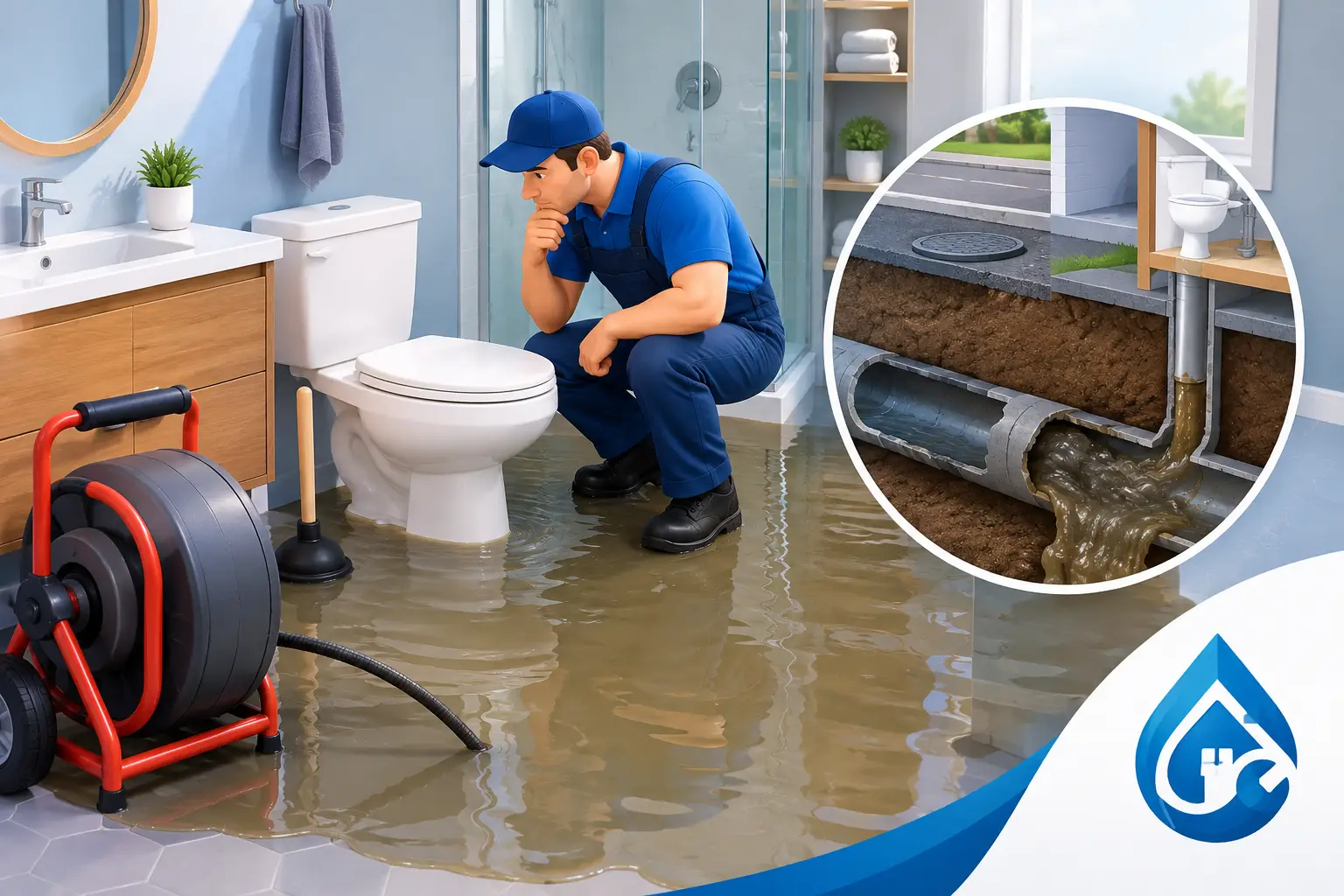
A sewer backup example can start with something that seems minor: a toilet that bubbles when the washing machine drains, a shower that fills with dark water, or an unpleasant sewer odor near a floor drain. Then a lower-level bathroom, laundry room, or commercial restroom begins to flood. This is not a typical clogged fixture. It often means wastewater cannot move through the property’s main sewer line.
For homeowners, landlords, and property managers, the difference matters. A sink clog may affect one fixture. A sewer backup can expose people to contaminated water, damage floors and walls, interrupt tenant operations, and create a much larger repair if the source is not found quickly.
A Sewer Backup Example From a Typical Property
Imagine a single-family home with a bathroom near the garage and a laundry room on the same side of the house. The homeowner runs a load of laundry. As the washer drains, water rises through the nearby shower drain. A few minutes later, the toilet in that bathroom gurgles and dirty water appears around the shower.
The washing machine did not cause the sewer line problem. It simply sent a large volume of water into a drain system that was already restricted. Because the wastewater could not pass through the main line to the public sewer, it took the easiest available path back into the home through a lower drain opening.
A similar situation can happen in a restaurant, apartment building, office, or school. Multiple fixtures may drain slowly at first. Once a dishwasher, washing machine, mop sink, or restroom sees heavy use, wastewater may appear at a floor drain. In commercial properties, the impact can extend beyond cleanup costs to lost use of restrooms, disrupted operations, and tenant complaints.
How to Tell a Main Sewer Line Backup From a Simple Clog
The key clue is the number and location of affected fixtures. A clogged bathroom sink usually remains a sink problem. A main sewer line issue often affects more than one drain, especially fixtures on the lowest level of the building.
Watch for toilets that gurgle after another fixture drains, water rising in a tub or shower when a toilet is flushed, repeated clogs in different rooms, or wastewater coming up through a floor drain. Slow drainage throughout the property can also point to a developing restriction in the main line.
A sewage-like odor is another warning sign, but it is not proof by itself. Dry drain traps, damaged venting, or localized drain issues can also produce odors. A proper diagnosis should identify where the blockage is located and whether the line itself is damaged.
What Causes Sewer Backups?
The cause is not always visible from inside the building. In Orange County, many properties have a mix of older plumbing components, mature landscaping, and changing soil conditions. The right repair depends on what is actually inside the line.
Tree Root Intrusion
Tree roots naturally seek moisture. Small roots can enter through joints, cracks, or weakened sections of a sewer pipe, then expand inside the line. They catch toilet paper, grease, and other debris until normal flow becomes restricted or blocked.
Root cutting may restore flow, but it may not be a lasting answer if the pipe has separated joints, cracks, or severe deterioration. A camera inspection helps show whether clearing the line is enough or whether repair or replacement should be considered.
Grease, Wipes, and Household Debris
Kitchen grease cools and clings to pipe walls. So-called flushable wipes, paper towels, hygiene products, and excessive paper products do not break down like toilet paper. Over time, they can create a dense blockage, particularly where a pipe already has rough interior surfaces or poor slope.
For commercial kitchens and multi-unit properties, grease control and scheduled drain maintenance can make a meaningful difference. However, maintenance cannot correct a collapsed or badly offset sewer line.
Broken, Sagging, or Aging Pipe
Older sewer lines may crack, corrode, shift, or develop a low area known as a belly. Waste and solids collect in that low point instead of traveling freely to the sewer connection. Heavy cleaning can remove the buildup temporarily, but recurring backups often signal a structural issue.
Construction activity, soil movement, and vehicle loads near buried piping can also contribute to damage. This is why a camera inspection is valuable after a repeat backup. It moves the conversation from guesswork to a visible condition inside the pipe.
A Problem Beyond the Property Line
Sometimes the blockage is in a shared lateral, a municipal sewer, or another section outside the building’s private plumbing. The symptoms may look similar, but responsibility and next steps can differ. A licensed plumber can help determine where the issue appears to be located and document the condition clearly.
What to Do When Wastewater Comes Back Up
First, stop using water inside the property. Do not flush toilets, run faucets, use the dishwasher, take a shower, or start laundry. Each gallon sent down a drain can add to the backup.
Keep people and pets away from the affected area. Sewer water can contain bacteria and other contaminants, so avoid walking through it or trying to clear it with a household plunger. If water has reached electrical outlets, appliances, or a utility area, do not touch equipment near standing water.
If it is safe to do so, take a few photos before cleanup begins. For landlords and property managers, note the affected units, fixtures, and time the issue was discovered. This information can help a plumbing professional assess the pattern and can be useful for property records.
Then arrange for a licensed plumbing contractor to inspect and clear the line. Professional drain cleaning equipment can remove many blockages, while a sewer camera can identify roots, breaks, offsets, standing water, or heavy buildup. The goal is not just to make the water disappear. It is to determine why the backup happened and whether the repair will hold.
After the plumbing source is corrected, contaminated materials may need specialized cleanup. Porous items such as carpet padding, drywall, insulation, or unfinished wood can retain contamination. The appropriate cleanup scope depends on how far the wastewater traveled, how long it remained, and what materials were affected.
Why Repeated Drain Clearing Is Not Always the Best Fix
Clearing a sewer line is often the correct first step because it restores drainage and allows an inspection. But repeated clearing without investigating the pipe condition can become costly. If roots return every few months or wastewater repeatedly appears at the same floor drain, the underlying pipe may be damaged or poorly graded.
There is a practical trade-off. Preventive cleaning can be a reasonable plan for a line with minor root intrusion and otherwise sound pipe. A line with major cracks, a collapse, or a persistent belly may need a more durable repair. The best decision depends on the camera findings, the age and material of the pipe, access conditions, and how often the issue has occurred.
Lenora Plumbing approaches these problems with clear diagnosis, fair prices, and licensed workmanship. A qualified technician should explain what was found, what repair options make sense, and what each option is intended to solve before work moves forward.
Steps That Help Reduce Future Backups
No property can eliminate every sewer risk, but good habits reduce avoidable blockages. Keep grease out of kitchen drains, place wipes and paper towels in the trash, and avoid using toilets as disposal points for hygiene products or cleaning materials. If your property has known root activity or an older sewer line, periodic inspection and maintenance may help catch restrictions before they become a messy backup.
Property managers should also pay attention to patterns. A tenant report of slow drains, recurring toilet clogs, or gurgling fixtures is worth documenting early. Addressing a developing main line issue is usually less disruptive than waiting for wastewater to reach a finished space.
If your drains are talking to each other – one fixture gurgles when another drains – treat that as a reason to have the main line checked. A timely, accurate diagnosis protects the parts of your home or business that are hardest and most expensive to replace.
Need help with a plumbing problem?
Speak directly with Lenora Plumbing about service for your Orange County home or business.
Call (949) 992-7410