
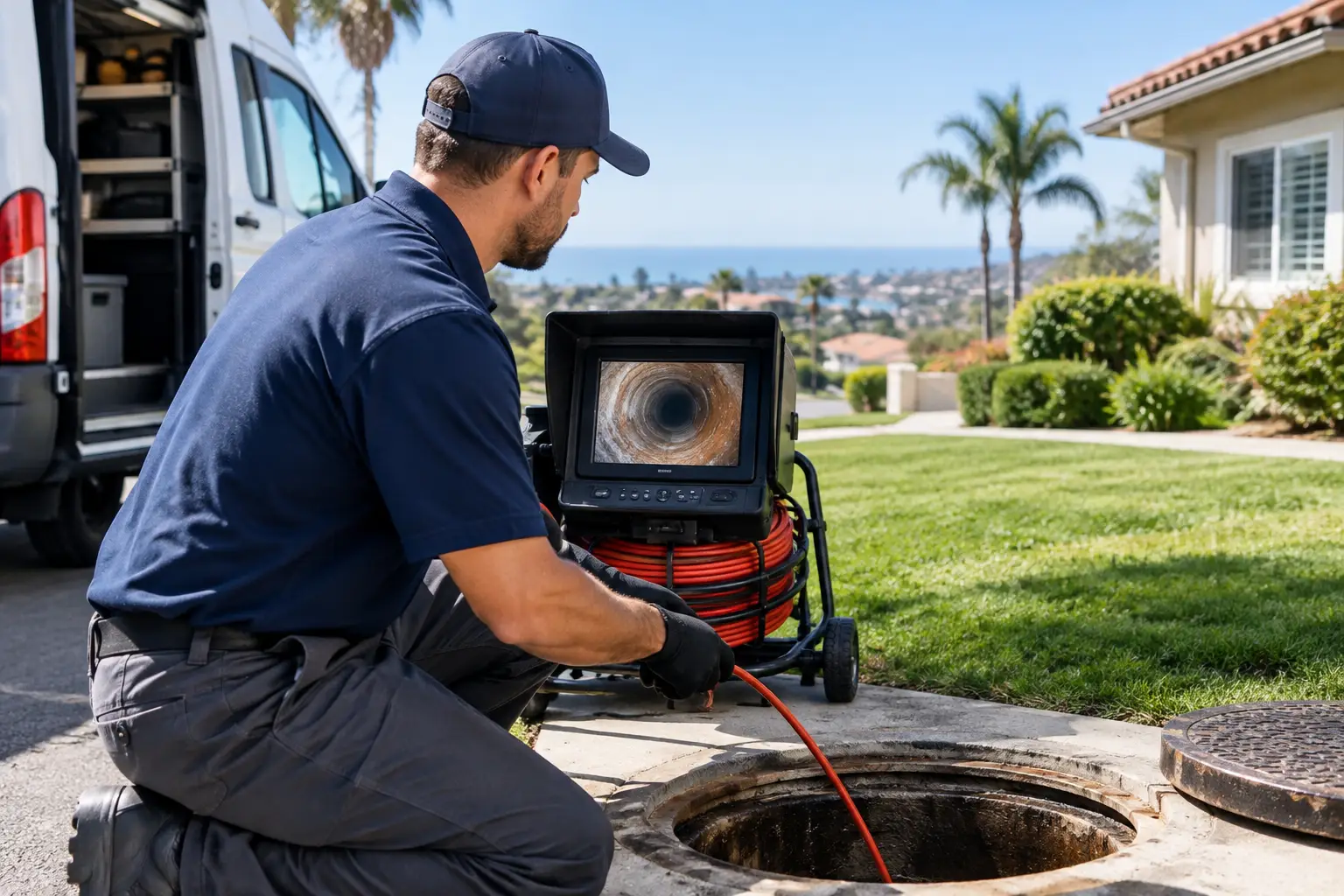
A sewer problem rarely starts with a dramatic backup. More often, it begins with a slow drain, an occasional gurgle, a patch of unusually green grass, or a smell that comes and goes. Knowing the likely sewer inspection cost helps you make a clear decision before a small warning sign turns into property damage, disruption, or a much larger repair.
For most homeowners, a professional sewer camera inspection is a practical first step. It allows a licensed plumber to look inside the line without guessing or opening up a yard, floor, or wall. The inspection can identify the source of the trouble, show where it is located, and help you understand whether cleaning, repair, or replacement is actually necessary.
What Does a Sewer Inspection Cost?
A sewer camera inspection commonly costs about $200 to $600. In Orange County, the final price may fall toward the higher end when access is difficult, the line is especially long, or the property needs additional diagnostic work.
That range typically covers a technician bringing specialized camera equipment to the property, accessing the sewer line through an available cleanout, running the camera through the pipe, and reviewing the findings with you. Some plumbing companies apply all or part of the inspection fee toward a recommended repair, while others price diagnosis and repair separately. It is reasonable to ask before work begins.
The lowest quote is not always the best value. A useful inspection should give you more than a quick look inside a pipe. You should understand what the camera found, where the issue appears to be, how serious it is, and what options are available. Clear findings help owners avoid paying for work that does not address the real problem.
What Affects Sewer Inspection Cost?
Every sewer line has its own history. Age, material, layout, landscaping, prior repairs, and access all affect the time and equipment needed to inspect it properly.
Access to the Sewer Cleanout
A cleanout is an access point that lets a plumber enter the sewer line with a camera. When it is visible and functioning, an inspection is usually more straightforward. If the cleanout is buried, damaged, blocked, or missing, additional labor may be needed to gain safe access to the line.
In some homes, access may need to be made through a toilet drain or another plumbing opening. That can add time and cost, especially if fixtures must be removed and reinstalled. A professional should explain the access method before proceeding.
The Length and Condition of the Line
A short, accessible residential line generally takes less time to inspect than a long line running beneath a large lot, multi-unit property, parking area, or commercial building. Older cast iron, clay, Orangeburg, or deteriorating pipe may also require a slower inspection because the camera can encounter offsets, corrosion, standing water, or heavy buildup.
A camera cannot always travel the entire length of a severely blocked line. In that situation, drain cleaning may be recommended first so the camera can provide a complete view. This can increase the appointment total, but it also prevents a partial inspection from leading to an incomplete diagnosis.
Root Intrusion and Heavy Blockages
Tree roots naturally seek moisture and can enter aging sewer pipes through small cracks or separated joints. Once inside, they can trap paper, grease, and waste until drainage becomes restricted. A camera inspection can reveal whether roots are minor and suitable for cleaning or whether the pipe has structural damage that needs repair.
Grease accumulation, scale, and debris can create similar visibility issues. Cleaning is sometimes the right next step, but it should not automatically be treated as a permanent fix. If the camera shows cracking, bellies in the line, or failing joints, cleaning alone may only provide temporary relief.
Property Type and Purpose of the Inspection
A homeowner investigating recurring drain problems may need a standard inspection. A buyer evaluating an older property, a landlord documenting a maintenance issue, or a property manager assessing a multi-unit building may need more detailed reporting, recordings, locating, or coordination with other parties.
Commercial sewer inspection pricing can vary more widely because of pipe size, building use, access restrictions, and the number of fixtures connected to the system. Restaurants, hotels, schools, retail spaces, and industrial facilities often need a more tailored scope than a single-family residence.
When Is a Camera Inspection Worth the Cost?
A camera inspection is particularly worthwhile when plumbing symptoms keep returning after basic cleaning. Repeated clogs in multiple drains, toilet bubbling, slow tubs and showers, unpleasant odors, and unexplained wet areas can all point to a sewer-line issue rather than a simple fixture clog.
It is also a smart precaution before buying an older home or starting a major renovation. Sewer lines are out of sight, so they are easy to overlook during a property decision. A relatively modest inspection cost can reveal a hidden repair risk before a purchase closes or before new flooring, hardscape, cabinets, or landscaping are installed.
For landlords and property managers, a documented inspection can help separate a one-time tenant-related blockage from an ongoing line condition. That distinction matters when planning maintenance, communicating with occupants, and protecting the long-term condition of the property.
What a Sewer Camera Can and Cannot Tell You
A sewer camera is one of the most useful diagnostic tools in plumbing, but it has limits. It can show roots, cracks, separated joints, pipe corrosion, blockages, standing water, and visible changes in pipe alignment. It can often help pinpoint the location of a problem when paired with electronic locating equipment.
However, a camera cannot always confirm every underground condition. For example, standing water may suggest a belly or low spot in the line, but further evaluation may be necessary to determine the full extent. A camera also cannot repair the pipe. Its value is in replacing guesswork with evidence before repair decisions are made.
Ask the technician to walk you through the findings in plain language. If repairs are recommended, request an explanation of the problem, the proposed method, the expected scope of work, and whether other options are available. A trustworthy plumbing contractor should be comfortable answering those questions.
How to Avoid Surprises on Your Estimate
Before scheduling an inspection, ask whether the quoted price includes camera use, a visual review of findings, and a written estimate for any recommended work. If you need a recording, report, or pipe locating, ask whether those services are included or billed separately.
It is also helpful to mention the symptoms you have noticed and any previous sewer repairs. Details such as recurring backups, recent landscaping, a home addition, or large trees near the sewer route can help the plumber arrive prepared and make the visit more efficient.
Be cautious with anyone who recommends major sewer replacement without explaining what the inspection found. Sewer work can be significant, and the right repair depends on pipe material, damage location, site access, local requirements, and the remaining condition of the line. Sometimes targeted repair or cleaning is appropriate. In other cases, replacement may be the more durable choice.
Choosing a Qualified Sewer Inspection Professional
Sewer diagnosis requires more than a camera. It takes experience to interpret what appears on screen and connect it to the symptoms occurring inside the property. Look for a California-licensed, bonded, and insured plumbing contractor that provides straightforward pricing and explains the next steps without pressure.
Lenora Plumbing approaches inspections with the same practical focus used on every job: identify the cause, explain the options, and perform work that protects the property. For Orange County homeowners and property professionals, that means receiving a clear assessment rather than being left to make a costly decision based on uncertainty.
A sewer inspection is not just another service charge. It is information you can use to protect your home, plan repairs responsibly, and move forward with confidence. When a drain problem keeps coming back, getting a clear look inside the line is often the most sensible place to start.
Need help with a plumbing problem?
Speak directly with Lenora Plumbing about service for your Orange County home or business.
Call (949) 992-7410