
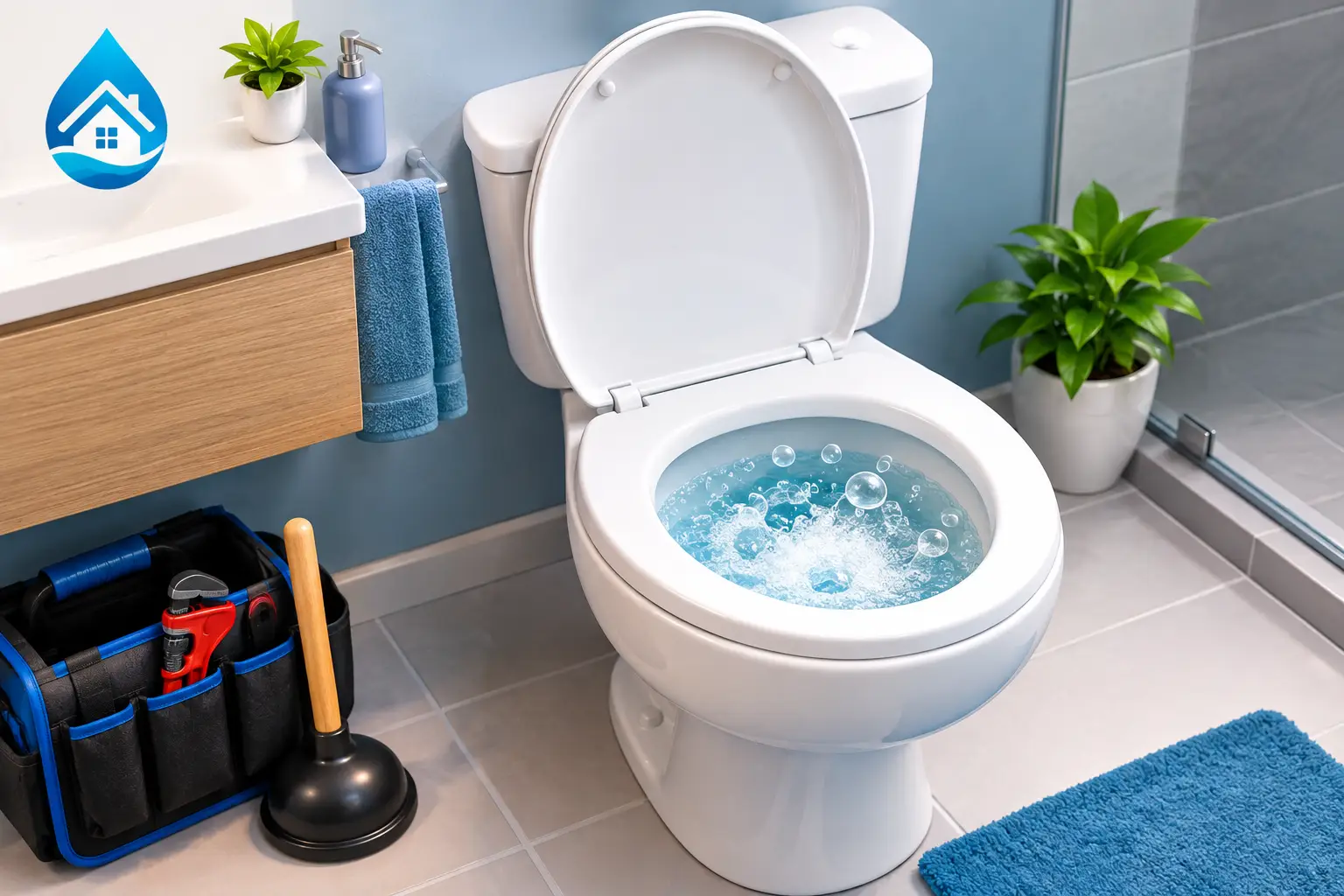
A toilet that bubbles, gurgles, or makes a glugging sound is telling you something about the plumbing behind the wall or below the floor. If you are wondering why does a toilet bubble, the short answer is usually a pressure problem in the drain system. Air is being forced through the toilet water because wastewater and air cannot move freely where they should.
One small bubble after a flush is not always cause for alarm. Repeated bubbling, however, deserves attention, especially when it happens while the shower, washing machine, or bathroom sink is draining. That pattern can point to a blockage or venting issue that may worsen into a slow drain, overflow, or sewer backup if it is left unresolved.
Why Does a Toilet Bubble When Nothing Is Flushing?
Your home’s drain system needs two things to work properly: a clear path for wastewater to travel out and a vent system that allows air pressure to balance. When either path is restricted, air looks for another route. The toilet bowl is often the most noticeable place for that air to surface.
Think of turning over a full bottle of water. Water pours smoothly only when air can enter the bottle to replace it. A plumbing vent performs a similar job. It brings air into the drainage system through a pipe that typically exits at the roof. Without enough airflow, draining water can pull or push air through nearby fixtures, creating the familiar gurgling sound.
A bubble that occurs after you use the toilet may be closer to the toilet itself. Bubbling that starts when another fixture drains is more likely to involve a shared branch drain, the main sewer line, or the vent stack.
The Most Common Causes of a Bubbling Toilet
A partial toilet or branch-drain clog
A partial clog is one of the most common explanations. Toilet paper buildup, wipes, paper towels, hygiene products, or a small object can narrow the drain without stopping it completely. Water may still go down, but it moves slowly and disrupts the air in the pipe.
The location of the clog matters. If only one toilet is affected and it flushes weakly, the obstruction may be in the toilet trap or the drain immediately below it. If a nearby tub, shower, or sink also drains slowly or gurgles, the clog may be farther down the branch line those fixtures share.
A household plunger can sometimes clear a simple, close-to-the-bowl obstruction. Use a flange plunger designed for toilets, maintain a good seal, and work it with steady strokes. If the bowl level rises, stop flushing. Repeated flushing can send contaminated water onto the bathroom floor instead of solving the blockage.
A blocked plumbing vent
Vent pipes can become blocked by leaves, nests, roof debris, or, less commonly in Southern California, windblown material that settles inside the opening. A blocked vent prevents the drainage system from drawing in enough air. The resulting pressure changes can make a toilet bubble even when the toilet itself is not clogged.
Vent diagnosis is not always straightforward. The issue may be at the roof opening, inside the vent pipe, or in the connection between the vent and the drain. Climbing onto a roof and placing tools into a vent pipe creates safety risks and can damage roofing materials. A licensed plumber can test the system and determine whether the problem is a vent restriction or a drain blockage producing similar symptoms.
A main sewer line restriction
When more than one fixture is acting up, the main sewer line becomes a stronger possibility. This line carries wastewater from the home to the public sewer connection or private septic system. A partial blockage in the main line can force air and wastewater back toward lower fixtures.
Watch for a toilet that bubbles when the washing machine empties, a shower that backs up after a toilet flush, or multiple drains that are slow at once. These are not separate little clogs happening by coincidence. They often indicate that the home’s drainage system cannot move water through the main line at normal volume.
Tree root intrusion is a frequent cause of sewer line restrictions, particularly in established neighborhoods with mature landscaping. Roots are attracted to moisture and can enter through small gaps in older pipe joints. Grease accumulation, scale buildup, pipe damage, and shifts in the line can also reduce flow. A professional sewer camera inspection is useful because it shows the actual condition and location of the problem rather than relying on guesswork.
A problem with the municipal sewer connection
Sometimes the issue is beyond the home’s private plumbing. A blockage or capacity issue in a public sewer can affect several properties, particularly if neighbors report slow drains or unusual sewer odors at the same time. Property owners are commonly responsible for the private lateral sewer line up to a defined connection point, while the local utility handles the public system. The exact responsibility boundary depends on the municipality.
If your neighbors are experiencing similar symptoms, contact the local sewer authority as well as a plumbing professional. Knowing where the issue lies can prevent unnecessary work on the wrong section of pipe.
A toilet installed or repaired incorrectly
Less commonly, bubbling is related to the toilet assembly itself. An incorrect wax ring installation, a poorly positioned toilet, or an issue with the drain connection can affect performance. These conditions do not typically create the same multi-fixture gurgling seen with a main-line clog, but they can contribute to weak flushing, leaks at the base, or persistent odors.
If the toilet was recently replaced or the bubbling began after bathroom work, mention that timing during the inspection. It gives the technician useful context and may narrow the diagnosis quickly.
What You Can Check Before Calling a Plumber
Start by observing the pattern rather than repeatedly testing the toilet. Flush once, then listen. Run the bathroom sink for a short time and note whether the toilet bowl bubbles. If it is safe to do so, observe whether the shower or tub drains normally. This information helps identify whether the issue is local to one fixture or shared by the bathroom plumbing.
Check the water level in the toilet bowl. A normal bowl level that suddenly rises during a flush suggests a restriction. A level that moves up and down while another appliance drains is more consistent with a pressure issue farther along the drainage path.
A careful plunger attempt is reasonable when the toilet alone is slow and there are no signs of backup elsewhere. Avoid chemical drain cleaners. These products can damage older piping, create hazardous conditions for anyone working on the drain, and rarely clear a serious obstruction in a toilet or sewer line.
Do not continue using large amounts of water if the toilet is bubbling alongside slow drains in other rooms. Hold off on laundry, long showers, dishwasher cycles, and repeated toilet flushing until the drainage system is evaluated. Reducing water flow lowers the chance of wastewater coming back through a tub, shower, or floor drain.
When Toilet Bubbling Needs Professional Diagnosis
A bubbling toilet is more than a noise problem when it is accompanied by backups, sewage odors, repeated clogs, or multiple slow fixtures. Those signs call for a proper inspection, not a stronger chemical or another round of flushing.
Professional drain cleaning equipment can remove many obstructions safely, while a camera inspection can reveal roots, broken pipe, heavy buildup, or a sagging sewer line. The right repair depends on what is actually inside the pipe. For example, a simple blockage may respond to cleaning, while recurring root intrusion or damaged pipe may require a more durable repair strategy.
For landlords and property managers, documenting the symptoms and timing is especially helpful. Note which units or fixtures are affected, whether the issue follows laundry use, and whether there has been recent renovation work or landscaping changes. Those details can reduce diagnosis time and help protect the property from larger plumbing damage.
Preventing Future Toilet Gurgling
The best prevention is simple but consistent: only flush toilet paper and human waste. Products labeled “flushable” can still collect in bends, older pipes, and sewer lines. Keep grease, food scraps, and coffee grounds out of sinks, since they can contribute to restrictions in shared drainage piping.
Homes with older sewer lines, large trees, or a history of recurring drain issues benefit from periodic professional inspection and cleaning. There is no single schedule that fits every property. A newer home with clear drains may need little attention, while an older Orange County property with root-prone sewer piping may need more regular maintenance.
A bubbling toilet is your plumbing system asking for attention before a small airflow issue becomes a messy drainage problem. Lenora Plumbing can help identify the cause, explain the repair options clearly, and provide licensed workmanship at fair prices so you can use your home with confidence again.
Need help with a plumbing problem?
Speak directly with Lenora Plumbing about service for your Orange County home or business.
Call (949) 992-7410