
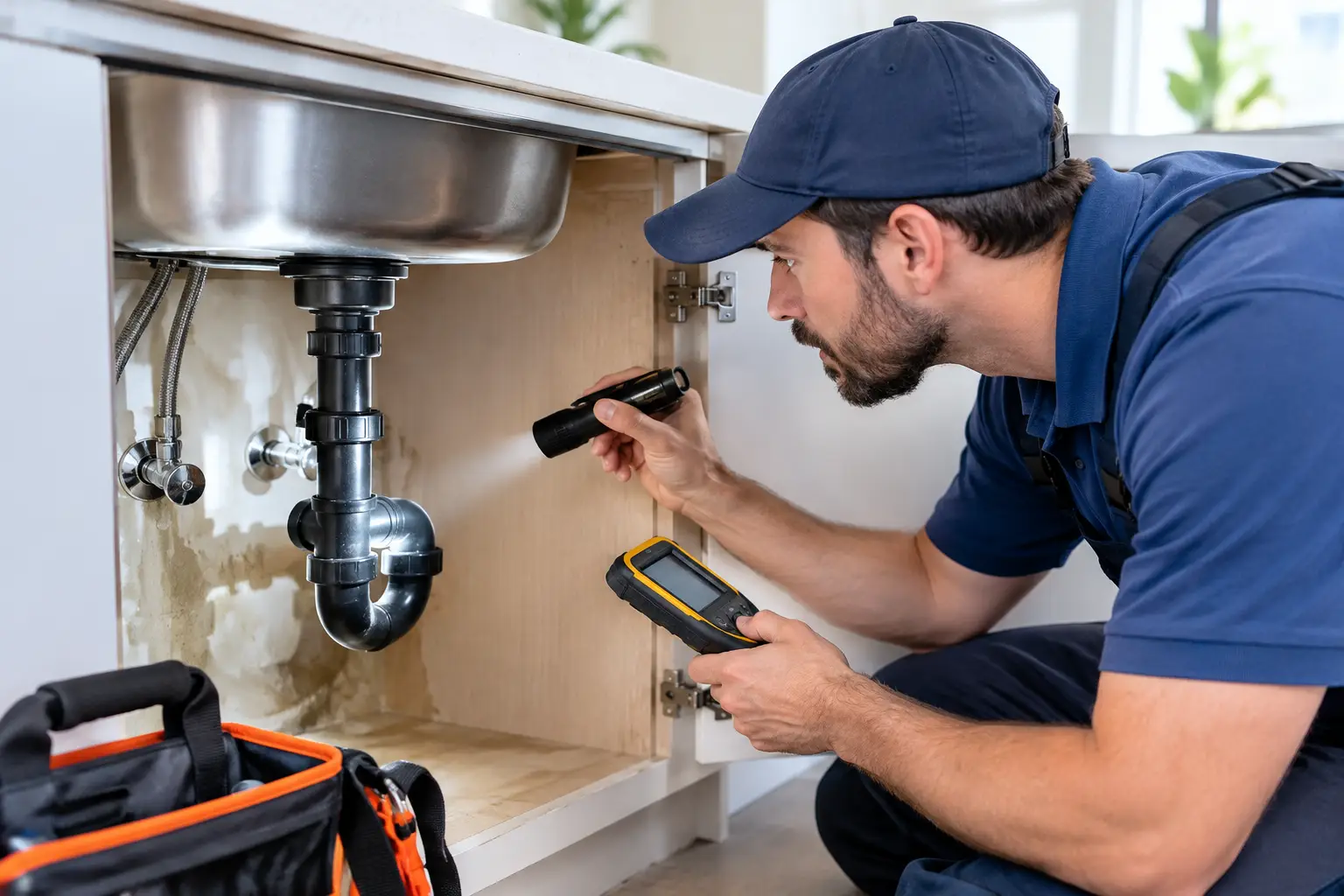
A water bill that climbs for no clear reason, a warm patch on the floor, or a faint musty smell behind a cabinet can point to water escaping where you cannot see it. Knowing how to locate hidden leaks early can protect your flooring, walls, foundation, and monthly budget. The goal is not to tear into drywall or guess at a repair. It is to narrow down the source safely, document what you find, and know when professional leak detection is the smarter next step.
Start With Your Water Meter
Your water meter is one of the most useful tools for finding a hidden plumbing leak. It can show whether water is moving through the system even when no one is using a fixture.
First, turn off every water-using item in the property. Do not run faucets, flush toilets, use the dishwasher, run the washing machine, or allow an irrigation system to start. Then locate the water meter, usually near the curb or property line. Many meters have a small leak indicator, often a triangle, star, or gear-shaped dial that moves with even a small amount of water flow.
Watch that indicator for several minutes. If it moves while all water is off, water may be leaking somewhere on the property. If your meter does not have a visible indicator, write down the reading, wait 30 to 60 minutes without using water, and check it again. A changed reading is a strong reason to investigate further.
This test does not identify the exact location. It does tell you that the issue is likely on your side of the meter rather than a billing error. For commercial properties, perform the test during a period when water use can be controlled and documented.
Rule Out the Most Common Indoor Leaks
Before assuming a pipe is leaking behind a wall or under a slab, check the accessible fixtures. Small fixture leaks can waste a surprising amount of water and are usually easier to correct.
Toilets are a frequent culprit because a failing flapper can let water pass quietly from the tank into the bowl. Remove the tank lid and add a few drops of food coloring to the tank water. Do not flush. If color appears in the bowl within 10 to 15 minutes, the toilet is leaking internally.
Look under kitchen and bathroom sinks for dampness, corrosion, swollen cabinet material, or water marks around shutoff valves and drain connections. Run water briefly and inspect the pipes while the fixture is draining. A leak may only show up when water is flowing.
Check refrigerator water lines, dishwasher connections, washing machine hoses, water heater fittings, and outdoor hose bibs as well. A damp area near a water heater should never be ignored. It may be a connection issue, a pressure relief valve concern, or tank deterioration, and each calls for a different repair.
Look for Clues in Walls, Ceilings, and Floors
Hidden leaks rarely stay completely hidden forever. Water follows gravity and the easiest available path, so the stain you see may be several feet away from the actual pipe failure.
Pay attention to discoloration on ceilings, bubbling or peeling paint, soft drywall, warped baseboards, cracked grout, and flooring that begins to lift or separate. A persistent musty odor can also signal moisture inside a wall, beneath a cabinet, or under flooring. In bathrooms, check the walls adjoining the shower or tub, especially if grout or caulking is cracked.
Touch suspected areas carefully. A wall that feels cool, damp, or unusually soft needs prompt attention. Avoid opening walls yourself if electrical wiring may be nearby. Turning off power to the affected area is sensible if water is close to outlets, switches, or electrical panels.
It also helps to notice timing. If a ceiling stain becomes darker after someone showers upstairs, the problem may involve a shower drain, supply line, toilet seal, or tub overflow. If moisture appears only after rain, it could be a roof, window, or exterior drainage issue rather than a plumbing leak. The right repair depends on identifying the source, not simply repairing the visible damage.
Check for Signs of a Slab Leak
Many Orange County homes have water lines running beneath a concrete slab. When one of those lines develops a leak, the water may never appear as a dramatic puddle. Instead, homeowners may notice subtle changes that become more expensive the longer they continue.
Common slab leak signs include a warm or hot area of flooring, the sound of running water when fixtures are off, unexplained increases in water use, damp carpet edges, moldy odors, or cracks in flooring and foundation areas. A hot-water line leak may create a noticeably warm section of tile, vinyl, or concrete.
Do not assume every crack means a slab leak. Soil movement, normal settling, and flooring issues can also create cracks. Still, a crack combined with meter movement, warm flooring, or constant water noise deserves professional evaluation. Slab leak detection often requires specialized acoustic equipment, pressure testing, thermal imaging, or other noninvasive methods to locate the problem without unnecessary demolition.
Separate a Plumbing Leak From an Irrigation Leak
Outdoor leaks can raise water costs just as quickly as indoor problems. They are also easy to miss because irrigation systems often run early in the morning or when no one is outside.
Inspect visible sprinkler heads, valves, and drip lines for pooling water, muddy spots, unusually green patches of grass, or water spraying in the wrong direction. Turn the irrigation controller off, then repeat the water-meter test. If the meter stops moving with irrigation disabled, the issue may be in the sprinkler system rather than the indoor plumbing.
A leak in the main line between the meter and the home can be more difficult to spot. Watch for sinking soil, wet pavement, water collecting near the foundation, or a section of landscaping that stays damp despite dry weather. Because underground utility lines can be present, avoid digging until the location is properly assessed.
Use Simple Tests Without Creating More Damage
Homeowners can gather useful information, but hidden leaks call for a careful approach. Keep a short record of water-meter readings, the location of stains or dampness, when the issue appears, and whether it changes after certain fixtures are used. Photos with dates can help show whether water damage is spreading.
Avoid relying on moisture alone to make a diagnosis. Condensation on cold pipes, humid bathroom air, a spill, or rain intrusion can look similar to a plumbing leak. Likewise, turning up the water pressure to “test” a line can worsen an existing weakness.
If you suspect a leak in a wall, under a floor, or beneath a slab, do not start removing finishes without a clear reason. Opening the wrong area adds repair costs and can disturb tile, cabinetry, insulation, or wiring. A qualified plumber can test individual lines and use detection equipment to focus repairs where they are actually needed.
When to Call a Licensed Plumber
A plumber should evaluate the problem when the meter confirms water use but the source is not visible, when a ceiling or wall is wet, when flooring is warm or buckling, or when you hear water running with fixtures off. These conditions can lead to structural damage, mold growth, and higher utility charges if they continue.
The same is true for recurring leaks. Replacing a supply hose or tightening a fitting may solve a simple issue, but repeated moisture in the same area can point to pipe corrosion, aging connections, excess water pressure, or a drainage problem. A lasting repair starts with an accurate diagnosis.
For homeowners, landlords, and property managers, ask for a clear explanation of the findings, the repair options, and expected costs before work begins. Lenora Plumbing provides licensed, bonded, and insured plumbing service with practical recommendations and fair pricing, so you can make a confident decision about protecting your property.
A Small Clue Is Worth Checking
Hidden leaks do not always announce themselves with a burst pipe. Often, they begin with a moving meter, one stubborn stain, or a floor that feels different underfoot. Checking those signs early gives you more repair options and helps keep a small plumbing problem from becoming a much larger restoration project.
Need help with a plumbing problem?
Speak directly with Lenora Plumbing about service for your Orange County home or business.
Call (949) 992-7410