
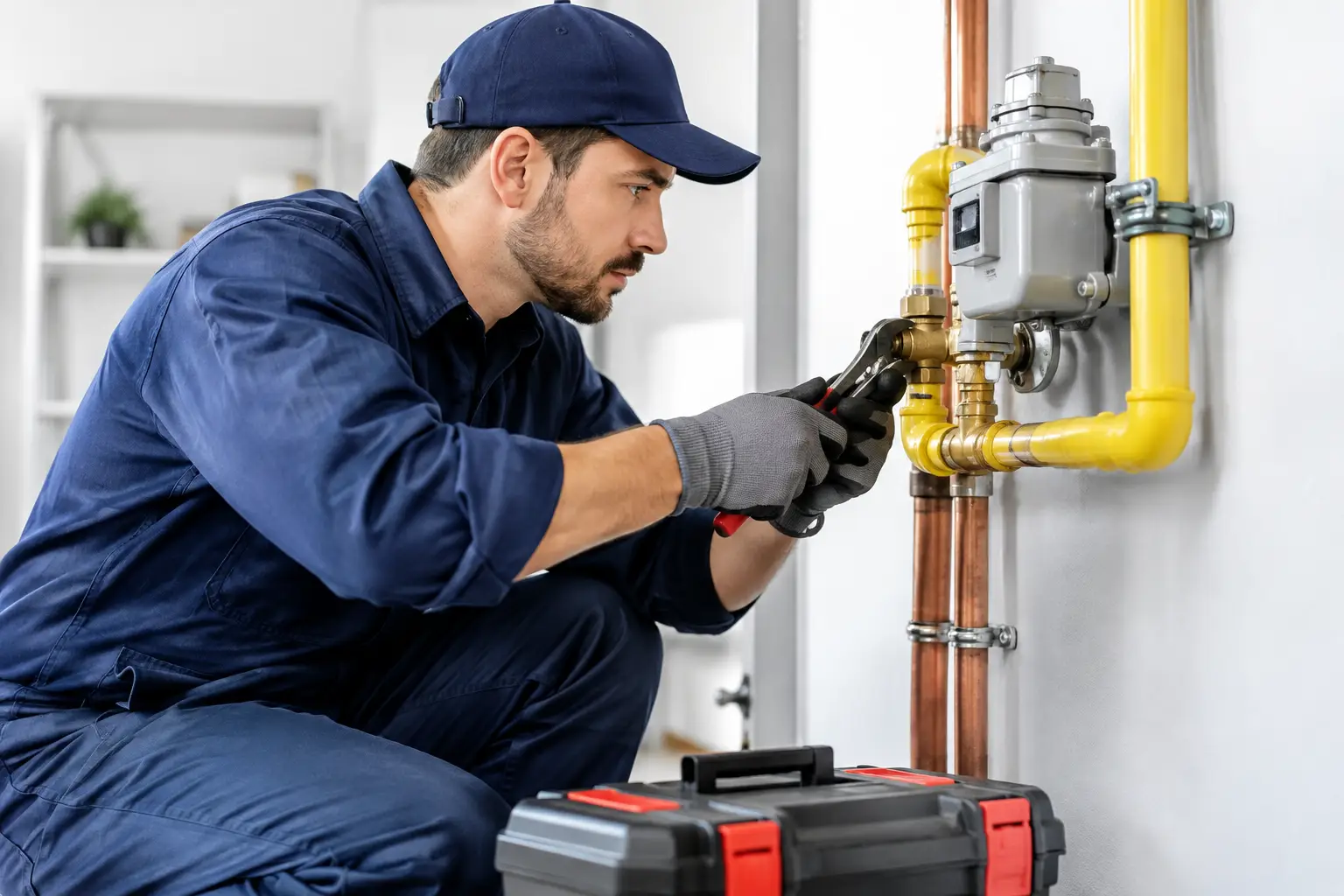
A faint sulfur or rotten-egg odor near a water heater, range, fireplace, or outdoor meter is not a problem to put off until the weekend. Gas plumbing involves systems that heat water, cook food, warm buildings, and support commercial equipment – but a damaged connection or aging line can create a serious safety concern. The right response protects people first, then the property.
If you suspect a gas leak, leave the area right away. Do not operate light switches, use electrical devices, light a match, or start a vehicle nearby. From a safe location, contact the gas utility or 911 as appropriate. Once the area has been made safe and the gas supply has been addressed, a licensed plumbing professional can diagnose and repair the issue correctly.
What Gas Plumbing Includes
Gas plumbing is the network of piping, valves, fittings, appliance connectors, regulators, and shutoff controls that delivers natural gas or propane to equipment. In a home, that may include a water heater, furnace, oven, cooktop, fireplace, clothes dryer, pool heater, or outdoor kitchen. Commercial systems may supply larger water heaters, rooftop units, restaurant appliances, boilers, or process equipment.
The pipe itself is only one part of the system. Safe performance depends on correct pipe sizing, approved materials, secure joints, accessible shutoff valves, proper appliance connections, and testing after work is completed. A line that appears to be working can still be undersized for an added appliance or compromised by corrosion, movement, or an old fitting.
That is why gas work is different from a simple household repair. A loose faucet connection may waste water. A poor gas connection can create a fire, explosion, or carbon monoxide risk.
Signs Your Gas Line Needs Professional Attention
Some problems announce themselves clearly, while others show up as appliance performance issues. A gas odor is the most obvious warning sign, but it is not the only one. Hissing sounds near a line or appliance, dying vegetation over a buried line, unexplained increases in gas use, or soot around gas equipment can all deserve attention.
Inside the property, watch for burners that struggle to light, flames that are yellow or irregular instead of mostly blue, pilot lights that repeatedly go out, or a water heater that does not heat consistently. These symptoms do not always mean the gas line is at fault. The appliance may need service, ventilation may be inadequate, or a component may be worn. A proper inspection separates the real cause from a guess.
For landlords and property managers, tenant reports should be taken seriously even when an odor seems intermittent. Gas odors can be more noticeable in enclosed spaces, at certain times of day, or when an appliance is operating. Document the concern, follow the proper safety steps, and arrange a qualified evaluation rather than asking a tenant to test connections themselves.
Common Gas Plumbing Repairs and Installations
Gas line service can range from a small correction at an appliance to a full system upgrade. The scope should match the condition of the existing line, local code requirements, and the demand of the equipment being served.
A technician may repair a leaking fitting, replace a deteriorated flex connector, install or replace an appliance shutoff valve, or reroute exposed piping that is vulnerable to damage. In older properties, sections of pipe may need replacement because of corrosion or poor prior workmanship. Buried gas piping can require specialized locating, excavation, and repair methods to avoid damage to surrounding utilities and hardscape.
New appliances often create another need for gas plumbing. Adding a higher-capacity range, tankless water heater, fireplace, pool heater, generator, or outdoor kitchen may require a new branch line or a larger main line. It is tempting to assume an available connection is enough. It may not be. Gas pipe sizing is based on the total load, pipe length, pressure, and the number of appliances drawing from the system.
Undersized piping can lead to weak burner performance, ignition issues, and unreliable operation when multiple appliances run at once. The lowest-cost installation is not a good value if it leaves equipment unable to perform as designed.
Why Licensed Gas Plumbing Matters
Gas work should be performed by a properly licensed contractor with the training and legal authority to handle fuel gas systems. California requirements, local building rules, manufacturer instructions, and permit requirements can all affect how a repair or installation must be completed.
Professional work starts with diagnosis. The plumber identifies the gas source, evaluates the line route and pipe material, checks connections and shutoffs, and considers appliance demand. Repairs are then completed using approved materials and methods. Depending on the job, the system may need pressure testing, leak testing, inspection, or permitting before it is returned to service.
This process can feel more involved than replacing a visible connector, but each step serves a purpose. It verifies that the repair addresses the actual defect and that the system is safe beyond the one location that first caught your attention.
For commercial property owners, the stakes are especially high. A poorly planned alteration can disrupt kitchen operations, tenant spaces, hot water availability, or building heating. Working with an insured, accountable contractor helps protect occupants, reduce downtime, and maintain clear records for ownership and facilities teams.
Do Not Treat Gas Repairs as a DIY Project
Homeowners are used to taking care of small maintenance tasks, and that practical mindset is valuable. Gas piping is the exception. Tape, sealant applied to an active leak, reused connectors, or improvised fittings can make a dangerous problem worse while hiding it temporarily.
Even tasks that seem straightforward, such as changing a range or dryer, may require confirmation that the appliance is compatible with the fuel type, that the shutoff is functional, and that the connector is correctly installed. Natural gas and propane systems have different requirements. Appliance conversion should follow the manufacturer’s instructions and be handled by a qualified professional when required.
There is also a difference between turning off an accessible appliance valve for safety and attempting to modify piping. Property owners should know where their main gas shutoff is located, but should not force a stuck valve or make repairs at the meter. The gas utility and a licensed contractor can advise on the appropriate next step.
Preventive Checks Protect the Whole Property
Gas systems do not need constant adjustment, but they do benefit from attention during remodeling, appliance replacement, tenant turnover, and major plumbing upgrades. A renovation can accidentally conceal a shutoff valve, leave piping exposed to damage, or add demand that the existing system was not designed to carry.
Schedule an inspection when you purchase an older property, install a new gas appliance, notice changes in appliance performance, or plan an addition. It is also wise to check that carbon monoxide alarms are installed and functioning where required. Those alarms do not replace proper gas line maintenance, but they add an important layer of household protection.
For Orange County homeowners, landlords, and business operators, choosing a local licensed contractor means having someone who can assess the full system rather than treating a gas concern as a quick patch. Lenora Plumbing approaches gas line work with clear communication, fair pricing, and workmanship designed to protect the people who rely on the property every day.
A gas line should give you dependable heat, hot water, and cooking without becoming something you have to worry about. When a smell, sound, or appliance issue raises a question, trust that instinct and have a qualified professional check it before a small concern becomes a larger one.
Need help with a plumbing problem?
Speak directly with Lenora Plumbing about service for your Orange County home or business.
Call (949) 992-7410