
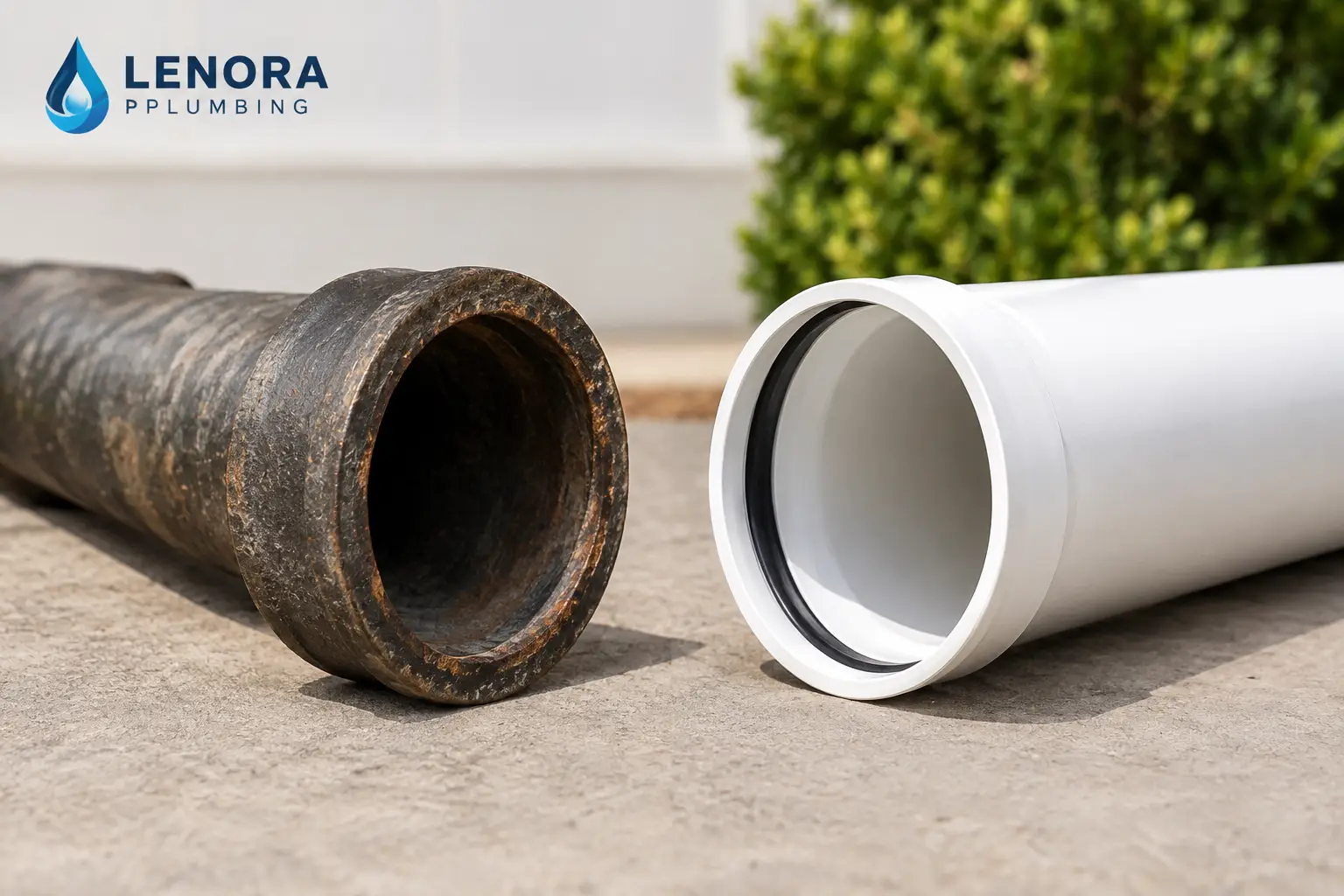
A sewer backup, recurring drain clog, or damp spot near an old pipe can turn one question into a major property decision: cast iron versus PVC sewer. The right answer depends on where the pipe runs, its current condition, local code requirements, the building’s age, and whether you are repairing one section or planning a long-term replacement.
For many Orange County properties, aging cast iron is part of the original plumbing system. PVC is often the practical replacement material for underground sewer piping because it is lighter, corrosion-resistant, and cost-effective. Still, cast iron has qualities that can make sense in specific indoor applications. A trusted plumbing contractor should diagnose the actual pipe condition before recommending either option.
Cast Iron Versus PVC Sewer: The Core Difference
Cast iron sewer pipe is a heavy metal pipe that has been used in residential and commercial buildings for generations. It is known for strength and for reducing the sound of water moving through vertical drain stacks. Older homes may have cast iron below the foundation, inside walls, or running from the structure toward the public sewer connection.
PVC, or polyvinyl chloride, is a rigid plastic pipe commonly used for modern drain, waste, and vent systems and exterior sewer lines. It is assembled with solvent-welded fittings that create tightly joined connections. Because it does not rust and is much easier to handle than cast iron, PVC has become a standard choice for many replacement projects.
Neither material is automatically best in every location. A quiet second-story bathroom stack and an underground main sewer line have different needs. The decision should begin with the pipe’s job, not simply the material that was installed before.
Durability Means Different Things for Each Pipe
Cast iron is physically tough. It can handle heavy loads and offers excellent resistance to impact when properly supported. That is one reason it remains common in certain commercial buildings, multi-family properties, and locations where sound control or fire-related building requirements influence the design.
Its weakness is internal corrosion. Over decades, wastewater, moisture, and gases can cause the inside surface of cast iron to roughen and flake. This process, sometimes called scaling, reduces the pipe’s effective diameter. Toilet paper, grease, and debris catch on that rough interior more easily, which can lead to slow drains and repeated clogs. Corrosion can eventually create cracks, holes, and leaking joints.
PVC does not corrode the way cast iron does. Its smooth interior helps wastewater move through the line and makes buildup less likely under normal use. When installed with the proper slope, bedding, fittings, and cleanouts, PVC sewer piping can provide long service life.
That does not make PVC indestructible. It can crack if it is poorly supported, exposed to significant impact, or installed under unsuitable conditions. Underground PVC can also shift if the surrounding soil settles or if the trench was not prepared correctly. Workmanship matters as much as material selection.
What tree roots can do to either system
Tree roots usually enter sewer lines through openings. Aging cast iron is especially vulnerable when corroded joints, cracks, or failed sections create a path toward moisture. Once roots enter, they can form a dense blockage and widen the damaged area.
PVC’s fused joints generally offer better protection against root intrusion than old mechanical joints. However, roots can still invade if a PVC fitting is improperly joined, a pipe cracks, or a connection is damaged. Replacing a root-filled cast iron line with PVC may reduce future risk, but the installation must be correctly designed and tested.
Noise, Fire Resistance, and Indoor Pipe Locations
This is where cast iron can still have an advantage. Water flowing through a cast iron drain stack is noticeably quieter than water moving through PVC. In a two-story home, condominium, hotel, or office setting, that difference can matter when a drain line runs near bedrooms, living spaces, or tenant areas.
Cast iron also performs differently in fire-rated assemblies. Building design requirements can affect what materials are approved in walls, shafts, and multi-unit structures. PVC can be used in many approved applications, but it may require properly rated penetrations, firestopping, or other installation details.
For a single-family home’s buried sewer lateral, noise is not usually a deciding factor. For an interior vertical stack in a multi-family or commercial building, it may be. This is one reason a full cast iron replacement is not always the only solution, and a full PVC replacement is not always the right one.
Cost: Upfront Price Versus Future Repairs
PVC usually costs less to purchase and install than cast iron. It is lightweight, can be cut and assembled efficiently, and does not require the specialized handling associated with heavy cast iron pipe. On a typical sewer replacement, those labor savings can be meaningful.
Cast iron material is more expensive and more labor-intensive to install. It may also require additional support and careful connection methods. If a building needs its sound-reducing qualities or the project specifications call for it, the added cost can be justified.
For property owners, the more useful comparison is not just the invoice total. Consider the condition of the existing line, the number of repairs it has needed, the risk of interior damage from future leaks or backups, and whether the property will be renovated soon. Repeated spot repairs on badly deteriorated cast iron can cost more over time than a properly planned replacement.
When Repairing Existing Cast Iron Makes Sense
Replacement is not always necessary. A camera inspection may show that the line has a localized crack, a damaged fitting, or a small area of root intrusion while the rest of the system remains structurally sound. In those cases, a focused repair, cleaning, or trenchless solution may be a better use of your budget.
Repair can also make sense when access is difficult and the damaged section is limited. For example, replacing a short exposed cast iron section in a crawlspace may be straightforward, while disturbing a larger system under finished floors may not be warranted unless inspections reveal widespread deterioration.
The key is accurate diagnosis. Slow drains alone do not prove that the entire sewer line has failed. A professional camera inspection can identify scaling, offsets, cracks, root entry, standing water, and collapsed pipe sections so the recommendation is based on evidence.
When PVC Sewer Replacement Is Often the Practical Choice
PVC is frequently a strong option when an old underground cast iron sewer line has extensive corrosion, recurring root intrusion, multiple leaks, or major loss of interior pipe diameter. It is also commonly selected during repiping, additions, bathroom remodels, and sewer lateral replacements where compatible modern materials are approved.
A quality PVC installation requires more than swapping one pipe for another. The trench needs the correct depth and support. The line needs consistent slope so solids can travel without leaving waste behind. Connections to remaining cast iron, ABS, or other piping need approved transition fittings. Cleanouts should be accessible for future maintenance.
In Southern California, soil conditions, landscaping, driveway access, and the route to the city connection can all affect the scope of the work. A clear estimate should explain what pipe will be replaced, how access will be handled, whether permits are needed, and what restoration is included after the work is complete.
Do Not Mix Materials Without the Right Transition
It is common for a property to have both cast iron and PVC. An older building may retain a cast iron stack while a newer PVC section runs to the sewer connection. This can work well when the transition is made with the correct approved coupling and the pipes are properly aligned and supported.
Improvised connections can leak, separate, or create an internal lip that catches debris. Different materials also move differently with temperature changes and settling. A licensed plumber will account for those details rather than treating the transition as a simple patch.
Choosing the Right Sewer Pipe for Your Property
The best decision starts with a clear view of the existing system. Age is a clue, but it is not a diagnosis. Two homes built in the same year can have very different pipe conditions based on soil, prior repairs, drainage habits, root activity, and past renovations.
For most deteriorated underground residential sewer lines, PVC offers a practical balance of smooth flow, corrosion resistance, and fair installation cost. Cast iron remains worth considering where quieter operation, building requirements, or specific commercial design needs take priority. The right recommendation should account for the building, not force every property into one material choice.
If you are weighing a repair against replacement, ask for a detailed inspection and a plain-language explanation of what the pipe is doing now and what each option is designed to solve. Lenora Plumbing can help Orange County property owners make that decision with licensed workmanship, transparent pricing, and a repair plan built for the condition of the line.
Need help with a plumbing problem?
Speak directly with Lenora Plumbing about service for your Orange County home or business.
Call (949) 992-7410