
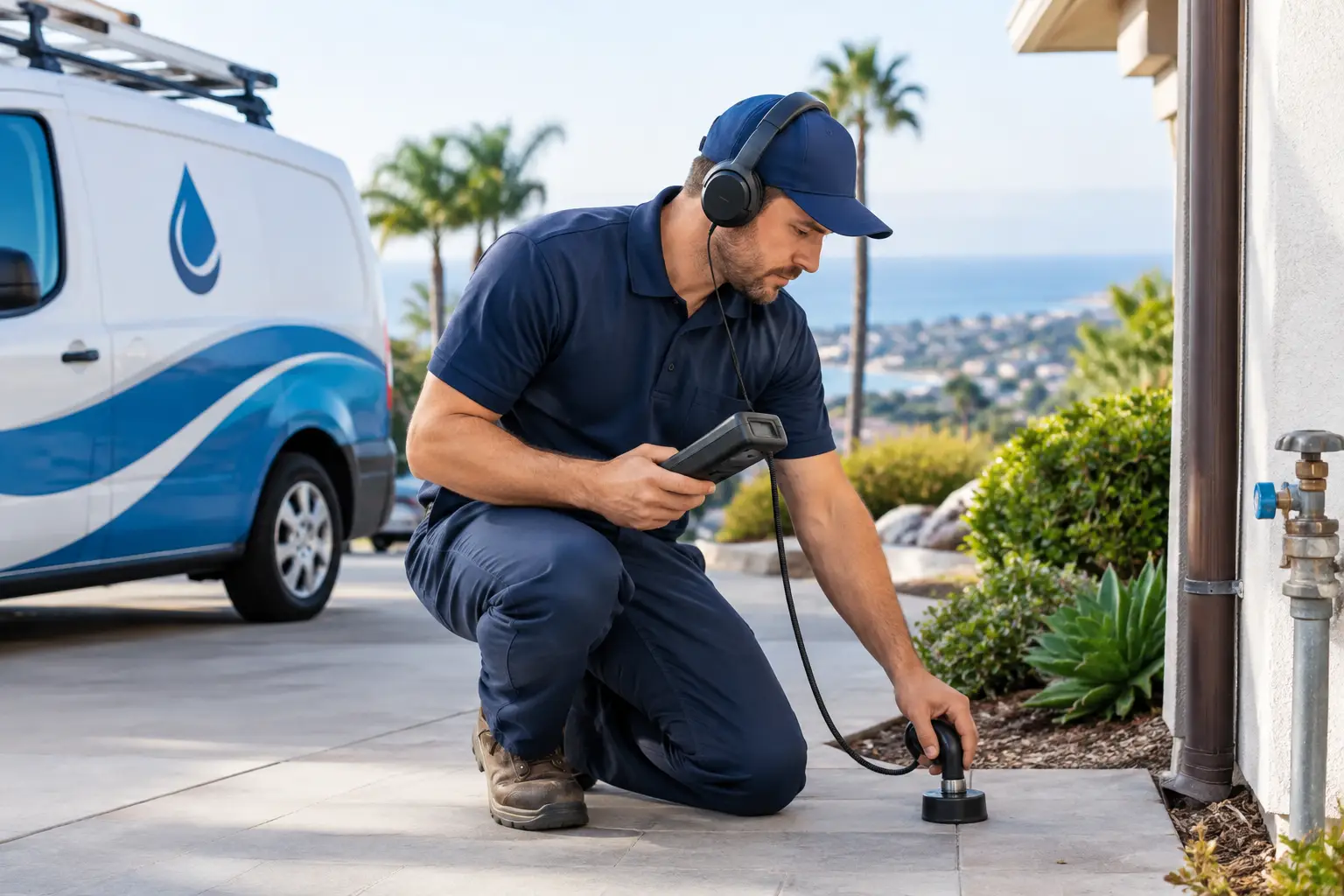
A water bill that climbs without explanation, a warm patch on the floor, or the faint sound of water moving behind a wall can turn a small concern into a costly property problem. Leak detection cost is usually far less than the cost of allowing hidden water damage, mold growth, flooring damage, or foundation concerns to continue unnoticed.
For homeowners, landlords, and property managers, the key is understanding what the diagnostic visit includes. A professional leak inspection is not simply a quick look under a sink. It is a process of testing the plumbing system, narrowing down the source, and identifying the most appropriate repair path before unnecessary demolition begins.
What Drives Leak Detection Cost?
The price of leak detection depends on where the leak may be, how accessible the plumbing is, and which testing methods are needed to confirm the source. A visible drip from an exposed supply line is generally straightforward. A leak beneath a concrete slab, inside a wall, under landscaping, or somewhere in a large commercial building requires more time and specialized equipment.
In Orange County, a basic professional leak inspection may commonly begin in the low hundreds of dollars. More complex diagnostic work, especially for suspected slab leaks or difficult-to-access underground lines, can range higher. The final cost should be based on the actual conditions at the property, not a one-size-fits-all number.
A clear estimate should explain whether the charge covers the initial inspection only or includes advanced testing. It should also clarify that leak detection and leak repair are separate services. Finding the source accurately is the first step. Repair pricing depends on the pipe material, location, extent of damage, access needed, and whether damaged finishes need to be opened or restored.
The suspected leak location matters
Leaks in exposed plumbing near a water heater, under a sink, or around a toilet may be found through a visual inspection and basic pressure testing. These situations often require less diagnostic time than hidden leaks.
A suspected slab leak is different. Water lines may run beneath the concrete foundation, and signs can be indirect: warm flooring, damp carpet, cracks, mildew odors, reduced water pressure, or a water meter that continues moving when fixtures are off. Locating that leak without a careful process can be challenging, which affects the inspection cost.
Exterior and underground leaks can also take longer to isolate. Irrigation systems, pool equipment, main water lines, and long commercial plumbing runs may require separate testing to determine whether the water loss is inside the building, outside the building, or associated with a specific system.
The testing method affects the price
Licensed plumbers use different diagnostic tools depending on the situation. Pressure testing can help confirm whether a plumbing line is losing water. Acoustic equipment can help detect the sound of water escaping from a pressurized pipe. Thermal imaging may identify unusual temperature patterns that point to hot-water leaks. Moisture meters can help map affected areas behind finishes or beneath flooring.
No single tool can locate every leak with complete certainty. Older pipe materials, thick concrete, background noise, multiple plumbing branches, and nearby water sources can make findings less direct. A qualified technician uses the tools as part of a larger diagnostic process, rather than relying on one reading alone.
Property size and plumbing complexity count
A single-family home with a clear water-loss issue is usually quicker to inspect than a multi-unit building, restaurant, school, or commercial facility with numerous restrooms, supply lines, and equipment connections. Larger properties may require zone-by-zone testing to identify the affected area.
For landlords and commercial property managers, documenting the findings can be particularly valuable. A detailed diagnosis helps support repair decisions, communicate with tenants, plan access to affected units, and avoid paying for exploratory work in the wrong location.
Typical Leak Detection Cost Ranges
While every property needs an individual assessment, it helps to know what pricing categories often look like. Basic leak investigations may fall around $150 to $400 when the issue is reasonably accessible and testing is limited. Advanced hidden-leak or slab-leak detection can commonly range from roughly $300 to $800 or more, depending on the time, equipment, and complexity involved.
These ranges are not repair quotes. A technician may find that the problem is a failed fixture, a toilet leak, a pressure regulator issue, or an irrigation line rather than a pipe beneath the slab. In other cases, the investigation may reveal more than one leak, particularly in aging plumbing systems.
The lowest advertised diagnostic fee is not always the best value. A low starting price can be useful, but it is worth asking what testing is included, whether the technician is licensed, and how the findings will be explained. A cheaper inspection that does not isolate the problem may lead to repeat visits and more disruption later.
Why Accurate Detection Can Save Money
Hidden leaks waste water every hour they remain active. Even a small pinhole leak can increase utility bills over time, while a larger supply-line break can damage cabinets, flooring, drywall, and personal property. When water travels beneath flooring or behind walls, the visible wet spot may not show the full area affected.
Accurate detection helps avoid two expensive mistakes: opening walls or floors based on guesswork, and delaying a repair until damage becomes more extensive. If a leak is found in a targeted area, the repair plan can focus on the actual problem rather than broad exploratory demolition.
For slab leaks, the right repair is not always the same. A localized repair may make sense when the pipe damage is isolated and accessible. Rerouting a line can be more practical when the pipe is in a difficult location or when future access is a concern. Repiping may deserve consideration when an older system has recurring failures. The best choice depends on the age and condition of the plumbing, not just the immediate repair price.
How to Keep Leak Detection Costs Under Control
Start by gathering useful information before the appointment. A copy of recent water bills can show whether usage changed gradually or suddenly. Note where you have seen moisture, heard running water, noticed warm flooring, or experienced lower pressure. If your water meter has a leak indicator, check it after all faucets and water-using appliances are turned off.
Do not assume a high water bill automatically means a slab leak. Running toilets, dripping faucets, malfunctioning water softeners, appliance connections, and irrigation problems can also waste significant water. The goal of a professional inspection is to separate these possibilities efficiently.
It also helps to make access available to the water heater, under-sink cabinets, utility areas, crawlspaces, and any areas where symptoms have appeared. Removing stored items when possible can reduce delays and allow the technician to inspect more thoroughly.
When comparing plumbing companies, ask whether they are licensed, bonded, and insured. Request a clear explanation of the diagnostic charge, the findings, and the proposed repair options. Fair pricing is not just a number. It means understanding what work is being performed, why it is recommended, and what factors could change the final repair cost.
When a Professional Inspection Makes Sense
Schedule a leak inspection when your water meter shows use with all fixtures off, when your water bill rises without a clear reason, or when you notice persistent dampness, mildew odors, warm spots, stains, or unexplained foundation-area moisture. Property managers should also act when tenants report recurring moisture or water-pressure changes, even if the source is not visible.
Waiting for obvious damage can make a plumbing issue harder and more expensive to resolve. A timely diagnosis gives you information to make a practical decision, whether the answer is a minor fixture repair, a targeted pipe repair, or a larger long-term plumbing plan.
Lenora Plumbing provides licensed, professional diagnosis with clear communication and fair prices for Orange County property owners. A careful inspection does more than locate water loss. It gives you a reliable starting point for protecting your home, building, and budget.
Need help with a plumbing problem?
Speak directly with Lenora Plumbing about service for your Orange County home or business.
Call (949) 992-7410