
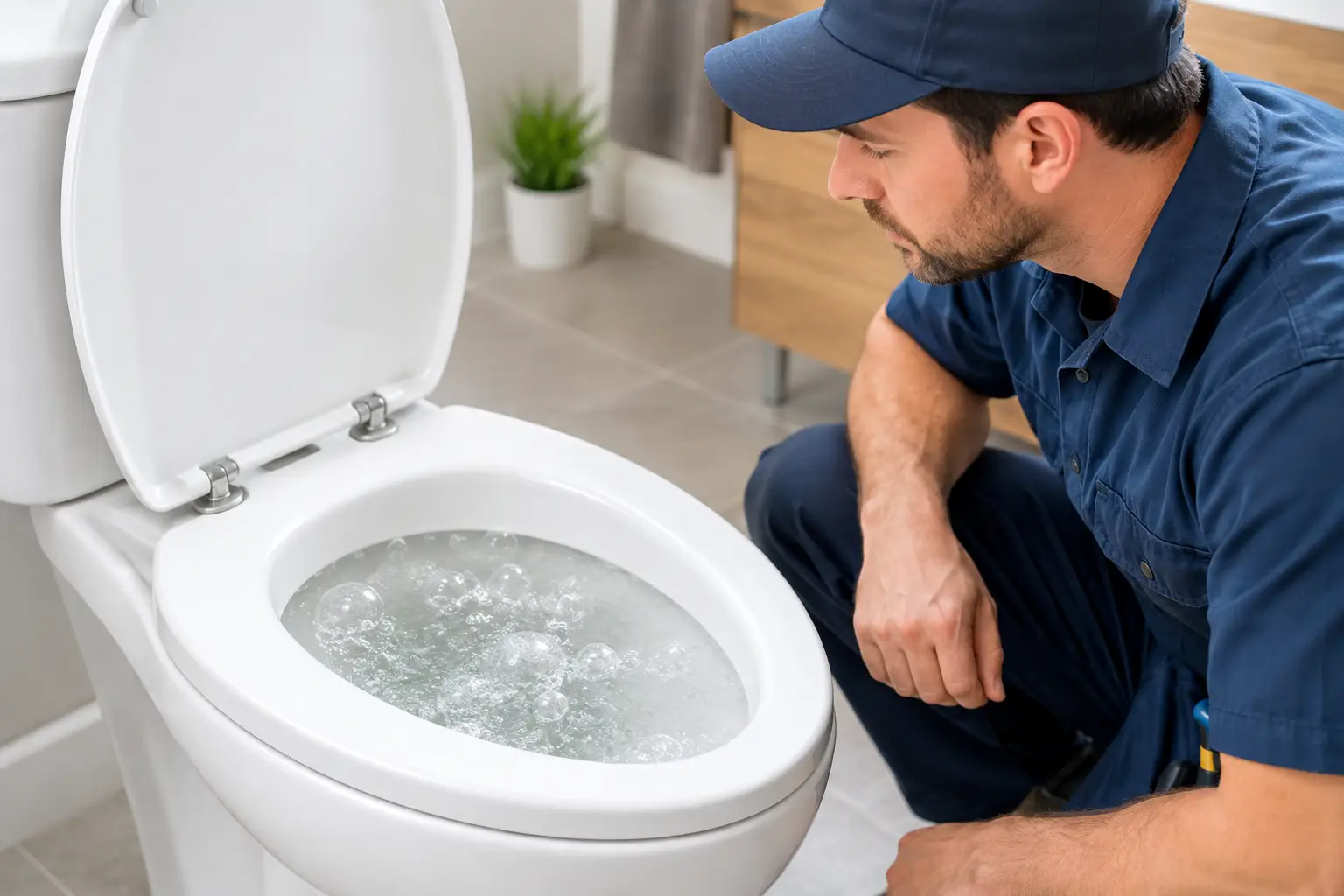
A toilet should flush, refill, and stay quiet. When bubbles rise in the bowl, especially while the toilet is not being used, the plumbing system is signaling that air is being forced where water should move freely. Toilet bubbling causes range from a small drain obstruction to a developing sewer line issue, so the pattern matters. Acting early can help protect your home from a messy backup, water damage, and avoidable repair costs.
Why a Toilet Bubbles Instead of Draining Normally
Your plumbing drain system relies on a balance of water flow and air pressure. Wastewater travels through drainpipes and into the sewer line, while roof vents allow air into the system to keep that flow smooth. When a blockage or ventilation problem disrupts that balance, air can push backward through the nearest opening. In many homes, that opening is the toilet bowl.
The bubbling may happen immediately after you flush, when a nearby sink drains, or when the washing machine empties. Those details help narrow down whether the problem is isolated to one fixture or affects a larger portion of the plumbing system.
A single, brief gurgle after a slow flush may point to a partial clog near the toilet. Repeated bubbling, water rising in the bowl, or gurgling that occurs when other fixtures run deserves faster attention. Those signs can indicate that wastewater has limited room to move through a shared drain or main sewer line.
Common Toilet Bubbling Causes
A partial clog in the toilet trap or branch drain
The toilet trap is the curved passage built into the fixture. It holds water to block sewer gases, but it can also catch excess paper, wipes, small objects, or buildup. A partial clog leaves enough space for some water to pass, but not enough for air and water to move normally together.
You may notice a weak flush, a bowl that drains slowly, or bubbles after flushing. A plunger can sometimes clear a simple toilet-level clog. Use a flange-style toilet plunger, maintain a good seal, and avoid repeated aggressive flushing if the bowl is rising. If plunging does not restore normal performance, the obstruction may be farther down the drain.
A blocked drain line serving the bathroom
A bathroom drain line may serve the toilet, shower, tub, and sink. Hair, soap residue, paper products, and debris can gradually narrow that pipe. When water from one fixture moves through the line, it can create pressure that makes another fixture gurgle or bubble.
For example, a toilet that bubbles when the shower drains often points to a shared bathroom drain issue. You may also see water standing in the tub after flushing. This is not usually a problem to solve with more chemical cleaner. Harsh drain chemicals can damage certain pipes, leave a clog untouched, and create a safety concern for anyone who later opens the line.
A clog or restriction in the main sewer line
The main sewer line carries wastewater from the home to the public sewer connection or septic system. When it is restricted, every drain in the house may be affected. Toilets are often the first fixtures to show the problem because they release a large volume of water quickly.
Warning signs include bubbling in more than one toilet, gurgling from showers or sinks, slow drains throughout the house, or wastewater appearing in a low shower or tub drain. Do not keep running water to test the problem if these symptoms are present. Washing clothes, taking a shower, or flushing repeatedly can add water behind the blockage and increase the chance of a backup indoors.
Main line restrictions have several possible sources. Grease buildup, accumulated paper, pipe scale, a sagging section of line, damaged pipe joints, and foreign objects can all interfere with flow. In older Orange County properties, tree roots are also a frequent concern. Roots seek moisture and can enter through small openings in aging sewer pipes, then expand into a dense blockage over time.
A blocked plumbing vent
Plumbing vents extend through the roof and give the drain system a path for air. Without proper venting, draining water can pull or push air through fixture traps, leading to gurgling sounds and unusual bowl movement.
Leaves, nesting material, debris, or other obstructions can block a vent opening. A vent issue can look similar to a drain clog, which is why diagnosis matters. The right repair depends on whether the problem is air movement, wastewater flow, or both. Roof access and vent work can be hazardous, so this is generally best left to a licensed plumbing professional.
A problem with the municipal sewer connection
Sometimes the restriction is not entirely within the property line. A municipal sewer issue, a blockage near the connection point, or a damaged lateral line can create symptoms inside the building. Homes at lower elevations or properties with older sewer connections may be more vulnerable when a public line is overloaded or restricted.
A professional inspection can help identify where the issue begins. This avoids paying for work on the wrong section of pipe and provides clearer information if coordination with a utility or local agency is necessary.
When Toilet Bubbling Is a Warning Sign
Not every bubble means a major sewer repair is required. A simple clog may be the answer, particularly when only one toilet has trouble and every other drain works normally. Still, some symptoms should be treated as a clear warning that the problem is beyond a basic plunger.
Call for professional diagnosis when the toilet bubbles without being flushed, multiple fixtures drain slowly, or water rises in the bowl and then drops on its own. Pay close attention if flushing one toilet makes water move in a shower, tub, or another toilet. That cross-fixture behavior often means the issue is in a shared drain or the main sewer line.
Sewage odors, discolored water, or wastewater backing up through a floor drain are also serious signs. Keep children and pets away from affected areas, avoid using water fixtures, and do not attempt to clear a suspected main line blockage with store-bought chemicals. The goal is to prevent additional wastewater from entering a system that may already be near capacity.
What You Can Do Before a Plumber Arrives
Start by observing, not repeatedly testing. Note which fixtures cause the bubbling, whether the toilet is slow to flush, and whether the issue happens after using a sink, shower, dishwasher, or washing machine. This information helps a technician locate the likely part of the system more efficiently.
If the toilet is close to overflowing, remove the tank lid and close the flapper if water is still entering the bowl. You can also turn the shutoff valve behind the toilet clockwise to stop the water supply. Do not flush again until you know the water level is stable.
For a toilet that has only a mild, isolated clog, careful plunging may be reasonable. Use only moderate pressure and stop if water rises high in the bowl. Never use a metal object to probe the toilet trap, as it can crack porcelain or damage the fixture’s finish. If a plunger fails, a professional can use the appropriate auger or drain-cleaning equipment without guessing at the source of the problem.
How a Professional Finds the Actual Cause
Good plumbing service starts with identifying the location and nature of the restriction. A technician may test fixture drainage, inspect accessible cleanouts, and use specialized drain-clearing equipment to remove buildup or roots. For recurring clogs or suspected pipe damage, a sewer camera inspection can show the condition inside the line.
That camera view is valuable because not every blockage needs the same repair. A soft buildup may clear with professional drain cleaning, while roots may require cutting and a plan for longer-term pipe repair. A cracked, offset, or deteriorated line may need targeted replacement instead. The trade-off is simple: clearing the immediate blockage may restore flow, but damaged pipe can allow the same issue to return if the underlying condition is not addressed.
For landlords and property managers, documentation of the findings can also make maintenance decisions easier. It helps distinguish a one-time tenant-related clog from a building drain problem that requires capital planning.
Preventing Future Bubbling and Drain Trouble
The best prevention is to treat toilets as toilets, not disposal bins. Only human waste and toilet paper should be flushed. Products labeled flushable, including many wipes, can still collect in bends, join with grease or debris farther down the line, and contribute to costly blockages.
Avoid pouring cooking grease down kitchen drains, and use strainers where practical to reduce hair and debris entering bathroom lines. If your property has mature trees near the sewer route, recurring root intrusion may warrant periodic inspection. Older homes may also benefit from knowing the sewer line material and condition before a small warning turns into a disruptive plumbing project.
If your toilet is bubbling, take the pattern seriously and stop adding water if other drains are affected. Lenora Plumbing provides licensed, bonded, and insured diagnosis with fair pricing for homeowners and property managers across Orange County. A clear inspection today can protect your drains, your floors, and your peace of mind tomorrow.
Need help with a plumbing problem?
Speak directly with Lenora Plumbing about service for your Orange County home or business.
Call (949) 992-7410